Pensacola Airport Expansion: The Digital Playbook for Gulf Coast Summer Demand
Pensacola's new airport investment is a signal for Gulf Coast businesses to tighten booking, follow-up, and local visibility before summer demand peaks.

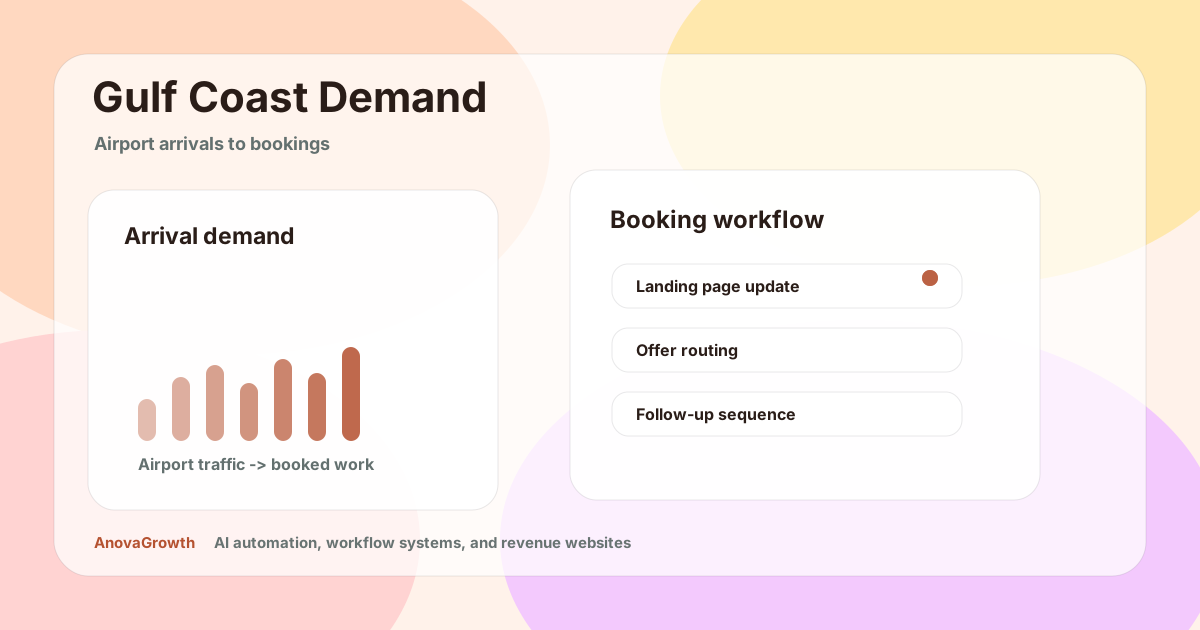
Pensacola's latest airport expansion funding is the clearest regional demand signal Gulf Coast businesses have received this summer. If more travelers are moving through the Panhandle while your booking flow, mobile website, and follow-up still depend on manual work, you will feel the strain fast. The near-term win is not adding more software. It is tightening the customer journey before summer volume peaks.
For market context, start with our Gulf Coast location page, where tourism, hospitality, and home-service seasonality already shape the work we build.
What Happened on the Gulf Coast This Month
Two recent Pensacola signals matter beyond Escambia County:
- On May 19, 2026, the City of Pensacola announced a $9 million FAA Airport Terminal Program grant for Pensacola International Airport. The project expands the TSA checkpoint, adds roughly 8,400 square feet, improves passenger queuing, and modernizes baggage handling. Source: City of Pensacola.
- Visit Pensacola's official summer calendar is already pushing recurring June and July visitor draws, including Blue Angels practice cruises throughout June and the Pensacola Beach Air Show on July 15-18, 2026. Sources: Visit Pensacola Blue Angels Practice Cruises and Visit Pensacola Pensacola Beach Air Show.
That combination matters because Gulf Coast demand rarely arrives in a smooth line. It comes in spikes. Infrastructure investment increases travel capacity, and signature events compress attention into narrow booking windows. Businesses that respond quickly convert that demand. Businesses that rely on inbox triage usually watch it leak away.
Why This Matters for Gulf Coast Operators
The Gulf Coast page is built around four realities that are especially relevant right now:
- Tourist demand shows up suddenly.
- Mobile visitors make fast decisions.
- Off-season habits break during summer surges.
- Service businesses compete on response speed as much as price.
That applies to hotels, vacation rental managers, fishing charters, restaurants, tour operators, med spas, HVAC companies, and contractors serving second-home owners across Pensacola, Destin, Fort Walton Beach, and Panama City.
If a traveler lands, searches, taps your site, and cannot book or get a fast answer, the lead usually goes to the next business.
Decision Table: What To Tighten Before Peak Summer Weeks
| Workflow | Common manual pattern | Better system | Primary payoff |
|---|---|---|---|
| Booking and inquiry capture | Calls, texts, forms, and DMs live in different places | Unified intake with instant routing and acknowledgment | Fewer lost leads during high-volume days |
| Website conversion | Slow mobile pages and vague CTAs | Fast, conversion-focused web development with clear booking paths | Higher conversion from tourist traffic |
| Follow-up and reminders | Staff manually send confirmations and chase no-shows | Triggered AI automation for confirmations, reminders, and post-visit follow-up | Better show rates and more repeat revenue |
| Back-office handoffs | Reservations, service requests, and CRM updates copied by hand | Connected workflow automation across forms, calendars, CRM, and messaging | Less admin drag during surge periods |
If you only fix one area this month, fix speed-to-lead. Gulf Coast demand is often short-lived, and delayed follow-up is expensive.
Where Gulf Coast Businesses Usually Break Under Volume
1) The Mobile Booking Path Is Too Fragile
Many local sites still force mobile visitors to pinch, scroll, and guess where to click. That is a conversion problem, not just a design problem. Travelers checking options from a hotel room, the beach, or the airport will not wait.
This is why web development on the Gulf Coast has to be built for action first: obvious offers, fast load times, clean forms, and no dead-end pages.
2) Follow-Up Slows Down When Staff Gets Busy
Peak weeks create the exact conditions that make manual systems fail. The phone rings more. Staff gets pulled into operations. Texts go unanswered. Lead forms sit overnight.
That is where AI automation changes the economics. Instant acknowledgments, lead qualification, after-hours response, and scheduled follow-up reduce the revenue lost between first contact and booked work.
3) Seasonal Teams Still Run on Disconnected Tools
Reservation systems, email tools, spreadsheets, and texting apps often sit in separate silos. The result is duplicated work and missed details.
For Gulf Coast operators, workflow automation usually has the fastest operational ROI because it connects the tools you already use instead of forcing a full platform change in June.
How This Plays Out by Industry
Hospitality and Tourism
Hotels, rentals, tour operators, and restaurants need cleaner demand capture during compressed visitor windows. The goal is simple: fewer abandoned inquiries, faster confirmations, and more structured guest follow-up after the visit.
Home Services and Contractors
Summer travel does not only help tourism brands. It also drives property turnover, second-home maintenance, and urgent service calls. Contractors serving Gulf Coast homeowners need faster quote intake and cleaner dispatch coordination while demand is high.
Experience-Based Businesses
Fishing charters, wellness brands, attractions, and event-led businesses win when the site, booking path, and confirmation flow feel immediate. This is where speed matters more than having the flashiest brand.
Four Questions to Answer This Week
- How quickly does a new inquiry get a useful response after hours?
- Can a mobile visitor understand your offer and take the next step in under 30 seconds?
- Which staff updates are still typed manually every day?
- What breaks first when volume jumps 20% for a holiday or major event weekend?
If those answers are unclear, your summer operating system is probably too manual.
A Practical 30-Day Gulf Coast Rollout
Week 1: Audit the First Response Path
Map every way a prospect can reach you: phone, form, text, email, social DM, booking engine.
Week 2: Fix the Mobile Conversion Layer
Tighten your core pages, simplify offers, and remove friction from booking or quote requests.
Week 3: Automate the Highest-Volume Follow-Up
Start with confirmations, reminders, lead routing, and review or rebooking prompts.
Week 4: Connect the Back Office
Push intake data into calendars, CRM records, internal notifications, and reporting so staff does not have to re-enter everything by hand.
For a related Florida example, read Seasonal Business Automation for Daytona Beach FL. The market is different, but the underlying demand pattern is similar.
Key Takeaways for Gulf Coast Businesses
- Pensacola's May 19 airport grant is a regional demand signal, not just an airport headline.
- June and July event traffic will reward fast booking paths and punish slow follow-up.
- Gulf Coast businesses usually get the best short-term ROI from better mobile conversion, automated follow-up, and connected workflows.
If you want a practical plan built for Pensacola, Destin, Fort Walton Beach, or Panama City, start with our Gulf Coast growth page or contact us to scope the highest-friction workflow first.
Sources
Related articles
Hurricane Isaias Gulf Coast Business Recovery: Build Resilient Workflows
Hurricane Isaias exposed fragile Gulf Coast operations. Build recovery workflows that keep customers informed, requests routed, and bookings moving.
Read the article: Hurricane Isaias Gulf Coast Business Recovery: Build Resilient Workflows
Panama City's Reef Expansion: The Booking Playbook for Stronger Fall Demand
Panama City operators should use the new reef expansion push to tighten booking, follow-up, and mobile conversion before fall fishing and dive demand rises.
Read the article: Panama City's Reef Expansion: The Booking Playbook for Stronger Fall Demand
Nashville's New Tourism Board: The Operations Playbook for Hospitality Growth
Nashville's new tourism board signals hotels, venues, and service operators to tighten booking, follow-up, and mobile conversion before demand rises.
Read the article: Nashville's New Tourism Board: The Operations Playbook for Hospitality Growth
