Seasonal Business Automation for Daytona Beach FL
Daytona Beach businesses swing between peak season chaos and off-season quiet. Automation keeps both manageable.

The Seasonal Rollercoaster
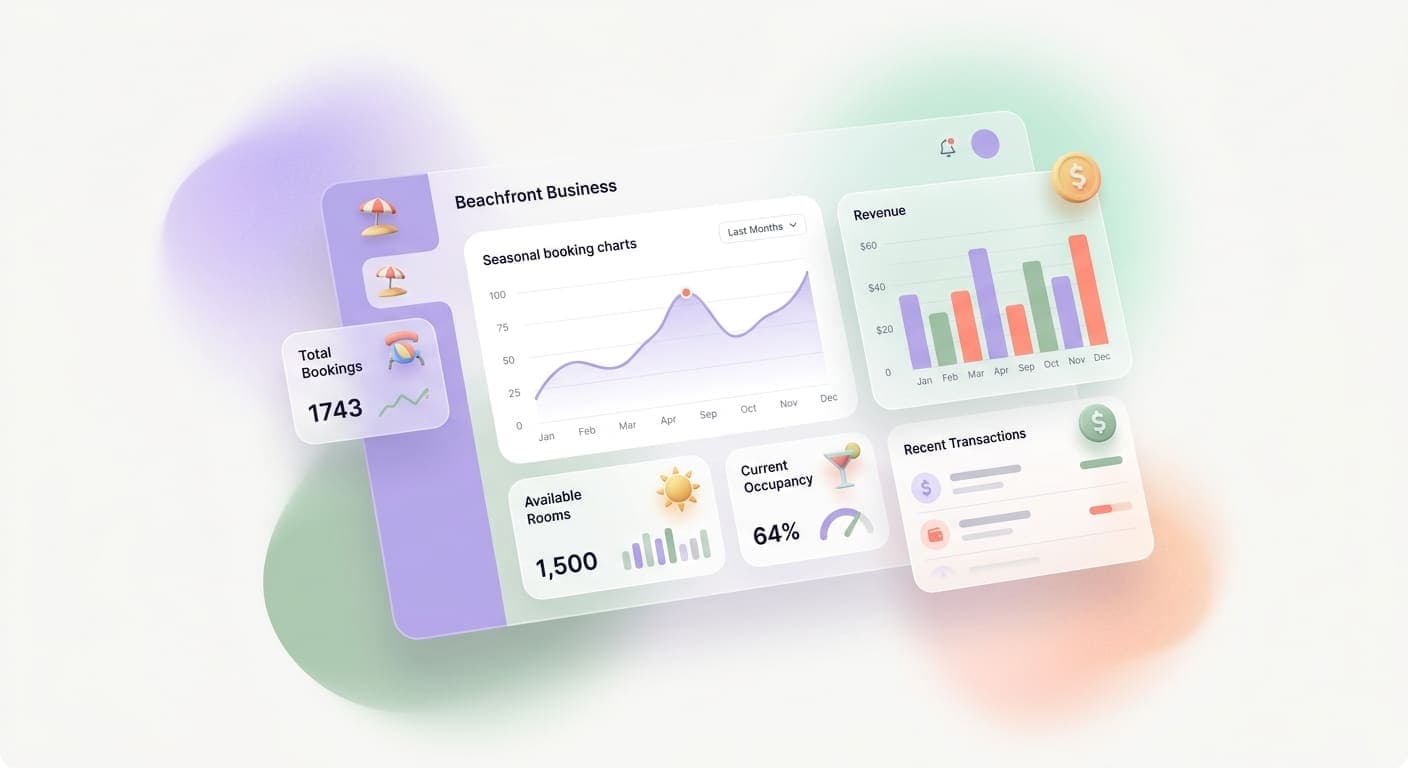
If you run a business in Daytona Beach, your calendar doesn't look like everyone else's. While most companies plan around steady quarterly growth, you're bracing for surges that can double or triple your normal volume, then adjusting for stretches where foot traffic drops to a fraction of peak.
The Daytona 500 in February kicks off the year with a massive influx of visitors. Bike Week follows almost immediately in March, drawing hundreds of thousands of motorcycle enthusiasts. Spring break overlaps and extends the wave. Summer brings family tourism and beach season. Biketoberfest in October creates another spike. And between these peaks, there are quieter months where revenue drops and the streets feel empty by comparison.
This pattern creates a unique operational challenge. You need enough capacity to handle peak demand without overcommitting resources during the slow months. You need marketing that ramps up before events and nurtures leads year-round. You need systems that scale up and down without requiring you to manually adjust everything each time.
That's where automation changes the equation. The businesses in Daytona Beach that handle seasonality well aren't just working harder during peaks, they've built systems that manage the swings for them.
Automating the Surge
Peak season in Daytona Beach doesn't give you time to think. Every decision you make during Bike Week or the Daytona 500 comes with a clock ticking. The businesses that capture the most revenue during surges are the ones with systems already in place before the first visitors arrive.
Dynamic Pricing That Responds in Real Time
If you're still setting prices manually for peak events, you're either leaving money on the table or scaring people away with guesswork. Dynamic pricing tools adjust rates based on demand, competitor pricing, and booking velocity. Hotels and vacation rentals use these to maximize revenue per available room without constant manual intervention.
The same logic applies to restaurants running special event menus, tour operators managing limited-capacity experiences, and any business where demand predictably outstrips supply during certain windows.
Pre-Event Email Campaigns on Autopilot
Two months before Bike Week, the people who came last year should be hearing from you. Automated email sequences triggered by event proximity can handle this entirely, segmented by past behavior, personalized with relevant offers, and timed to land when booking decisions happen.
This isn't about blasting your entire list with a generic "Bike Week is coming!" message. It's about sending the right message to the right segment at the right time. Past Daytona 500 attendees get race-week packages. Families who visited in summer get early-bird deals for next season. Repeat customers get loyalty perks. All of this runs in the background while you focus on operations.
Booking Engine Scaling
Your website needs to handle traffic spikes without crashing. During major events, a Daytona Beach hotel or rental company might see 10 times their normal web traffic in a single day. If your booking engine chokes under load, you lose reservations to competitors whose sites stayed up.
Cloud-based hosting and properly configured infrastructure handle scaling automatically, spinning up additional server capacity during high-traffic periods and scaling back down when things calm down. The cost of peak-ready infrastructure is a fraction of the revenue you'd lose from downtime during your biggest weekend of the year.
Staff Scheduling That Adapts
Staffing a seasonal business means balancing between having enough people during surges and not overpaying during slow periods. Automated scheduling tools pull from historical data, how many covers you served during last year's Bike Week, how many check-ins you processed during spring break, and build schedules based on projected demand.
When forecasts change (a weather event, a canceled race), the system adjusts and notifies staff of shift changes without you making twenty phone calls.
What Happens Between Events
The off-season is where many Daytona Beach businesses lose ground. Revenue drops, marketing goes quiet, and customer relationships go cold. But the businesses that grow year over year treat the off-season as prep time, not downtime, and automation makes that possible without adding work.
Loyalty Campaigns That Run Themselves
Every customer who visits during peak season is a potential repeat customer. Automated loyalty campaigns keep your brand in front of them during the months when they're not thinking about Daytona Beach. A post-visit thank-you email, followed by a 90-day check-in, followed by an early-access offer for the next event season, all triggered automatically based on their last visit date.
Review Request Sequences
Reviews collected during peak season fuel your visibility for the next cycle. An automated review request sent 24-48 hours after checkout or after a dining experience catches people while the memory is fresh. The key is timing and simplicity, a short message with a direct link to your Google Business Profile. No friction, no five-step process.
If you're new to building these kinds of workflows, our guide on where to start with automation walks through the foundations.
Off-Season Lead Nurturing
People planning their next Daytona Beach trip don't always book immediately. They browse, compare, and save options months in advance. An email nurturing sequence that delivers useful local content, upcoming events, insider tips, new restaurant openings, keeps your business top of mind when they're finally ready to commit.
This works especially well for B&Bs and boutique hotels where the guest relationship is more personal. A well-timed email about the new spa you added or the chef's tasting menu you launched can convert a browser into a booker.
Maintenance and Improvement
The off-season is also when systems get improved. Website updates, CRM cleanup, process documentation, and automation refinements happen when you're not in the middle of handling peak traffic. Build a checklist that triggers automatically at the start of each off-season so nothing gets forgotten.
Restaurant and Bar Automation
Daytona Beach restaurants and bars face a specific version of the seasonal challenge: you need to operate efficiently whether you're serving 50 covers on a Tuesday night in September or 300 on a Saturday during Bike Week.
Waitlist Management
Digital waitlist tools replace the clipboard at the door and give guests accurate wait times via text. When the wait is long during events, guests can browse nearby shops instead of standing in a crowd. When a table opens, they get a text and come right back. Less chaos at the host stand, fewer walkouts, better guest experience.
Social Media on a Schedule
Consistency on social media matters more than volume. Batch your content during slower weeks, photograph new dishes, capture behind-the-scenes prep, and write captions, then schedule everything to publish during peak weeks when you have zero time to think about Instagram.
Advanced setups connect your POS data to social media triggers. A dish hits a certain number of orders and an automated post highlights it as the week's most popular item. It's real-time marketing without real-time effort.
Delivery Platform Integration
If you're on DoorDash, Uber Eats, or any other delivery platform, managing orders across multiple tablets is operationally painful during high volume. Integration tools consolidate all delivery orders into your existing POS system so your kitchen sees one stream of tickets instead of juggling three screens. This directly reduces errors and speeds up fulfillment when every minute counts.
Vacation Rental and Hotel Systems
Short-term rental operators and hotel managers in Daytona Beach deal with complexity that multiplies during peak season. Automation turns that complexity into a manageable system.
Channel Management Across Platforms
If you list properties on Airbnb, VRBO, Booking.com, and your own website, manual calendar syncing is a recipe for double bookings. Channel management software syncs availability, pricing, and booking details across all platforms in real time. One booking on Airbnb instantly blocks those dates everywhere else.
Guest Communication Automation
From booking confirmation to check-in instructions to post-checkout review requests, the guest communication timeline is predictable and automatable. Triggered messages handle the full lifecycle:
- Booking confirmed: immediate email with confirmation details
- One week before arrival: area guide with local tips and property access info
- Day of check-in: access codes and parking instructions
- Day after checkout: thank-you message with review request
- 30 days later: invitation to book their next stay with a returning guest offer
This runs for every single guest without you writing a single manual message.
Cleaning Crew Coordination
Turnover coordination between guests is the operational bottleneck for vacation rentals during peak season. Automated systems notify your cleaning crew the moment a checkout happens, assign the unit based on the next check-in time, and confirm completion before the new guest gets their access codes. No text threads, no phone tag, no guesswork about whether a unit is ready.
Building a Year-Round Revenue Engine
The goal isn't just surviving peak season and coasting through the rest. It's building systems that generate consistent revenue regardless of what the event calendar says.
That means automated lead capture running 365 days a year. Email sequences that nurture prospects through every phase of the decision cycle. A website that converts visitors whether they found you through a Daytona 500 Google search or a "things to do in Florida" Pinterest pin in August.
It means your CRM tracks every interaction so when peak season arrives, you know exactly who's warm and ready to book. And it means your AI-powered tools handle the repetitive tasks so your team can focus on delivering the experience that brings people back.
The businesses in Daytona Beach that grow consistently aren't the ones working the hardest during Bike Week. They're the ones whose systems work hard all year while they focus on what they do best.
For a deeper look at how automation directly impacts your bottom line, read our breakdown of how AI automation reduces operational costs.
Start Before Your Next Peak Season
If you're reading this between events, you're in the best possible position. Building automation systems takes time to plan, implement, and test. You don't want to be configuring a new booking engine the week before spring break.
Here's a realistic timeline for getting foundational automation in place:
Weeks 1-2: Audit your current workflows. Identify the manual processes that cause the most pain during peak season. Map out each step, what triggers it, who handles it, and where the bottlenecks are.
Weeks 3-4: Prioritize and select tools. Focus on the one or two workflows that have the biggest impact on revenue or time savings. Pick tools that integrate with what you already use. Don't overhaul everything at once.
Weeks 5-8: Build and test. Set up the automations, run them in test mode, and refine the logic before they go live. This is where you catch edge cases, a guest who books and cancels the same day, a double-booking scenario, a payment that fails.
Ongoing: Monitor and improve. Automation isn't set-and-forget. Review performance monthly, adjust triggers based on actual behavior, and add new automations as your comfort level grows.
Starting now means your systems are tested and stable before the next major event. Starting later means you're scrambling to set things up while simultaneously handling peak demand. The choice is straightforward.
Ready to build systems that handle seasonality so you don't have to? See how we help Daytona Beach businesses automate or explore our workflow automation services. If you want to talk specifics, reach out here.
Related articles

Hurricane Isaias Gulf Coast Business Recovery: Build Resilient Workflows
Hurricane Isaias exposed fragile Gulf Coast operations. Build recovery workflows that keep customers informed, requests routed, and bookings moving.
Read the article: Hurricane Isaias Gulf Coast Business Recovery: Build Resilient Workflows
Panama City's Reef Expansion: The Booking Playbook for Stronger Fall Demand
Panama City operators should use the new reef expansion push to tighten booking, follow-up, and mobile conversion before fall fishing and dive demand rises.
Read the article: Panama City's Reef Expansion: The Booking Playbook for Stronger Fall Demand
Nashville's New Tourism Board: The Operations Playbook for Hospitality Growth
Nashville's new tourism board signals hotels, venues, and service operators to tighten booking, follow-up, and mobile conversion before demand rises.
Read the article: Nashville's New Tourism Board: The Operations Playbook for Hospitality Growth
