Email Newsletters for Service Businesses: Stay First in Line for Repeat Work
Past customers are your cheapest repeat revenue. Here is the monthly newsletter that keeps your service business first in line, with no writing habit.

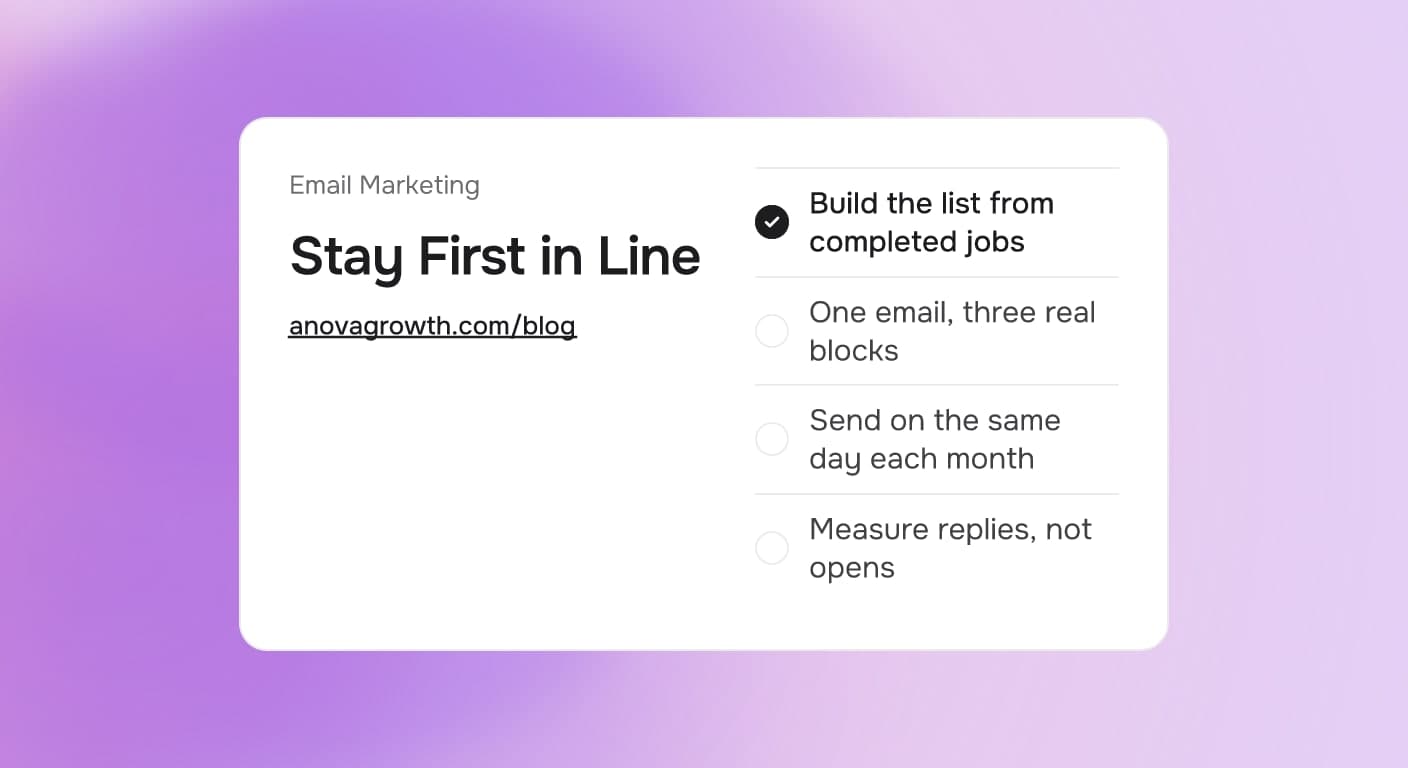
Quick answer
A monthly newsletter keeps your service business in front of the people who already hired you once. Each email has three blocks pulled from real work: a job story, one useful answer, and one clear offer. Send it the same day every month to a list built from your invoices and CRM. Past customers read it, remember you, and call you before they search for someone new.
Who the list is actually for
Most owners reject email because they picture strangers: cold lists, spam complaints, people who never called the office. That picture is what makes the idea die before it starts.
The profitable version is backwards. Your best audience is people who already paid you once. The homeowner whose water heater you replaced. The property manager you patch for each spring. The restaurant owner whose hood system you installed. They do not think about you week to week. When the next job comes up, they search, a competitor sits at the top of the results, and the cheapest relationship you already owned gets re-auctioned.
A newsletter keeps your name parked in that mental slot all year. It costs one focused hour a month instead of ad spend, and it works on customers who already trust you, which is the only audience where email reliably pays.
You already own the list. It sits in your invoicing software, your CRM, your calendar history, and your phone. Every completed job and every serious quote handed you a person, an address, and the exact service they cared about.
The decision table: three ways to stay in touch
| Approach | What it looks like | What it usually gets |
|---|---|---|
| Send nothing | Repeat work only when a customer remembers you | Competitors pick off easy jobs between yours |
| Occasional promotion blasts | One email whenever business is slow | Unsubscribes, a discount-trained list, no habit |
| Monthly newsletter built from job data | One email, same day each month, from real work | A familiar name in the inbox, replies, steady repeat calls |
The middle row is the trap. An email that only shows up when you need work teaches the whole list that your messages mean a pitch. A newsletter is a habit on a schedule; the emergency blast is a different tool and should stay out of the inbox rotation.
What goes in it, so you can keep it going
Three blocks, every month, in the same order. Every block starts from work you already did, so you never face a blank page with nothing to say.
One job story
Pick a single job from the past month and tell it plainly: what was wrong, what you found, what you did, what it cost. Two or three sentences each. Written like a text to a neighbor, not an ad.
What one block looks like for a plumbing company: "Job of the month: a 2012 water heater failed on a Friday. The tank rusted through from skipped flushes, so we swapped it the same day and set a flush reminder for next October. Five minutes of maintenance would have added years to the old one."
That block does three things at once. It proves you handle the work, it teaches a maintenance habit that creates future calls, and it reads like a story instead of a brochure.
One useful answer
Take one question your office actually answered this month and answer it in 60 to 100 words. End with a specific "call us if" line. You already wrote this answer once on the phone or in a text; now it does that job a thousand more times for free.
One clear offer
One thing, with one next step. A seasonal check, a discount window, a new service line. Not five offers stacked at the bottom, because a pile of offers reads as a pitch and trains readers to skim.
This is the same structure we use for the AnovaGrowth list. Every completed project becomes a contact tagged by service. Each monthly send starts as a draft written from what shipped that quarter: what we built, what it fixed, what it changed. Our first drafts read too polished and got silence. The plain ones, the "here is what we built and what broke" emails, get replies. Plain beats polished in an inbox, every time we test it.
Build the list from completed jobs, not purchased contacts
The list builds itself if you wire three sources together:
- Invoices and completed jobs. Every paid invoice or closed job adds a contact with a service tag and the job date. That tag is what lets you send relevant seasonal work later.
- Quote list, lighter touch. People who received a quote but did not book get a slower cadence and a different message than customers. They asked about you once; they are not strangers, and they are not customers yet.
- One permission line at invoicing. Add a line to the invoice or receipt email: "You will get one short email a month with maintenance tips. Unsubscribe anytime." Boring, honest, and it keeps deliverability clean.
Never buy contacts. A purchased list burns your sender reputation and drags every future email into spam, which hurts the invoices and reminders you are already sending. Deliverability is the foundation under all of it, and we walk through the fixes in our guide to why good emails land in spam.
If your list has gone quiet for a long stretch and needs a heavier restart than a newsletter, that is a different campaign, and we cover it in our piece on reactivating dormant customers.
Send once a month, the same day
Frequency is simple. Once a month, the same weekday, for the whole year. More than that and you drown in your own content. Less than quarterly and the list forgets who you are.
The part that actually fails is consistency, not writing. Businesses start strong for two emails, then a busy month kills the streak, and the newsletter quietly becomes a graveyard. Two fixes handle it:
- Automate the schedule, keep the judgment. The draft gets written from job notes three days ahead of the send date. A fixed calendar slot and a template that fills from CRM data mean the hardest step is reading the draft before it goes.
- Batch the source material. At the end of each week, your office drops the month's best job, the best question, and the pending offer into three template slots. Ten minutes weekly buys you a finished email on send day with no scramble.
What to measure, and what to ignore
Measure replies, phone calls that mention "the email you sent," and repeat bookings on tagged jobs. Those track money. Opens do not, because modern mail clients inflate open numbers with privacy features, so treat open rates as a rough heartbeat at best.
Unsubscribes are a health check, not a disaster. A list that prunes people who never wanted the work is a list that reaches the right inboxes. If unsubscribes spike, the content drifted into pitch territory, and moving one newsletter back toward useful answers fixes it.
Six questions owners ask before starting
How long before it pays off?
Longer than you want and faster than ads, if you keep the schedule. In our own sends, the first few went out to quiet numbers. Around the fourth or fifth send, replies and repeat work started showing up, which is the normal arc for a habit channel: the list learns the pattern before it acts on it.
Should every email sell something?
One offer block per email, yes. That is a sell, and the other two blocks are useful, which is what keeps the sends welcome. If every block sells, you built a promo list.
What if my list is tiny?
A list of 150 real past customers who remember the work is a working asset. Five thousand bought strangers is not. Start with whoever has paid or quoted recently and grow it with every job you close.
Do I need an expensive tool?
No. Start with whatever your CRM already includes, and if it has no broadcast feature, use a standard email marketing tool with proper unsubscribe handling. Do not send these from a personal or company inbox directly, because one blast from your main domain risks the reputation that your quotes and reminders depend on.
How do I keep it out of spam?
Use a proper email tool with your domain authenticated, one link early instead of a wall of links, and copy written for people. The technical side is a one-time setup, and our deliverability guide lists the records and tests in order.
Can AI write it?
AI can draft every block from your job notes, and that is how we produce drafts. The unreviewed draft is the risk: generic copy that mentions the trade but not your town, your crew, or your customer's names gets skimmed and dies. You add local detail and sign off on it. The drafting is automated; the voice and the judgment stay yours.
Key takeaways
- Your past-customer list is the cheapest growth channel you own, and it already exists in your invoices and CRM.
- One monthly email with three blocks from real work beats bursts of promotions, because a schedule builds a habit and a pitch builds unsubscribes.
- Build the list from completed jobs and quotes, with one honest permission line, and never buy contacts.
- Send on the same day monthly, with the draft prepared from job data a few days ahead.
- Measure replies and repeat bookings, ignore open counts, and treat unsubscribes as a content signal.
Next steps
If this stays on the to-do list for another quarter, nothing changes: next season's slow weeks fill with someone else's trucks. If it ships, one hour a month protects work you already earned.
Ready to stay in front of your best customers? Contact us and we will build the newsletter flow from your job data, from list wiring to the monthly send. It pairs well with the rest of the retention side, like automated referral systems and faster lead response, and it runs on the same automation backbone as our AI automation services.
Related articles
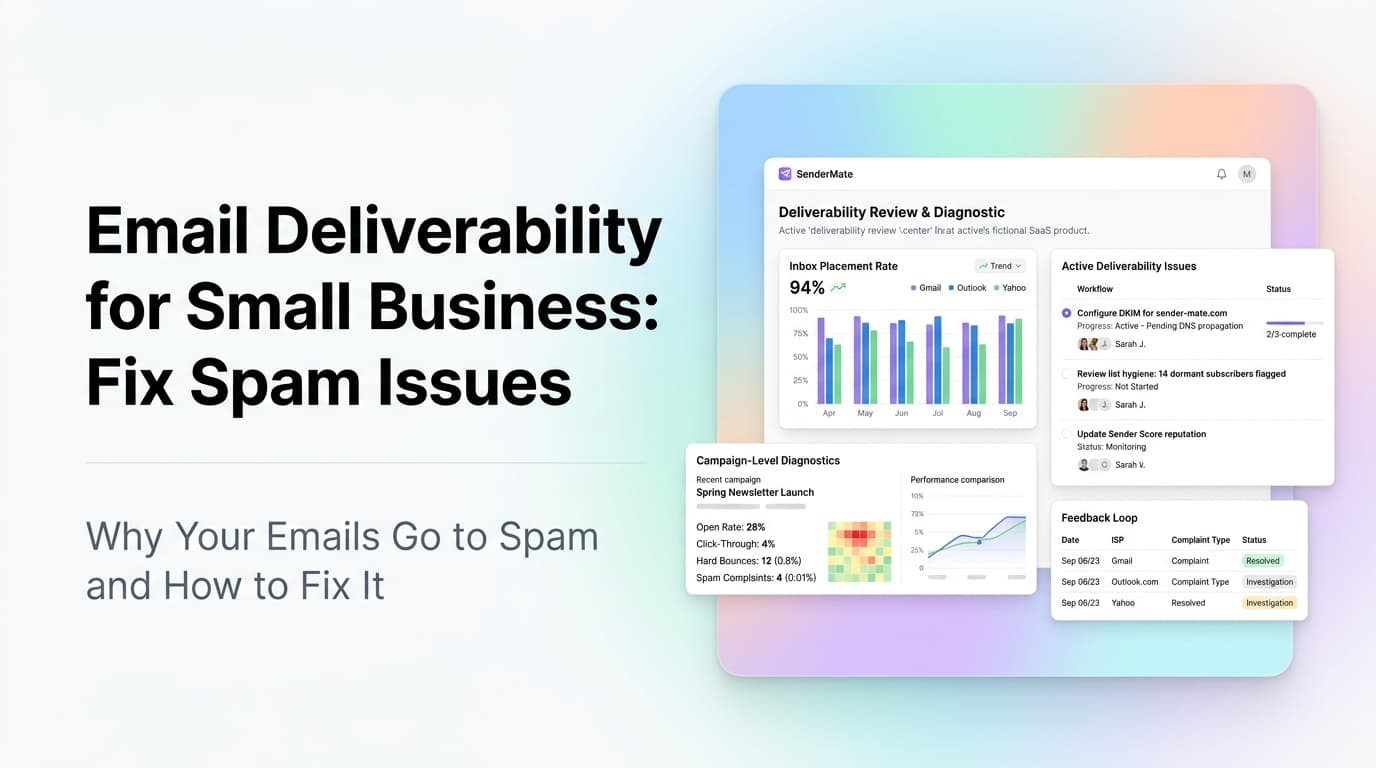
Email Deliverability for Small Business: Why Your Emails Go to Spam and How to Fix It
Your marketing emails landing in spam is costing you leads and sales. Here is why it happens and exactly how to fix deliverability for good.
Read the article: Email Deliverability for Small Business: Why Your Emails Go to Spam and How to Fix It
Google Search Console for Service Businesses: The Monthly Checklist That Finds Missed Leads
Search Console shows which searches already find you. Run this monthly checklist to catch indexing breaks, ranking drops, and easy lead fixes.
Read the article: Google Search Console for Service Businesses: The Monthly Checklist That Finds Missed Leads
Google Local Services Ads for Service Businesses: How Pay Per Lead Works and When to Run Them
LSA charges you per lead, not per click. See how Local Services Ads work, when they beat Google Ads, and how to keep junk leads from eating your budget.
Read the article: Google Local Services Ads for Service Businesses: How Pay Per Lead Works and When to Run Them
