Huntsville contractors do not need a vague AI strategy right now. They need tighter execution. A fresh Department of Defense contract modification awarded on June 24, 2026 to Torch Technologies in Huntsville is a practical signal that more local teams will be asked to coordinate engineering work, reporting, approvals, and delivery at higher speed (Department of Defense).
Start with the Huntsville location page if you want the market context first. The short version is simple: when contract volume or complexity rises, the first bottlenecks are usually internal handoffs, not talent.
What Changed in Huntsville This Month
On June 24, 2026, the Department of Defense announced a $33.6 million contract modification for Torch Technologies in Huntsville for hardware-in-the-loop and systems-of-systems support tied to missile defense work at Redstone Arsenal (Department of Defense).
That matters beyond one award.
Huntsville's local economy already runs on aerospace, defense, government contracting, research, and technical delivery. When a contractor in that environment takes on more integration-heavy work, pressure usually shows up in four places at once:
- Program managers need cleaner milestone visibility.
- Engineering teams need fewer manual handoffs.
- Compliance and documentation work expands quietly.
- Finance and operations teams get dragged into status chasing.
That last point is where a lot of margin disappears. The work is still getting done, but too much of the process sits in inboxes, spreadsheets, and disconnected systems.
Where Huntsville Contractors Should Automate First
The best entry point is not a flashy chatbot. It is operational plumbing.
| Workflow | What usually breaks | Better approach |
|---|---|---|
| Proposal to kickoff | Scope notes live in email threads and slide decks | Route approved scope into a shared delivery workspace automatically |
| Engineering handoffs | Teams re-enter status into multiple systems | Sync milestone, issue, and owner data across project tools |
| Compliance reporting | Audit prep starts too late and burns senior time | Trigger document collection and report assembly continuously |
| Vendor and subcontractor tracking | External dependencies go dark until a deadline slips | Build alerting and status workflows around procurement milestones |
| Invoice and burn tracking | Finance sees delivery reality too late | Connect contract milestones to billing and internal reporting |
For Huntsville companies, that usually means a mix of workflow automation, custom software, and selective AI automation, not one off-the-shelf tool dropped into a fragile process.
The Local Fit for AnovaGrowth Services
The Huntsville page already points to the right service mix. Aerospace and defense teams need secure integrations, back-office AI, and contractor-grade internal systems more than they need generic marketing automation.
Three use cases fit this market especially well:
1. Compliance and contract documentation workflows
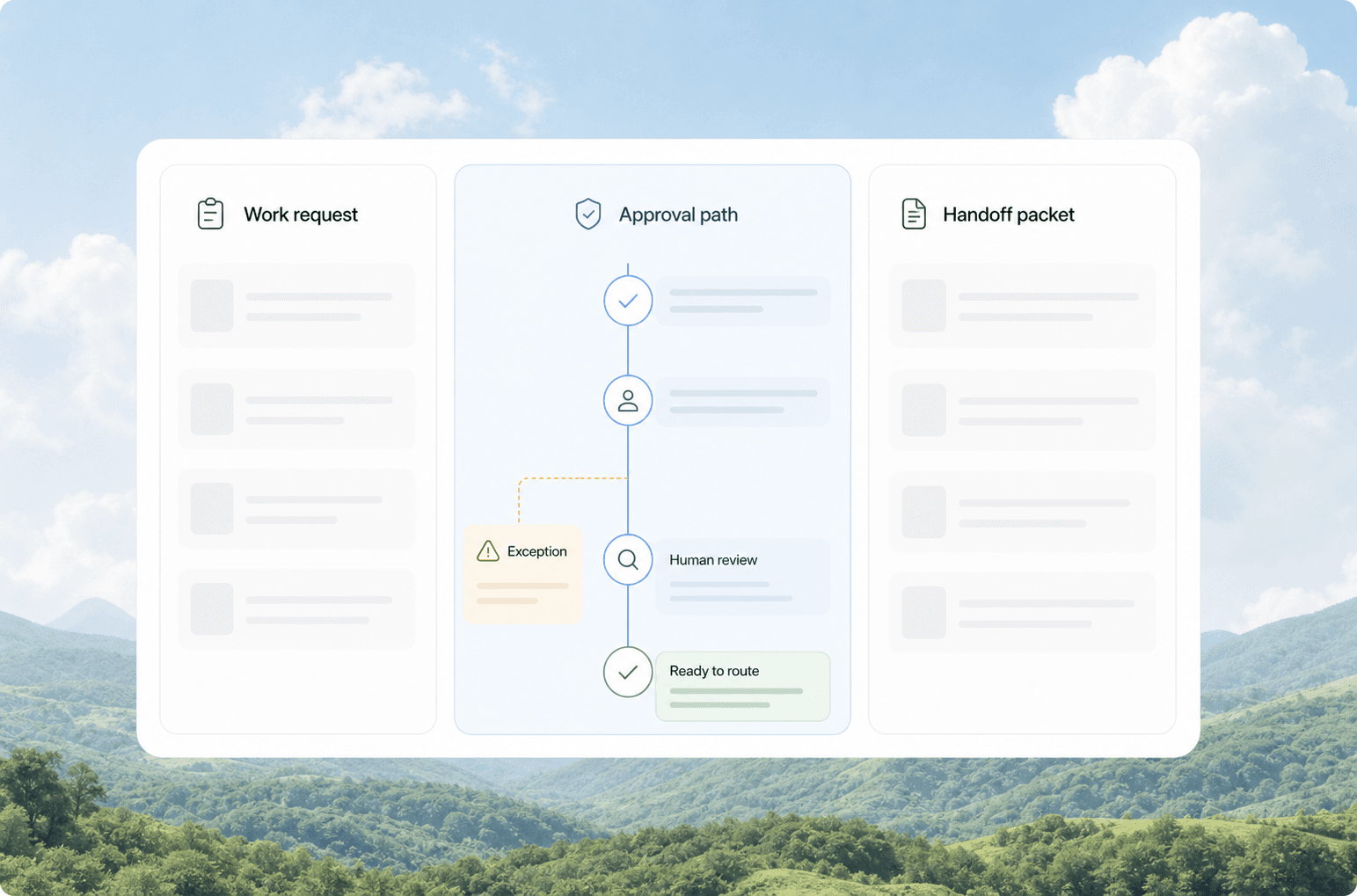
If a team still assembles status packages manually, the risk is not only wasted time. It is inconsistent reporting. Automated document routing, approval tracking, and evidence capture reduce that risk fast.
2. Program operations dashboards
Leaders need one place to see project phase, blockers, approvals, and burn. That is a strong fit for custom internal tooling when existing systems do not line up with how the contract actually runs.
3. Back-office AI for repetitive admin work
Invoice prep, summary generation, intake triage, and recurring reporting are all good AI targets because the rules are fairly stable and the cost of manual work adds up every week.
Proof Block: What This Looks Like in Practice
Here is the operating pattern we see most often.
A contractor wins or expands a program, then tries to absorb the extra coordination load by asking project leads to send more updates, join more meetings, and maintain more trackers. That usually creates reporting activity, not reporting clarity.
The better sequence is narrower:
- Map the handoff points between proposal, delivery, compliance, and billing.
- Remove duplicate data entry before adding AI.
- Add AI only where the inputs and review rules are stable.
That is the same logic behind our broader manufacturing AI automation guide. The tooling changes by industry, but the real win still comes from cutting operational drag before it spreads.
Related Huntsville Questions Worth Solving Next
- Which contract reporting steps still depend on manual copy and paste?
- Where do engineering updates stop being visible to finance or leadership?
- Which approvals should trigger downstream tasks automatically?
- What recurring documents could be assembled from live system data instead of end-of-month scrambles?
- Which workflows need secure internal software instead of another spreadsheet?
Those are better starting questions than "How do we use AI?" because they tie directly to time, risk, and delivery quality.
What This Means for Huntsville Operators
The June 24 Torch award does not prove every Huntsville contractor needs the same stack. It does show the kind of work that keeps expanding in this market: complex, integration-heavy programs that create hidden coordination costs. That inference is the useful part.
If your team serves Redstone, defense primes, federal agencies, or the broader Rocket City technical ecosystem, now is the right time to audit the internal workflows around delivery, documentation, and reporting. The companies that tighten those systems early usually protect margin better when the next program ramps.
For a wider view of how we approach this market, visit our Huntsville page. If you already know the bottleneck is internal execution, contact us and we can map the first workflow worth fixing.