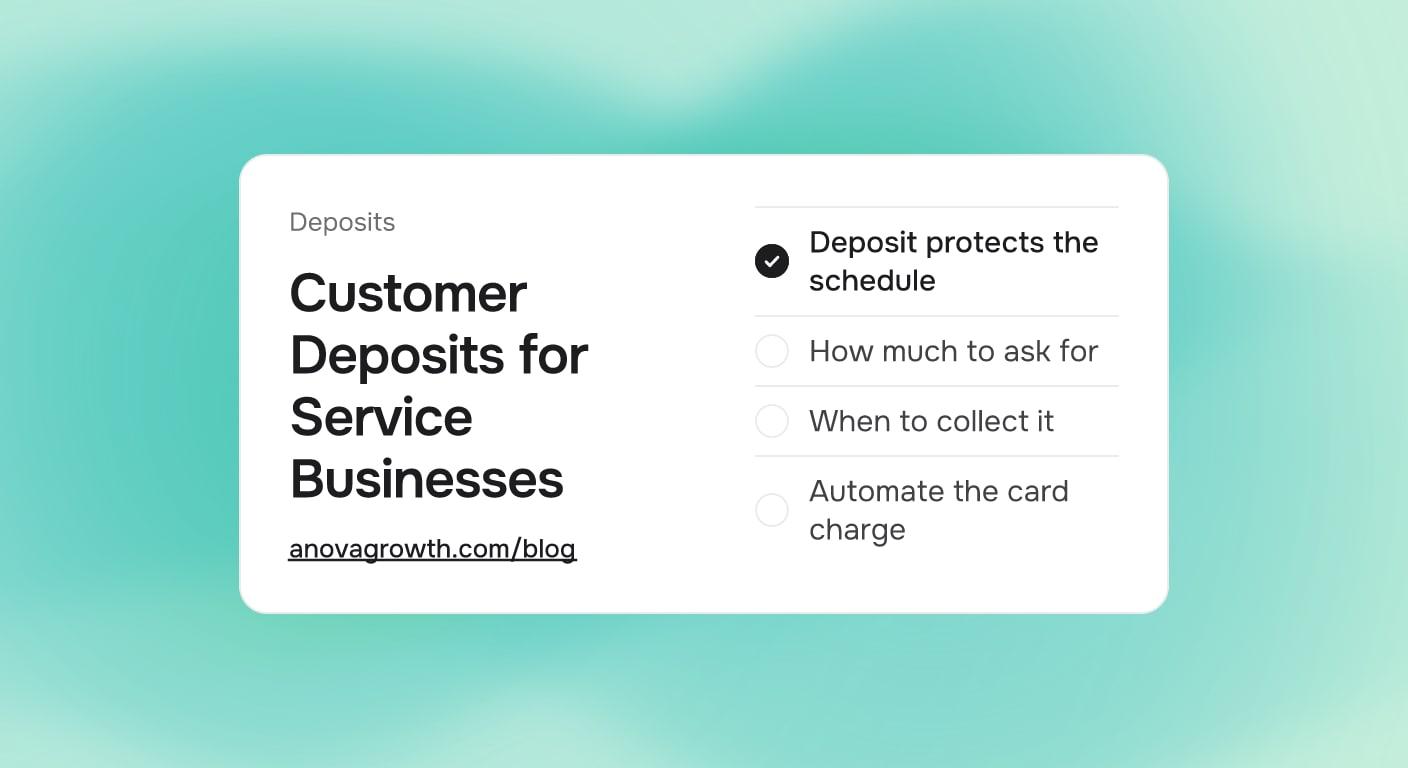
Customer Deposits for Service Businesses: When to Collect and How Much
Deposits protect your schedule and your cash flow. Here is how much to ask for, when to collect it, and how to automate the payment step.

An open appointment slot costs more than the hour on the calendar. The crew still gets paid, the truck still rolls, and the materials for that job are already staged on the shelf. When a customer cancels the night before or never answers the door, the schedule rarely gets filled back in time. The revenue for that slot is simply gone.
Customer deposits move that risk off your books and onto the booking decision, where it belongs. People who have paid something show up. The ones who will not commit a small amount today were going to cost you more later. This guide covers how much to collect, when to collect it, how to handle pushback, and how to make the whole step run on its own.
Quick Answer
Collect a deposit when a booking costs you money before the job starts: reserved crew time, ordered materials, or a held appointment slot. Most service businesses should ask for a flat booking fee on visits, full payment on small material jobs, and 20 to 50 percent at approval on projects. Take it by card at the moment of commitment, then automate the receipt and the balance reminder.
Why a Deposit Protects the Schedule
A booking creates costs before any work happens. A missed appointment burns that money in four places at once:
- Crew time. You pay technicians for the day whether every stop produces revenue or not.
- The slot itself. You almost certainly said no to another customer for that window.
- Materials and staging. Ordered parts, mixed paint, loaded equipment, reserved rentals.
- The scramble. Someone spends the next morning calling around to rebuild the route.
A written cancellation policy is words on a page. A deposit is money already collected, and it changes behavior on both sides. The customer values the appointment they paid to hold, and you can stop hoping a strongly worded confirmation email is protection.
If you already bill trip charges or minimum service call fees, a deposit is the same idea applied one step earlier in the booking. The trip charge guide explains how to price the truck roll itself.
Deposit Scenarios at a Glance
Pick the row that matches the job in front of you:
| Situation | What to collect | Why it works |
|---|---|---|
| Emergency or after-hours call | Service call fee in full at dispatch | You pay for the truck roll whether the customer is home or not |
| Small job with materials | Full payment at booking | Cheap to collect, and these are the jobs that get ghosted most |
| Material-heavy or multi-day project | 20 to 50 percent at approval, balance on milestones | The deposit covers ordered materials and keeps cash moving through the job |
| Recurring maintenance agreement | First billing cycle paid now | The reserved slot is the product, so pay for the schedule |
| Quote older than two weeks | Deposit at acceptance with refreshed pricing | A stale yes creates a price dispute; a deposit forces a current decision |
How Much to Ask For
State your deposit policy in plain numbers and put it everywhere a customer can book: the phone script, the confirmation text, the invoice. Three structures cover most service businesses:
- Flat booking deposit by job type. One number per service. It is easy to say on the phone and easy to defend: a set fee to hold a cleaning visit, a set fee to hold a service call window.
- Percentage of the approved estimate. Twenty percent for lighter work, up to half when materials dominate the cost, taken at approval and credited to the final invoice.
- Full payment for small jobs. If the ticket is small and materials are required, asking for the whole amount at booking is faster than collecting twice and chasing the difference later.
Keep the percentage proportionate to what you have already spent by start time. On home improvement projects, several states limit how much a contractor can collect before work begins, so check the rule where you operate before you settle on a number. The safe policy for most shops is enough to cover materials plus a meaningful share of the labor.
When to Collect It
The best moment is the earliest moment the customer is committed, and that differs by job type.
- Scheduled visits like cleaning, maintenance, and inspections: collect at booking. The customer chose the slot, and the payment is part of choosing it.
- Estimate-driven projects: collect at approval. The deposit doubles as the commitment moment, while the price is fresh and the customer is engaged. Waiting two weeks past approval to circle back is how approvals go stale.
- Emergency calls: collect at dispatch, in full, as the service call fee.
The worst moment is after the job. A balance due on the invoice is a payment, not protection. Collect deposits while the job is still a promise, and let the invoice settle the remainder.
How to Handle Pushback
You will hear objections. Keep the answers short and consistent:
- The budget objection. The deposit applies to the final invoice. It is not a separate fee. Say that sentence the same way every time.
- The trust objection. Offer the written cancellation and refund terms before anyone asks for them. Trust comes from terms in writing, and from you holding them fairly for every customer.
- The pay-on-completion habit. For projects, offer milestone billing. For visits, offer payment on completion with a card kept on file in your system. Give a structure, because customers who resist deposits usually resist surprises even more.
Then put the refund rules in writing: what happens when the customer cancels more than a week out, inside a week, or the same day. A simple ladder like full credit toward a rescheduled date, partial refund with notice, forfeited inside 24 hours, is enough for most shops. The exact numbers matter less than deciding them before the first awkward phone call.
Automating the Deposit Step
Collecting deposits by hand means chasing card numbers by phone, writing receipts, and remembering who still owes a balance. The automated version is a short chain:
- Charge at booking. The booking link or the dispatcher takes the card and charges the deposit in the same step.
- Tag the job record. The CRM marks the job as deposit paid, with the amount and the date.
- Confirm in writing. The receipt goes out by text and email automatically, so the policy is documented without anyone typing it.
- Remind for the balance. The pre-visit reminder shows what is still owed, and the invoice nets the deposit out. The invoice reminder guide covers the balance-chasing half in detail.
We build this flow for service clients, and the step that actually matters is the tag. When the CRM knows a deposit is paid, the reminder, the route sheet, and the final invoice all inherit it. When it does not, somebody reconciles card charges against the calendar by hand every week, and that manual step is where deposits get lost. In the booking flows we set up, the whole chain is usually three or four connected steps, and it is exactly the kind of work described in our AI automation services.
Example, using round numbers. A two-person crew loses four booked days a month to no-shows and late cancellations, at an average ticket of $400. That is $1,600 of scheduled work gone, before crew pay. A $100 deposit moves each of those decisions back to booking day, when the customer still has an open calendar. A customer who declines the deposit leaves the slot open for someone who will commit, and pairing the policy with automated appointment reminders keeps the customers who did pay showing up on time.
Common Fan-Out Questions
How much deposit should a small service business take?
On small jobs, take the full amount at booking when materials are involved, since the cost of a ghosted appointment is close to the cost of the job. On larger projects, 20 to 50 percent at approval covers materials and shows commitment without squeezing the customer's cash flow.
What do I do when a customer refuses to pay a deposit?
State the policy once, calmly, and hold it: the deposit comes off the invoice and the terms are in writing. If the customer still refuses for a scheduled visit, offer a prepaid alternative or book the job as capacity allows, and leave the slot open for a customer who will commit. A policy you waive on the first phone call is not a policy.
Do I have to refund the deposit if the customer cancels?
Only the terms you wrote say so. Put the cancellation ladder in writing before you take the first deposit: full credit toward a rescheduled date, partial refund with notice, forfeited inside your short cancel window. Customers who accepted the policy at booking rarely dispute it later.
Should a deposit come out of the final invoice?
Yes, when the deposit is a down payment. The invoice shows the full price, the deposit already collected, and the balance due. For flat booking fees on visits, the deposit is simply the payment for that visit.
Can my booking link collect the deposit automatically?
Most modern booking and field service tools support a card capture or partial payment at booking. The setup that matters is the tag back into your job record, so reminders and invoices know the deposit is paid. If your booking tool and CRM will not talk to each other, fix that connection before you announce the policy to customers.
Key Takeaways
- Collect a deposit whenever a booking creates a cost you cannot recover: crew time, ordered materials, a committed slot.
- Match the amount to the exposure. Small jobs with materials: full payment. Projects: 20 to 50 percent at approval. Emergency calls: the service call fee.
- Collect while the job is still a promise. A balance due after the work protects nothing.
- Write the cancellation and refund ladder before the first deposit, not after the first dispute.
- Automate the charge, the job tag, and the balance reminder, so the policy runs the same on a busy Saturday as on a quiet Tuesday.
Next Steps
Start with one job type where no-shows hurt most, set the number, and put the policy in writing. Take deposits through your booking link, tag the paid jobs in the CRM, and let reminders do the chasing. Once the chain runs clean for a month, extend it to the rest of the schedule.
Ready to set this up? Contact us to discuss how we can help your business.
Related articles

Birmingham Biotech Growth: Build Workflows Before Research Scales
UAB's new $192 million research building raises the bar for Birmingham healthcare and biotech operations. Build the workflows that keep complex work moving.
Read the article: Birmingham Biotech Growth: Build Workflows Before Research Scales
Charlotte CLT Beyond: Build Workflows Before Airport Growth
Charlotte's proposed CLT Beyond program points to more commercial activity. Local operators should fix lead, quote, and follow-up workflows before demand arrives.
Read the article: Charlotte CLT Beyond: Build Workflows Before Airport Growth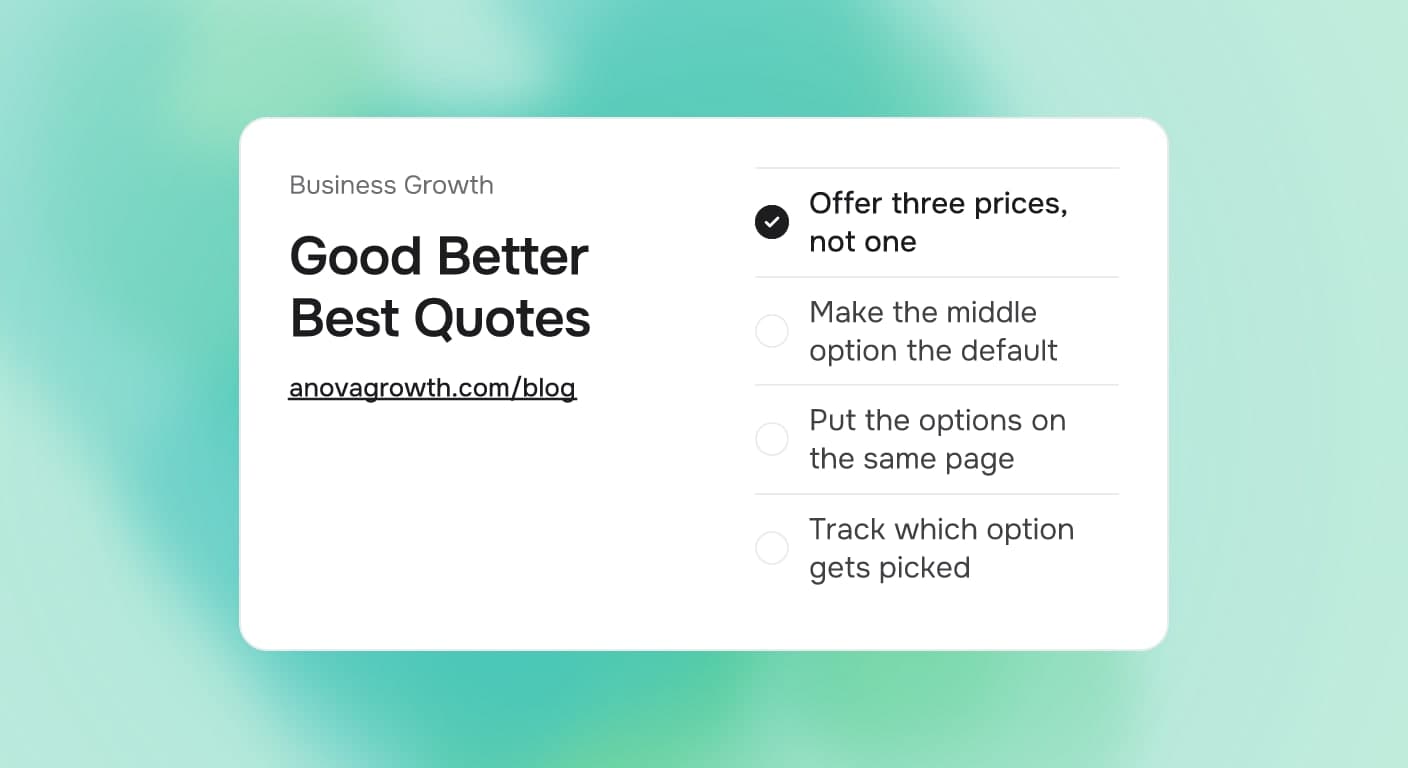
Good Better Best Quotes: Pricing Options That Close More Service Jobs
Stop quoting a single price. Learn how good, better, best quote options let customers self-select, protect margins, and close more service jobs.
Read the article: Good Better Best Quotes: Pricing Options That Close More Service Jobs
