Charlotte just got another clear growth signal. Mecklenburg County announced a major new regional campus from Averitt near Charlotte Douglas International Airport, with new jobs and a larger footprint for transportation operations.
If you run a business in this market, that kind of expansion matters even if you are not in freight. More movement in and around CLT means tighter response windows, more inbound calls, and more opportunities to lose leads when your team is buried in manual work.
For local context, start with the Charlotte market page, where banking, healthcare, automotive, and distribution are already major focus sectors.
What This Development Signals for Charlotte Operators
A new logistics campus does not just create jobs. It usually increases the pace of day-to-day commercial activity across service providers, vendors, and B2B partners.
For Charlotte companies, three pressure points show up fast:
- Quote turnaround slows down when request volume spikes.
- Follow-up gets inconsistent when leads come in after hours.
- Dispatch and scheduling teams spend too much time on repetitive status updates.
Those are workflow problems, not hiring problems.
Where AI Automation Creates Fast Wins
The highest-return move is to automate the repetitive handoffs between sales, operations, and customer communication. That is exactly what AI automation services are built to solve.
1) Lead Capture and Qualification
When a lead submits a form, calls, or messages after hours, an AI workflow can instantly:
- capture contact and job details
- route the lead by service type or territory
- trigger a structured follow-up sequence
This keeps speed-to-lead high without forcing your team to monitor every channel manually.
2) Quote-to-Dispatch Handoffs
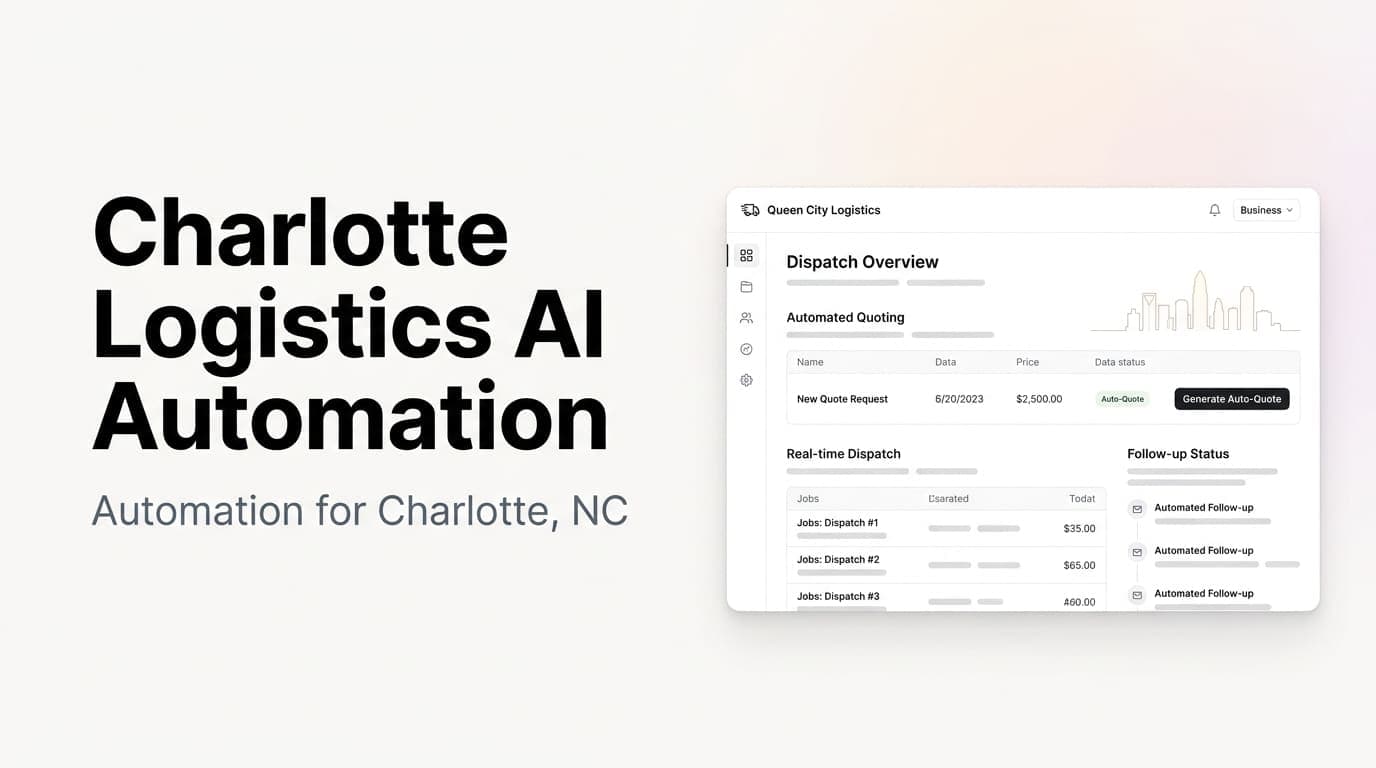
If your quote process still lives in inbox threads and spreadsheets, volume growth will expose it quickly. Automating quote approvals, handoff rules, and customer updates reduces dropped requests and bottlenecks.
3) CRM Follow-Up Discipline
Charlotte businesses that grow fastest usually have one thing in common: consistent follow-up. With CRM-connected automation, every estimate, callback, and status update can be scheduled and tracked without manual reminders.
Why This Matters Beyond Logistics
Charlotte's economic momentum touches multiple industries. Banking and healthcare vendors, field-service providers, and construction partners all feel the effects of increased commercial throughput.
That means workflow automation is not a "nice to have" in this market. It is a way to keep service quality high while demand changes week to week.
If you want a practical framework, this related guide breaks down common bottlenecks and what to automate first: The 7 Workflow Bottlenecks AI Automation Should Fix First.
Key Takeaways for Charlotte Business Owners
- The new regional logistics investment near CLT is a local signal that operational speed will matter more this year.
- Most growth friction comes from manual handoffs across lead intake, quoting, and dispatch.
- AI and workflow automation can improve response time and consistency without adding unnecessary overhead.
Next Step
If your Charlotte team is feeling operational drag, map your lead-to-delivery workflow and automate the first two handoffs this month.
When you are ready, talk with AnovaGrowth about building an automation stack that fits your process and market.