Why Your HVAC Company Needs AI Chatbots Before Summer
Learn how HVAC AI chatbot can transform your business operations and bottom line.

The Hidden Cost of a Missed HVAC Lead
Every missed call, slow email reply, and "we'll call you back tomorrow" message costs your HVAC business money you never see. The summer surge makes this problem worse. When temperatures climb, homeowners act fast. If your phone goes to voicemail at 8 PM or your website offers no way to book outside business hours, those leads vanish to a competitor who answered faster.
CallRail's March 2026 data shows that 97% of homeowners consider response speed when choosing an HVAC provider. With average HVAC marketing costs at $9.49 per click and a 15.11% conversion rate, a missed lead is not a minor inconvenience. It is an expensive write-off.
What the Numbers Say About After-Hours Demand
CallRail reports that 41% of online-booked jobs arrive after hours. Your office closes at 5 PM, but your website stays open. That gap costs you.
Jobber's 2026 report, based on surveys of 1,050 U.S. home-service owners conducted in December 2025, confirms the pressure. More than 70% of customers expect a same-day response. More than half expect a response within an hour. Your team cannot work 24/7, but your leads do not care about your business hours.
The same data shows that HVAC leads AI adoption among home-service trades. It is the most booked trade in the sector. Businesses that deploy AI tools for quoting, invoicing, and email already outpace those still relying on manual processes. An HVAC AI chatbot is the next logical step for companies that want to stop losing leads after dark.
WebFX's May 2026 study tested 100 commercial home-services keywords across five trades, running each search five times for 500 total searches. The Local Pack appeared in 488 of those searches, or 98% of the time. When Local Services Ads ran, they ranked first 100% of the time. Your Google Business Profile and local search presence matter more than ever. But search visibility means nothing if the lead that finds you walks into a dead end.
How an HVAC AI Chatbot Captures Leads Around the Clock
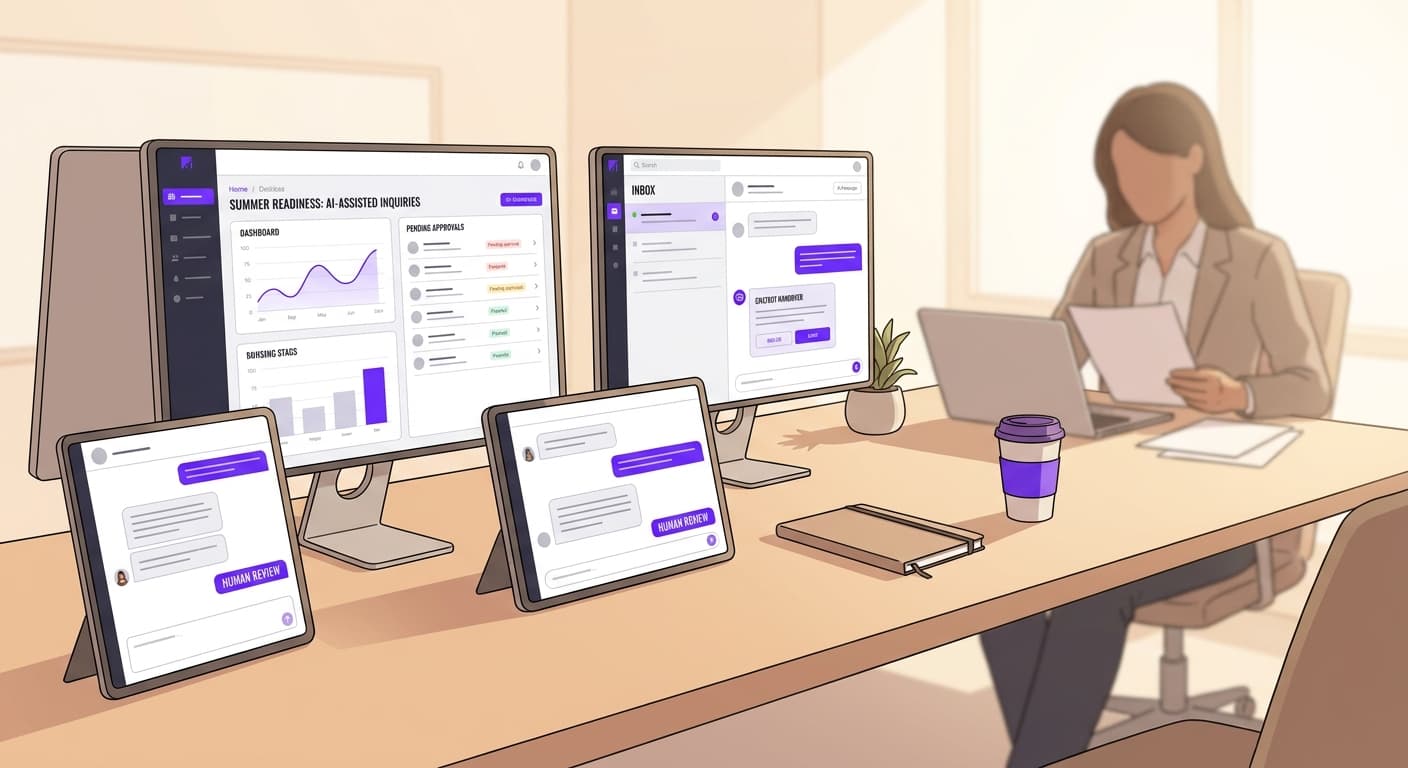
A chatbot sits on your website and answers questions the moment a visitor arrives. It greets them, asks what service they need, and collects their ZIP code to confirm they are in your service area. It qualifies the urgency level, offers appointment windows that match your availability, and hands the lead directly to your team or into your CRM.
Here is what that workflow looks like in practice:
- A homeowner texts your chatbot at 10 PM because their air conditioning unit blows warm air.
- The chatbot confirms they are in your service area, asks a few diagnostic questions, and requests a photo of the error code if applicable.
- It offers three appointment slots that work with your schedule.
- The homeowner books. You receive the full conversation and job details before your office opens.
This is not science fiction. This is what modern HVAC marketing automation looks like in action.
Common Questions About HVAC Chatbots
Will a chatbot replace my receptionist? No. A chatbot handles the after-hours volume and initial qualification. Your team handles the complex jobs, the phone calls they prefer to take, and the relationships that need a human voice.
What if a chatbot gives wrong information? You control what the chatbot says. You set the responses, approve the FAQ answers, and define the escalation rules. A chatbot does not guess. It follows your scripts.
How long does it take to set up? Most deployments take two to four weeks, depending on your CRM integration and how much you customize the conversation flow. The setup pays for itself the first time it books a job that would have otherwise gone to voicemail.
Does it actually convert leads? Yes, when you track the right metrics. CallRail's data shows that 66% of home-services businesses cite lead follow-up and conversion as a major challenge. A chatbot addresses that challenge by responding instantly, qualifying the lead, and booking the appointment before the prospect moves on.
Measuring What Matters: Chatbot Metrics That Drive Revenue
Do not track vanity metrics. Track what affects your bottom line.
- Lead capture rate: What percentage of chatbot visitors leave their contact information?
- Booking conversion: What percentage of conversations result in a scheduled appointment?
- Response time: Your chatbot responds in seconds. That beats any competitor still relying on voicemail.
CallRail's data proves that speed influences provider choice. Your chatbot gives you an unfair advantage: instant response, every time, at any hour.
Review these numbers monthly. If your lead capture rate is low, your chatbot script needs work. If your booking conversion is low, your appointment windows may not match customer needs. These are fixable problems with real data.
Getting Ready Before Summer Arrives
The time to deploy is now. Summer HVAC demand spikes follow a predictable pattern. You need weeks to integrate your chatbot with your existing systems, train your team on escalation workflows, and test the experience with real visitors before the rush hits.
CallRail reports that 72% of home-services businesses plan to increase their marketing budgets in 2026. Your competitors are moving. If you are still relying on voicemail and a contact form from 2019, you are falling behind.
An HVAC AI chatbot bridges the gap between your business hours and your leads' schedules. It captures the leads you are currently losing, qualifies them before your team sees them, and books appointments while your competition sleeps.
Key Takeaways
- Summer HVAC demand follows a predictable pattern. The time to prepare your lead capture system is now, not when the phones start ringing.
- An HVAC AI chatbot handles the 41% of online bookings that arrive after hours, giving you 24/7 coverage without hiring overnight staff.
- Specific numbers back the urgency. Ninety-seven percent of homeowners value response speed, HVAC CPC averages $9.49 per click, and conversion rates sit at 15.11%. Every missed lead has a real dollar cost.
- Choose a chatbot that integrates with your existing CRM, scheduling tools, and communication channels. Standalone tools create extra work.
- Track lead capture rates, booking conversions, and response times monthly. These metrics tell you whether your chatbot earns its keep.
Your Next Move
You have the data. You know the problem. The question is whether you act before your competitors do.
An HVAC AI chatbot does not replace your team. It gives your team more time to focus on the jobs that matter while making sure no lead slips through the cracks after hours. It responds in seconds, qualifies prospects, books appointments, and hands off clean leads to your dispatch system.
Deploy before summer. Measure the results. Adjust based on what converts.
Ready to get started? Contact us to discuss how we can help your business.
Related articles
AI Phone Answering for Service Businesses: Stop Missing Calls, Start Booking Jobs
Service businesses miss 30-50% of inbound calls. AI phone answering handles after-hours, peak times, and overflow without hiring more receptionists.
Read the article: AI Phone Answering for Service Businesses: Stop Missing Calls, Start Booking Jobs
The Maintenance Revenue Leak HVAC Companies Don't See
Most HVAC companies barely touch their maintenance list. AI re-engagement automation brings customers back on schedule.
Read the article: The Maintenance Revenue Leak HVAC Companies Don't See
How HVAC Companies Lose Leads (And What AI Does About It)
Most HVAC companies lose half their leads to phone tag and slow follow-up. AI intake automation fixes both without adding staff.
Read the article: How HVAC Companies Lose Leads (And What AI Does About It)
