Local SEO for Charleston Hospitality and Real Estate
Charleston businesses win local search by matching strong websites with neighborhood intent, review signals, and fast follow-up.


In Charleston, Search Visibility Shapes First Impressions
Charleston businesses live on intent-rich searches. Visitors look for hotels downtown, restaurants near King Street, and venues for specific weekends. Locals search for real estate teams, property managers, and neighborhood-specific services across Charleston County.
That makes local SEO a revenue channel, not a side task. If your business does not show up when people are ready to act, someone else gets the booking or inquiry.
What Local SEO Means in This Market
A Google Business Profile matters, but it is only one layer. Strong Charleston local SEO usually includes:
- a fast site with clear service pages
- neighborhood and service-area relevance
- consistent business info across listings
- review generation and review responses
- content built around local search intent
- conversion paths that turn visits into leads
The goal is not generic traffic. It is to rank for searches with clear buying intent.
Hospitality SEO Needs Structure
Charleston hospitality brands usually care about presentation, but rankings depend on structure. A restaurant or hotel site needs clear page titles, mobile speed, indexable menus or room pages, and obvious booking paths.
Supporting content helps too. Hotels can create pages around event weekends, neighborhood guides, or seasonal travel. Restaurants can target searches tied to private dining, brunch, or wedding traffic. That gives Google more context and gives searchers a clearer reason to click.
If the site is slow or awkward on mobile, rankings alone will not help much. Good web development is part of local SEO in markets like Charleston.
Real Estate SEO Is Hyperlocal
Charleston buyers rarely search in broad terms. They search by neighborhood, lifestyle, property type, and school zone. That is why broad pages are usually not enough.
Stronger pages match real searches such as:
- downtown Charleston condos
- Mount Pleasant family homes
- Daniel Island market trends
- investment property in Charleston County
The same logic works for brokerages, property managers, and vacation rental groups. And when inbound lead volume rises, pairing SEO with AI automation helps teams follow up faster.
Reviews and Neighborhood Signals Matter
In crowded categories, reviews influence clicks before someone even reaches your site. A steady review strategy improves trust, increases local relevance, and gives you customer language you can reflect in content.
Neighborhood signals matter too. If you serve West Ashley, James Island, Mount Pleasant, or Folly Beach, your site should show that naturally through real pages and useful content, not keyword stuffing.
Key Takeaways
- Charleston local SEO works best when it targets specific buyer intent.
- Hospitality and real estate businesses need neighborhood-level relevance.
- Reviews, listings, and mobile site quality all affect visibility.
- Rankings matter more when your site and follow-up process convert the click.
Build for How Charleston Customers Actually Search
Start with the services you want to rank, the districts that matter, and the questions customers ask before they book or reach out. Then build pages and content around that real demand.
If your rankings are not turning into leads, your SEO, website, and conversion flow are probably not aligned yet. We help Charleston businesses tighten that up through web development, free audits, and direct planning through our contact page.
Related articles

Why Rome, Georgia Businesses Need Digital Marketing That Actually Works
Rome GA businesses are discovering that generic marketing doesn't cut it. Here's what local companies need from a digital marketing partner.
Read the article: Why Rome, Georgia Businesses Need Digital Marketing That Actually Works
Google Business Profile Optimization for Service Businesses: Get Found, Get Called, Get Hired
Most service businesses leave money on the table with an incomplete GBP. Here is exactly how to optimize yours for calls, bookings, and map pack rankings.
Read the article: Google Business Profile Optimization for Service Businesses: Get Found, Get Called, Get Hired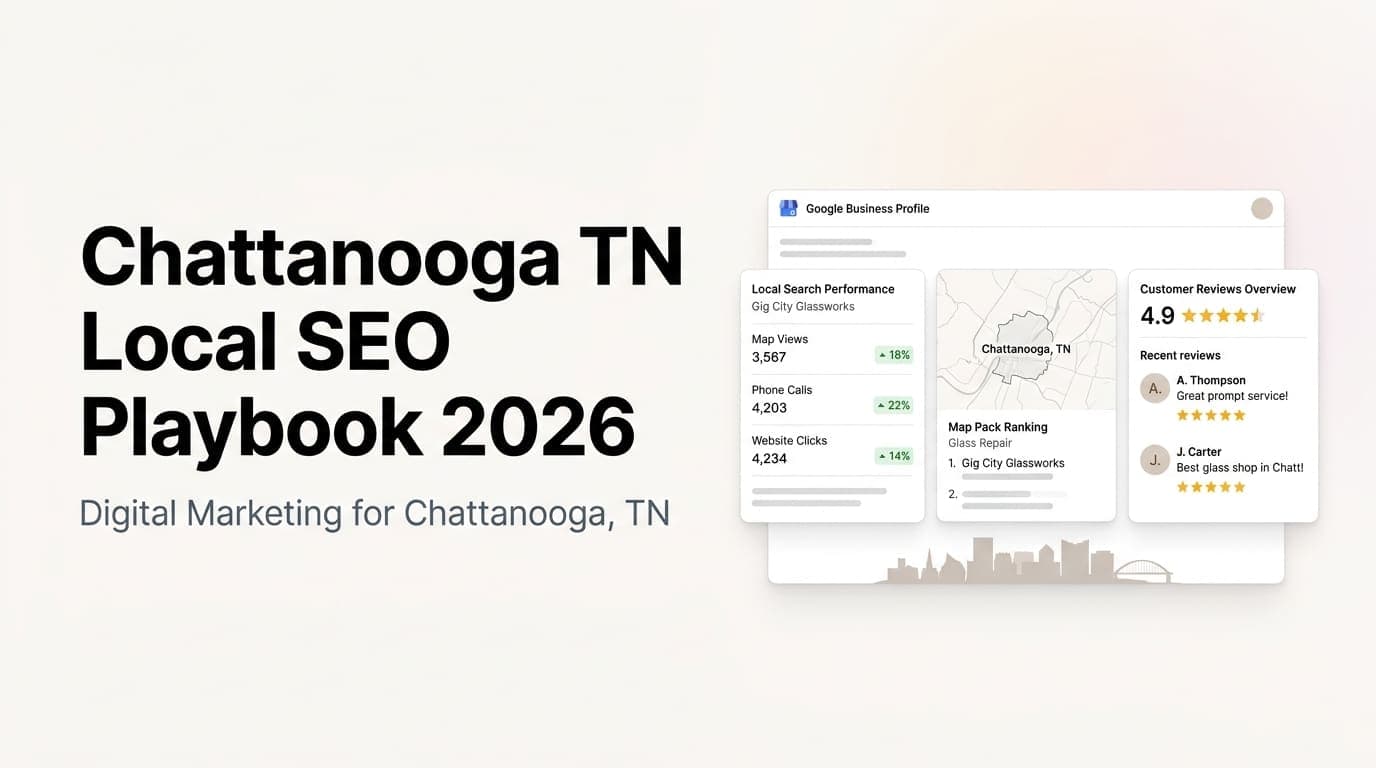
Chattanooga TN Local SEO in 2026: How to Win the Map Pack and the Phone Calls
Chattanooga businesses can dominate local search with the right GBP, review, and content signals. Here's the 2026 playbook for the Gig City market.
Read the article: Chattanooga TN Local SEO in 2026: How to Win the Map Pack and the Phone Calls
