If your AI plan is still a chatbot in a side tab, you are starting from the wrong place.
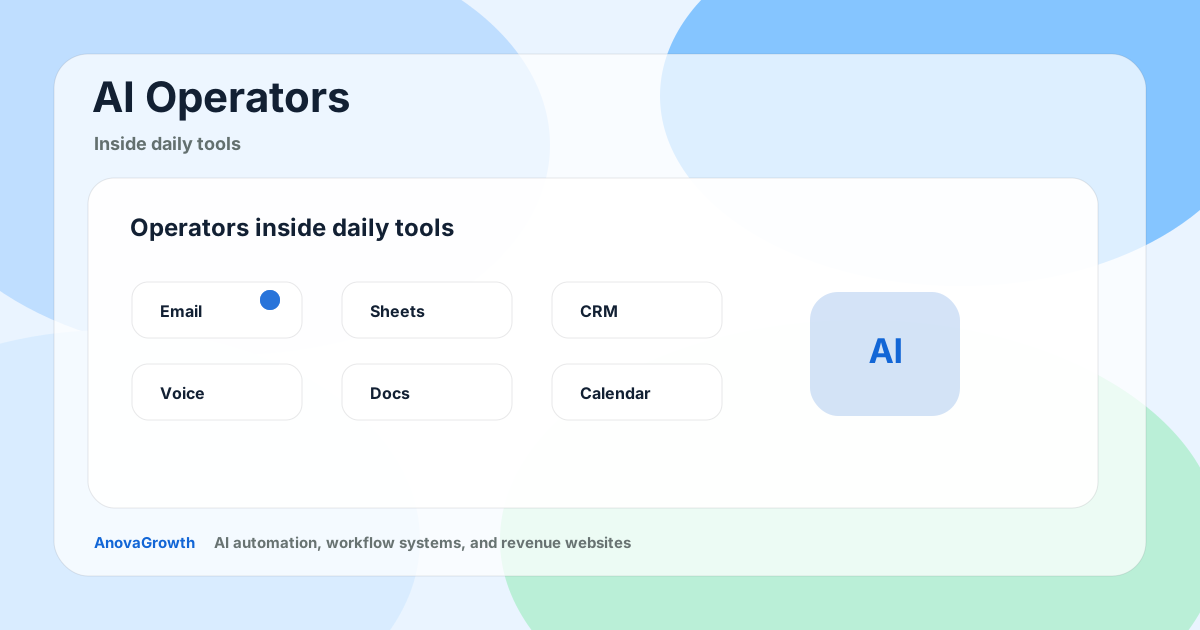
The biggest shift in the last week is not one new model. It is where AI is being deployed. New launches from OpenAI, Anthropic, AWS, NVIDIA/ServiceNow, and Google all point to the same move: AI is getting embedded into the interfaces your team already uses to run the business.
That matters because embedded AI is easier to adopt, easier to govern, and much more likely to produce real operating gains.
Five Signals From the Last 7 Days
1) Voice is becoming an execution interface, not just transcription
On May 7, OpenAI released new realtime voice models in the API, including GPT-Realtime-2 plus live translation and streaming transcription. The practical shift is that voice systems can now listen, reason, and act during a conversation instead of waiting for a full request and handing back text.
For business owners, this is the difference between "voice notes" and actual workflow execution: triaging service calls, collecting structured intake, and routing next actions immediately.
2) Default AI assistants are getting more reliable for day-to-day work
On May 5, OpenAI rolled out GPT-5.5 Instant as the default ChatGPT model and reported large reductions in hallucinated claims on high-stakes prompts. Whether you use ChatGPT directly or through connected tools, this improves baseline trust for routine drafting, planning, and analysis tasks.
Higher reliability does not remove review, but it lowers the overhead that kills adoption.
3) Agent templates are being packaged around real workflows
On May 5, Anthropic announced ten ready-to-run finance agent templates and broader Microsoft 365 add-in coverage. While the examples are finance-heavy, the bigger pattern applies to any service business: teams are moving from blank-slate prompting to pre-structured workflows that carry context across apps.
That same playbook is what turns AI from an experiment into repeatable operations.
4) Agents can now execute paid actions with governance
On May 7, AWS announced AgentCore Payments in preview, built with Coinbase and Stripe, for agents that need to access paid APIs, content, MCP servers, and other services. This is a key milestone because it addresses one of the biggest production blockers: controlled spend when agents act autonomously.
If AI can only recommend and never transact, many workflows stall at the final step.
5) Enterprise desktop agents are being built with control planes
On May 5, NVIDIA and ServiceNow expanded their partnership around governed autonomous desktop agents. The notable part is not only autonomy. It is the governance layer: policy control, auditability, and runtime constraints tied to enterprise workflows.
This is exactly the missing piece for companies that tested AI but could not ship it safely.
What This Means for Small and Midsize Businesses
You do not need to chase every release. You need to upgrade your implementation model.
The old model:
- Pick one model
- Run prompts manually
- Hope team behavior changes
The new model:
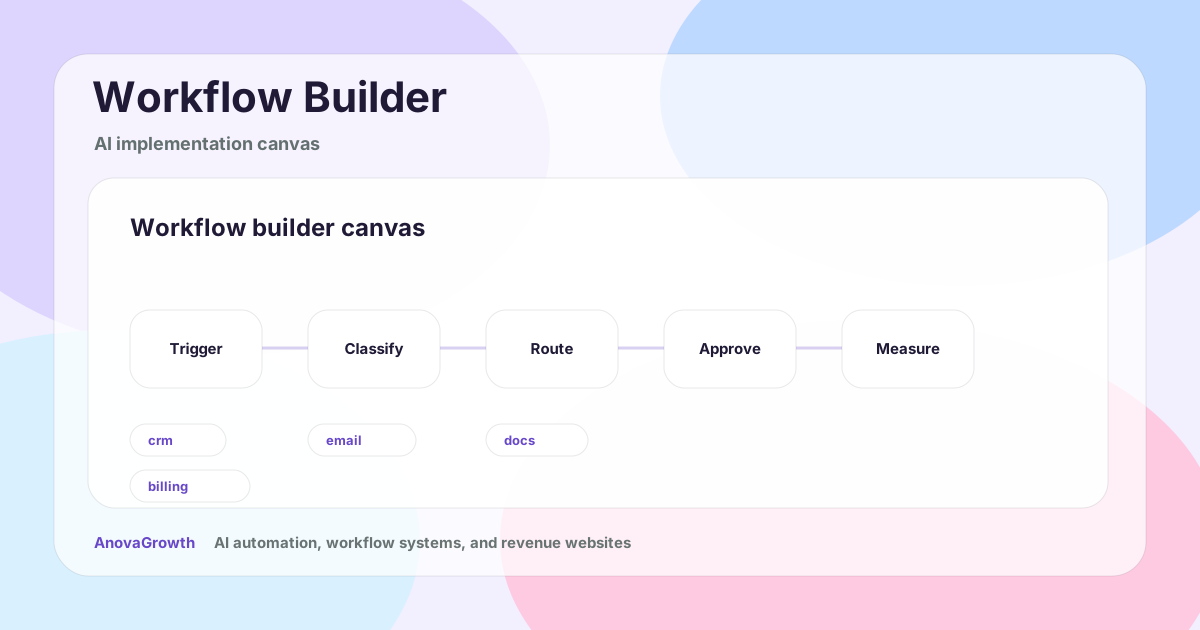
- Put AI inside existing systems (phone, inbox, CRM, docs)
- Define which actions can run automatically vs. require approval
- Track cycle time, error rate, and conversion impact weekly
If you need a practical starting point, begin with one workflow and map it end to end before tooling decisions. This guide is a good first step: Small Business Automation: Where to Start.
A 30-Day Rollout Framework
Week 1: Choose one operator workflow
Pick a workflow where delays cost revenue, such as lead follow-up, estimate turnaround, or support triage.
Week 2: Embed AI into the existing tool path
Do not create a new app unless necessary. Start where your team already works: voice channels, email, spreadsheets, or ticketing.
Week 3: Add governance and checkpoints
Define what the system can do automatically and where human review is mandatory.
Week 4: Measure and expand
If one workflow improves speed and quality, then expand to the next process.
For teams exploring agent-first implementation, this breakdown helps frame the architecture: What Are AI Agents? A Business Guide.
Bottom Line
The market is moving past "AI that answers" toward "AI that operates" inside the tools your team already uses.
That is good news for business owners. You do not need a moonshot. You need one governed, embedded operator workflow that saves time and improves response quality now, then a second one after that.
Want to deploy AI operators without adding tool chaos? Start with our AI automation services or contact us to map your first production workflow.