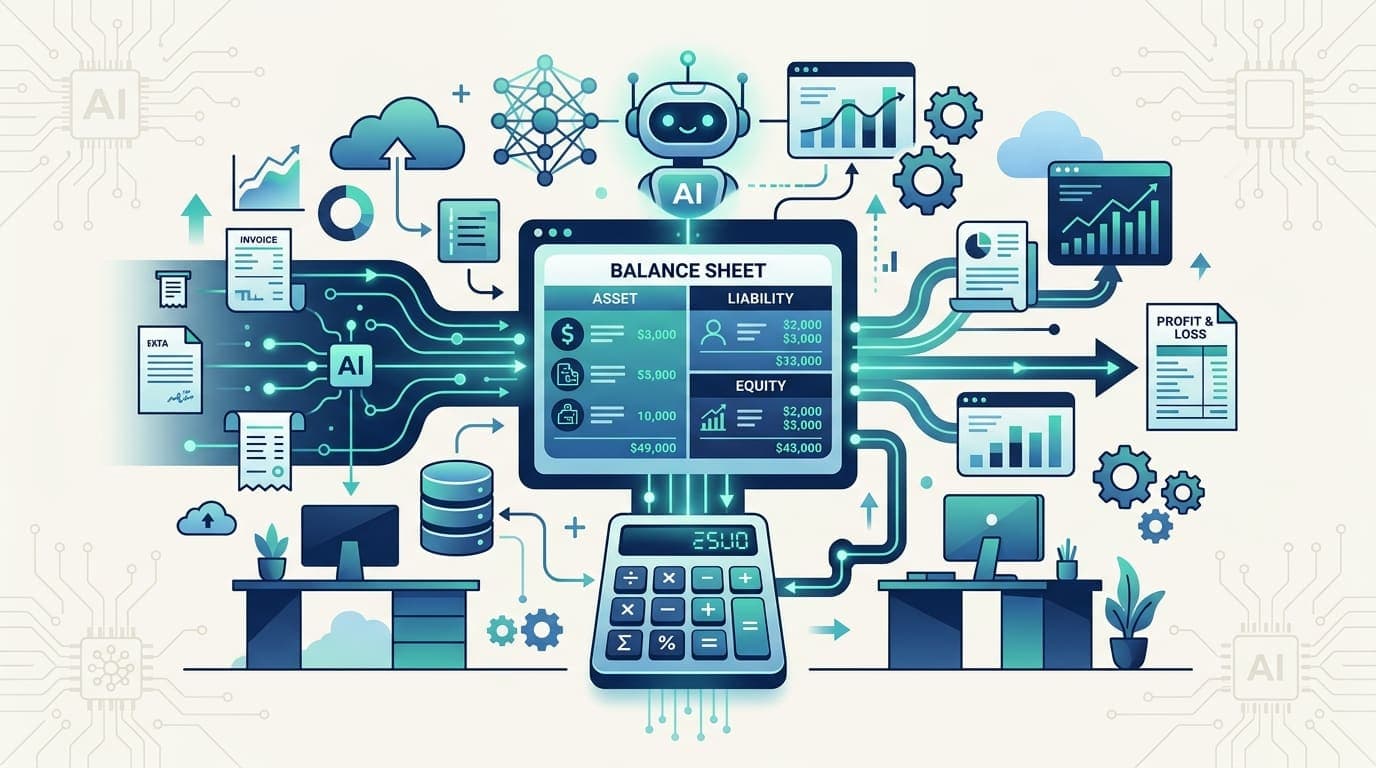
If you run an accounting or bookkeeping firm, you already know the problem: too much time on data entry, too little time on actual advisory work. Your best employees are spending half their day copying numbers from one system to another instead of talking clients through what those numbers actually mean.
That's not a people problem. That's a workflow problem. And in 2026, it's a solvable one.
What's Actually Getting Automated Right Now
The tools have gotten good enough that adoption is moving fast among firms that were paying attention. Here's what's working in practice:
Client Onboarding and Document Collection
Getting documents from clients has always been a bottleneck. AI-powered intake portals now handle the entire collection flow, send the request, receive files, extract the relevant data, drop it into your practice management system. No more chasing emails.
Firms using this typically cut onboarding time from days to hours. The software extracts W-9 data, categorizes uploaded documents, and flags anything missing before it even hits your desk.
Bank Rec Reconciliations
This is the biggest time sink for most bookkeeping teams. Modern AI reconciliation tools connect directly to client bank feeds, match transactions against the chart of accounts, and flag exceptions for human review instead of asking you to process everything manually.
The firms doing this well are reporting 60–80% reductions in reconciliation time. Your bookkeepers stop being data entry clerks and start being analysts who review what the AI couldn't confidently resolve.
Accounts Payable Processing
Vendor invoices come in via email, paper, and portal. AI document processing can extract line items, code them to the right accounts, route them for approval, and post them to your accounting system, all before a human sees them.
For firms managing AP for clients with high transaction volumes (retail, restaurants, construction), this alone can reclaim 10–15 hours per month per client.
Tax Preparation Workflows
This one is still maturing, but the direction is clear. AI tools are now pulling source documents directly into tax preparation software, checking for missing information, cross-referencing prior year entries for consistency, and flagging potential deduction opportunities.
The firms winning here aren't replacing CPAs, they're giving them a cleaner, more complete starting point so they spend their time on strategy and review instead of data gathering.
Client Communication and Follow-Ups
Routine client questions (Where's my return? Is this deduction allowed? What do I need to send you?) can now be handled by AI-assisted communication workflows. The AI doesn't answer complex tax questions, it routes them correctly and provides your team with context so responses are faster.
For routine status updates, that's fully automated. Clients get instant answers without pulling your team off deeper work.
What This Actually Frees Up
Here's the real impact: when you automate the data work, your people shift to advisory.
That bookkeeper who was doing three-way reconciliation for four hours a day? They're now reviewing AI recommendations and handling client questions that actually require judgment.
That CPA who was buried in source document gathering? They're starting from a pre-organized file and spending their time on planning conversations clients actually pay for.
You're not replacing your team. You're moving them up the value chain.
Getting There Without Dismantling Everything
You don't need to rebuild your entire practice to get started. The practical path:
-
Pick one pain point. Onboarding, AP processing, or reconciliations, start where your team is spending the most time on low-value work.
-
Audit your current workflow first. Before you automate, map what actually happens. Most firms discover steps that exist just because "that's how we've always done it." Those are your best automation candidates.
-
Choose tools that integrate with what you already use. If your practice management system has an API, prioritize tools that connect to it. Adding another standalone system creates new friction.
-
Automate 70%, review 30%. The goal isn't fully hands-off, it's getting the AI to handle what it handles confidently and flagging what needs a human. That review step is where you catch what the model can't know about a client's specific situation.
-
Measure the time savings. Track how long a process takes before and after. If you're not tracking it, you're guessing, and you'll have a hard time justifying the investment to yourself or your partners.
Who This Works Best For
This is most immediately valuable for firms with:
- High transaction volume clients (retail, restaurants, construction, property management)
- Repeat processes (monthly bookkeeping, quarterly estimated taxes, annual tax prep)
- Client communication bottlenecks (chasing documents, answering status questions)
- Teams spending more than 40% of time on data entry when they should be doing advisory work
Firms already running this are seeing client satisfaction scores go up, because clients get faster responses, more proactive communication, and advisors who actually have time to think about their situation.
Where This Goes Next
The firms that start now are building a competitive moat. As AI tools get more capable, better at understanding client context, more reliable at handling edge cases, the firms that already have the workflows and data infrastructure in place will adopt faster.
The ones still doing everything manually will face a painful catch-up.
Accounting has always been about turning data into insight. The firms that figure out how to let AI handle the data part will have way more time for the insight part, and clients will pay a premium for advisors who actually have time to advise.
Want to see what AI automation could look like for your firm? Talk to AnovaGrowth about a workflow audit tailored to accounting and bookkeeping operations.