Rome, GA Summer Downtown Playbook: Turn First Fridays Into Repeat Customers
Rome businesses can turn summer downtown traffic into repeat customers with sharper local SEO, better landing pages, and faster follow-up.

Quick answer: Rome has entered a steady summer demand cycle, not just a one-weekend spike. Between the tourism office's summer push, First Fridays, the weekly farmers markets, and new film-tour foot traffic, downtown businesses have repeated chances to win discovery and repeat visits. The businesses that convert best usually have three things in place: a page built for the moment, local search signals that are current, and follow-up that starts the same day.
If you serve this market directly, keep the Rome, GA growth page in your working set. It reflects how AnovaGrowth positions websites, local SEO, AI follow-up, and connected systems for Northwest Georgia businesses.
Why this is a real Rome opportunity right now
Rome's recent local signals point to a stronger summer commerce window than a normal slow roll into July.
- On May 11, tourism leaders highlighted Rome's hospitality momentum and shared that entertainment events, outdoor recreation, cultural events, and sports are the biggest regional visitor drivers.
- On May 13, Georgia's Rome published its summer guide featuring recurring attractions, river activity, Rome Emperors baseball, the new Ridge Ferry pump track, and the Stranger Things tour.
- Downtown Rome's First Fridays series is now running June through September.
- Georgia's Rome is also promoting weekly farmers markets in June and July, plus the Ridge Ferry Park market on Wednesdays and Saturdays.
That matters because downtown demand is now recurring. This is not just "be busy when an event happens." It is a repeatable local search and conversion pattern.
What downtown businesses usually get wrong
The common failure is treating summer traffic like pure foot traffic. In practice, most of that traffic passes through a screen first.
People search while they are parked, walking, or deciding where to go next. They check hours, menus, parking, product photos, and whether a place looks current. If that experience is stale, they choose somewhere else.
This is what we see in Rome and nearby-market audits most often:
- Google Business Profiles with spring hours, old photos, or no recent posts
- homepage hero sections that never mention a summer offer, event cadence, or downtown convenience
- no page that answers "why stop here today?" in under ten seconds
- no text-back, email acknowledgment, or list capture when interest comes in after hours
That is why web development services and AI automation services often have to work together. The page gets the click. The automation protects the opportunity after the click.
The right operating model for June through September
The better move is to treat downtown summer traffic as a 90-day funnel.
1. Build one summer landing section or page
You do not need a giant campaign. You need one clear destination that can handle:
- current hours
- one to two seasonal offers
- parking or location clarity
- a simple CTA like call, book, order, or visit today
For some Rome businesses that means a homepage refresh. For others it means a dedicated seasonal page linked from the homepage and Google Business Profile.
2. Refresh local SEO every week, not once
Rome's recurring event pattern rewards businesses that keep local signals fresh.
A practical weekly loop:
- Update your Google Business Profile post or photo set.
- Confirm hours and contact details before each major weekend.
- Add one timely sentence to your core page that reflects what is happening now.
- Link that page from the profile and from one relevant internal page.
If your local search foundation is shaky, start with the full Rome local SEO guide.
3. Use paid traffic only where time-to-decision is short
Google Ads can work well here, but only if you keep the scope tight.
This is the pattern that usually holds up:
- narrow geography around downtown, key corridors, or venue clusters
- one high-intent offer
- one landing experience
- one tracked action
If you spread budget across broad awareness campaigns, the spend disappears before the business learns anything useful.
4. Capture repeat intent before people leave downtown
This is the part small businesses skip most often. A summer commerce window is more valuable when it creates a second visit, not only a first sale.
Useful follow-up moves:
- text-back for after-hours inquiries
- same-day email or SMS for booking, menu, or offer requests
- simple list capture tied to one local incentive
- a weekly owner report showing source, response time, and conversions
Decision table: what to prioritize by business type
| Business type | First priority | Why it matters this summer |
|---|---|---|
| Restaurant or cafe | Current hours, menu highlights, one-tap directions | Visitors and locals make quick mobile decisions |
| Boutique or retailer | Seasonal page plus offer capture | Downtown traffic is easier to convert when the offer is obvious |
| Salon, fitness, or appointment business | Booking-first page flow plus reminder automation | Demand leaks fast when availability is unclear |
| Professional or home service business | Lead form speed and missed-call recovery | Local search interest often happens after normal hours |
First-hand AnovaGrowth operating insight
In smaller cities like Rome, businesses often assume repeat visibility will happen automatically because the market feels familiar. It usually does not. The winners are often not the most established names. They are the teams that keep digital surfaces current every single week while everyone else leaves the same page up for three months.
That is especially true when search behavior is tied to downtown momentum. Someone who discovers you during First Friday may come back later for a weekday purchase, but only if the first digital experience felt clear and current.
Fan-out questions Rome businesses should ask now
- Does our main page reflect what is happening in Rome this month, not last season?
- If someone finds us during First Friday, what is the exact next action we want them to take?
- Are we set up to capture interest after hours, or do those leads die overnight?
- Which one seasonal offer is worth making more visible in search and on the site?
- Are our Google Business Profile photos and posts recent enough to look active?
Bottom line
Rome's summer downtown calendar creates repeated visibility windows. That is useful for revenue only when your website, local SEO, and follow-up operate like one system.
If you want help tightening the system behind those searches, start with digital marketing that actually works for Rome businesses, review the Rome local SEO guide, or go straight to AI automation services.
Sources
- City of Rome: Georgia Tourism Leaders Highlight Rome’s Hospitality and Economic Impact During State of Tourism Program
- Georgia’s Rome: Summer Fun Ideas
- Rome Downtown Development Authority: First Fridays
- Georgia’s Rome Events: Farmers Market Listings
- City of Rome: New “Stranger Things” Photo Opportunity Installed on Jackson Hill
Related articles
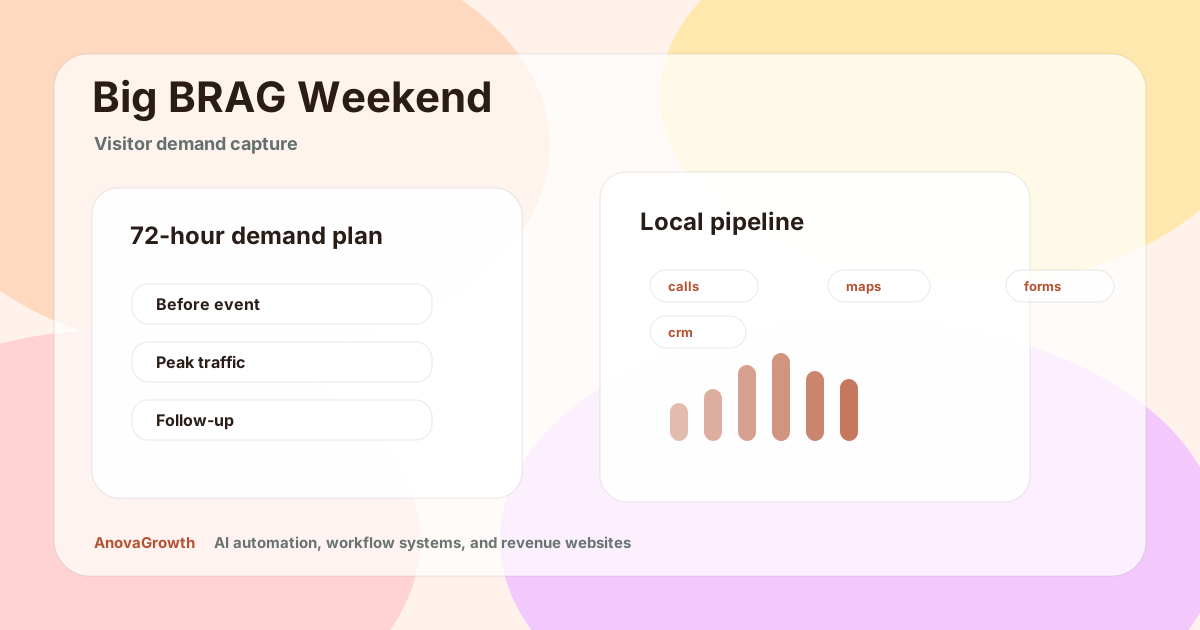
Rome, GA Big BRAG Weekend Playbook: Convert Visitor Traffic Into Booked Work
Big BRAG brings 1,000+ cyclists into Rome on May 31. Use this 72-hour playbook to capture demand with local SEO, website updates, and follow-up automation.
Read the article: Rome, GA Big BRAG Weekend Playbook: Convert Visitor Traffic Into Booked Work
Rome, GA Local SEO in 2026: How to Get Found When Customers Are Looking
Rome, GA is growing fast. More businesses means more competition for local customers. Here's how Rome service businesses win on Google in 2026.
Read the article: Rome, GA Local SEO in 2026: How to Get Found When Customers Are Looking
Why Rome, Georgia Businesses Need Digital Marketing That Actually Works
Rome GA businesses are discovering that generic marketing doesn't cut it. Here's what local companies need from a digital marketing partner.
Read the article: Why Rome, Georgia Businesses Need Digital Marketing That Actually Works
