AI Voice Agents for Service Businesses in 2026
AI voice agents can handle more calls than most teams expect, but only in the right workflows. Here's where they work and where they don't.

Introduction
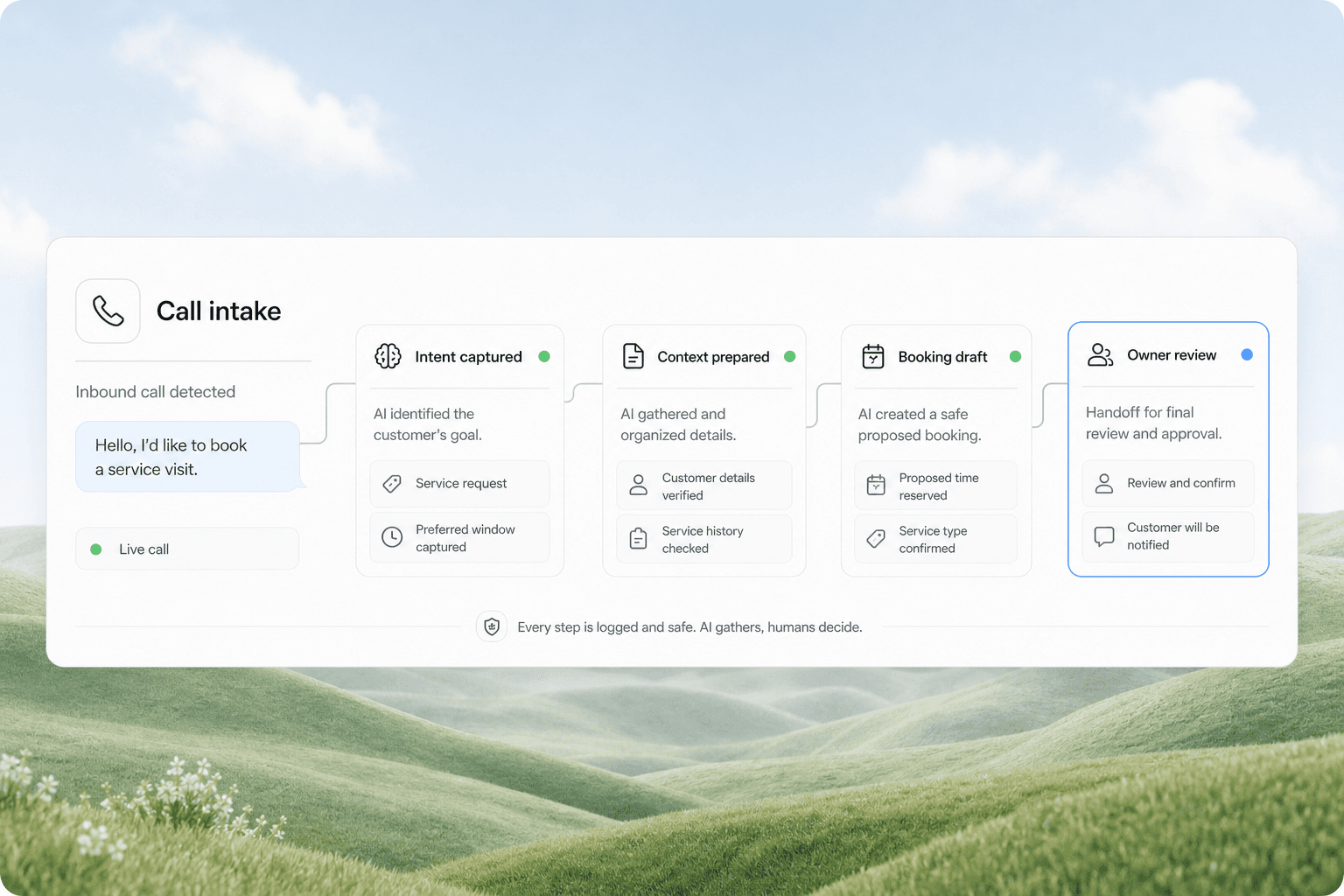
A lot of business owners are hearing the same pitch right now: let an AI answer your phones, book jobs, follow up with leads, and save payroll. Part of that pitch is real. Part of it is nonsense.
AI voice agents are getting good fast, especially for repetitive inbound calls. But they are not magic, and they are not a replacement for every customer-facing conversation. If you run a home service company, clinic, law office, dealership, or local service business, the win comes from using AI in the right part of the workflow.
Where AI voice agents work best
The best use cases are high-volume, repeatable conversations with a clear next step.
That usually includes:
- answering after-hours calls
- qualifying inbound leads
- booking basic appointments
- collecting missing intake details
- sending reminders and confirmations
- routing urgent calls to a human
If the agent can follow a defined script, pull from your calendar or CRM, and move the caller toward one clear outcome, it can be valuable quickly.
A plumbing company is a good example. Many calls are some version of: what is the issue, what is the address, is it urgent, and when can we send someone out? That is structured enough for automation. The same goes for many dental consult requests, HVAC maintenance bookings, and inbound estimate requests.
Where they still break down
Businesses get in trouble when they ask AI to handle emotionally sensitive, high-risk, or highly nuanced calls without guardrails.
That includes:
- angry customers with billing disputes
- complex scheduling exceptions
- medical or legal edge cases
- technical support with lots of back-and-forth
- VIP accounts expecting white-glove treatment
These calls need judgment, empathy, and accountability. Even a strong AI system can sound confident while missing context. That is not just annoying, it can cost trust and revenue.
A practical rule is simple: if a mistake is expensive or reputationally painful, route to a human faster.
What makes an AI voice rollout succeed
The technology matters less than the workflow design.
Most failed deployments have the same problems. The business did not define call goals, did not connect the agent to live systems, and did not build escalation logic. So the AI sounds polished, but it cannot actually complete the job.
A better rollout looks like this:
Start with one call type
Do not automate your whole phone tree at once. Start with one narrow workflow, like after-hours lead capture or appointment booking.
Connect the real systems
The agent needs access to the calendar, CRM, service area rules, and availability logic. If it cannot check the actual schedule or create the actual record, it becomes a dead-end bot.
Design human handoff on purpose
A good AI experience is not one where the AI never transfers. It is one where the caller gets handled quickly and lands with the right person when needed.
Review real call recordings
You will learn more from 20 live calls than from a week of demo hype. Look for where callers hesitate, repeat themselves, or ask questions outside the script.
The real ROI question
The point is not to replace your receptionist or coordinator. The point is to stop losing good opportunities.
For many service businesses, missed calls are the biggest leak in the pipeline. Nights, weekends, lunch breaks, and busy periods create dropped leads all the time. If an AI voice agent helps you answer more calls, capture cleaner information, and book more qualified appointments, the math gets attractive fast.
But if you force it into conversations it should not own, you create a new leak: frustrated customers.
Key Takeaways
- AI voice agents work best on repeatable inbound calls with a clear outcome.
- They should not handle sensitive, complex, or high-risk conversations without fast escalation.
- The biggest gains come from workflow design, CRM integration, and strong handoff logic.
- The real goal is fewer missed opportunities, not automation for its own sake.
Conclusion
AI voice agents are ready for real business use in 2026, but only when deployed with discipline. Start narrow, measure live results, and keep humans involved where judgment matters.
If you want to see whether voice AI fits your business, contact us and we’ll map out a rollout that actually makes operational sense.
Related articles

AI Automation for Louisville KY Dental Practices
Louisville dental practices use AI automation to reduce front desk phone load, fill more appointment slots, and keep patients engaged between visits.
Read the article: AI Automation for Louisville KY Dental Practices
5 Signs Your Business Is Ready for AI Automation (And What to Do Next)
If you're drowning in repetitive tasks, missing leads, or working nights and weekends just to keep up, your business is probably ready for AI automation.
Read the article: 5 Signs Your Business Is Ready for AI Automation (And What to Do Next)
Automated Service Business Tax Prep Workflow: Close Your Books Faster Every Quarter
Most service businesses spend two weeks doing tax prep manually. Here is how to automate the monthly close so quarter-end takes hours instead of days.
Read the article: Automated Service Business Tax Prep Workflow: Close Your Books Faster Every Quarter
