Rome, GA Event-Driven Demand Playbook: Turn Visitor Surges Into Local Revenue
Rome’s spring sports and tourism momentum creates short demand windows. Here is how local businesses can capture more calls, visits, and booked work.

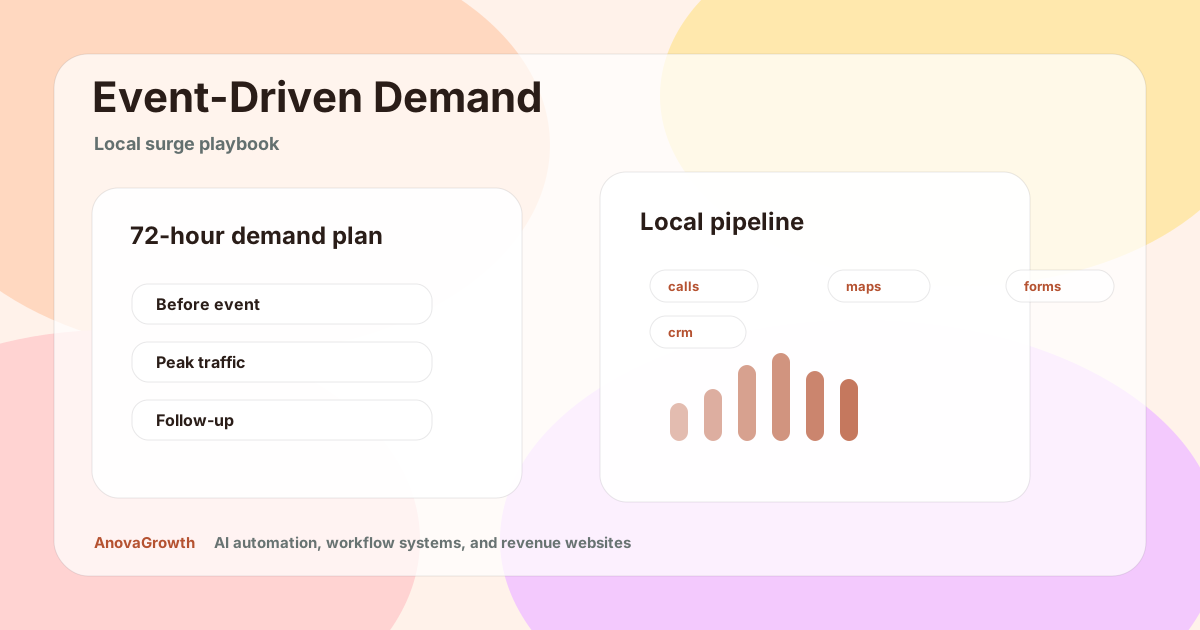
Rome is seeing a dense run of visitor activity this spring, including the Sun Belt tennis championships in late April and the UTR Sports NIT championship in early May at the Rome Tennis Center at Berry College. Those events are short, but the demand they create is real for restaurants, retail, hospitality, and service businesses.
The opportunity is not just “more traffic.” The opportunity is converting temporary attention into first-time customers, repeat buyers, and booked work.
Why this week-to-week tourism pattern matters
In a small market, every event window is compressed. If your business cannot get found quickly, you miss high-intent visitors who are already in buying mode.
Georgia tourism leaders also highlighted Rome’s hospitality momentum on May 11, with data showing what most often drives regional visits: entertainment events, outdoor recreation, cultural events, and sports. That is useful because it tells local operators where demand clusters are likely to keep showing up.
For local context and market positioning, start with the Rome, GA growth hub.
The 72-hour conversion window most local businesses miss
For event-based demand, the highest-converting window usually starts a few days before arrival and runs through the event weekend.
If your site, map listings, and ads are stale during that period, your competitors win those searches.
What to update before each event cycle
- Refresh your Google Business Profile offers, hours, and recent posts.
- Publish one location-specific update on your site tied to the upcoming event window.
- Tighten your service page CTA so mobile users can call or book in one tap.
- Turn on simple follow-up automation for form fills and missed calls.
If your core pages are still slow or unclear, prioritize web development services first, then layer on promotion.
Local SEO moves that capture visitor-intent searches
Most event traffic starts with maps and “near me” queries. That means your local search setup has to be current before weekend demand spikes.
A practical sequence:
- Add event-adjacent intent phrases naturally on relevant pages (for example, family activities, group dining, last-minute services, or same-day availability where applicable).
- Keep NAP data perfectly consistent across your listings.
- Increase review-response speed so recent trust signals stay visible.
- Build internal links from your homepage or city page to the exact page that converts.
If you want the detailed Rome checklist, use this companion guide: Rome, GA local SEO in 2026.
Where Google Ads fits in Rome right now
Ads are most useful when time-to-demand is short. Event-driven traffic is exactly that.
Use a narrow radius around key venues and lodging corridors, keep ad groups tightly mapped to buying intent, and send traffic to a page built for one action.
For most local teams, the best structure is:
- One campaign for immediate purchase intent.
- One retargeting campaign for visitors who did not convert.
- One short post-event campaign to recover late decision-makers.
When ad spend climbs without clean attribution, teams often confuse impressions for pipeline. Track calls, form submissions, booked appointments, and closed revenue, not just clicks.
Automation is the profit protector for short demand spikes
Event demand is wasted when follow-up is inconsistent. This is where lightweight automation wins.
A minimum stack:
- Instant text acknowledgment for every lead form.
- Missed-call text back within one minute.
- Next-business-day reminder for pending quotes.
- Weekly source report showing which channels produced real customers.
This is the practical side of AI automation services: fewer dropped leads during the exact weeks when demand is highest.
30-day Rome execution plan
- Week 1: Fix local SEO and conversion issues on your top two pages.
- Week 2: Launch tightly scoped event-window ads with proper tracking.
- Week 3: Deploy missed-call and lead follow-up automation.
- Week 4: Review close rates by source and reallocate budget to what converted.
Bottom line
Rome’s current tourism and event cadence gives local businesses repeated shots at high-intent demand. The winners are not the biggest brands. They are the fastest operators with clear pages, discoverable local presence, and disciplined follow-up.
If you execute those three systems together, short visitor spikes can become steady local revenue.
Need this built for your business? Contact AnovaGrowth for a Rome-specific growth system plan.
Related articles
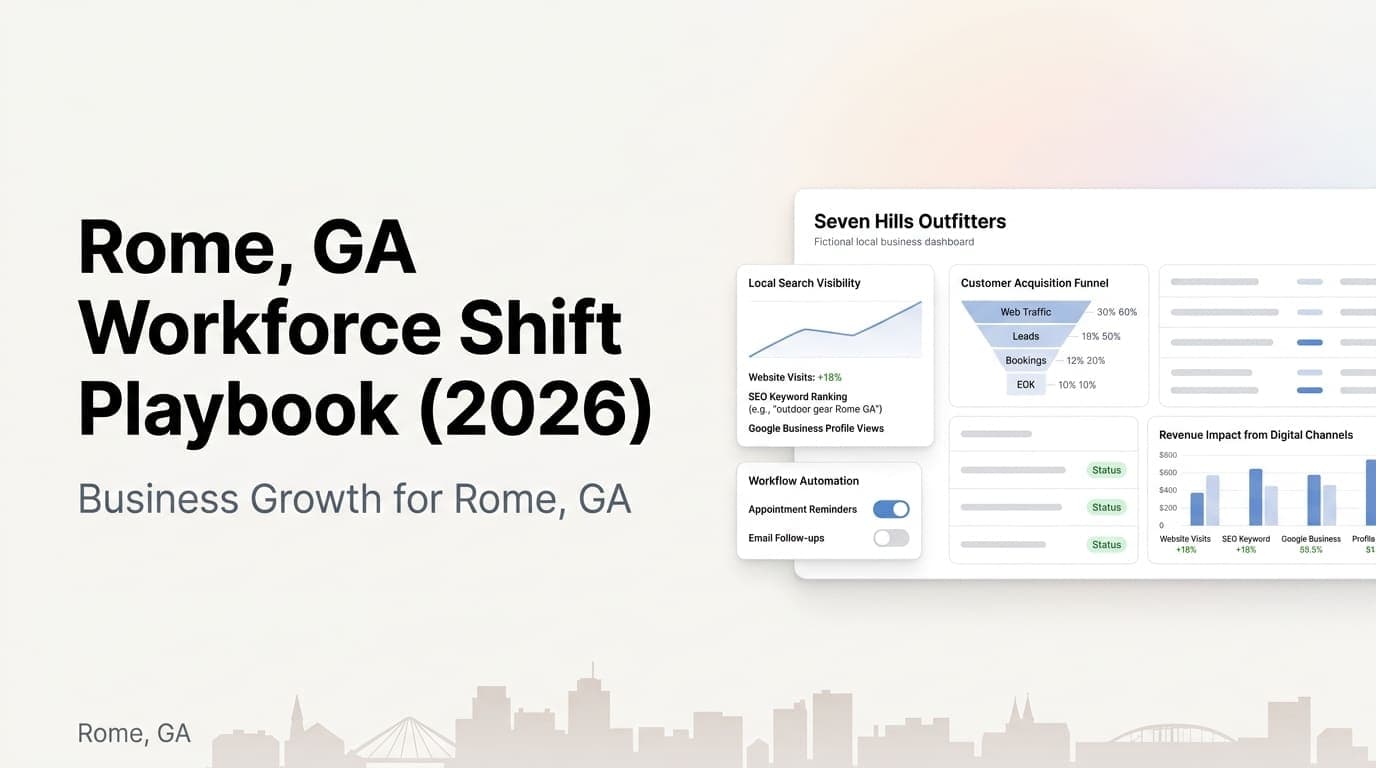
Rome, GA Workforce Shift in 2026: A Digital Demand Playbook for Local Businesses
As Rome navigates major workforce changes in 2026, local businesses can use websites, SEO, and automation to capture demand and protect revenue.
Read the article: Rome, GA Workforce Shift in 2026: A Digital Demand Playbook for Local Businesses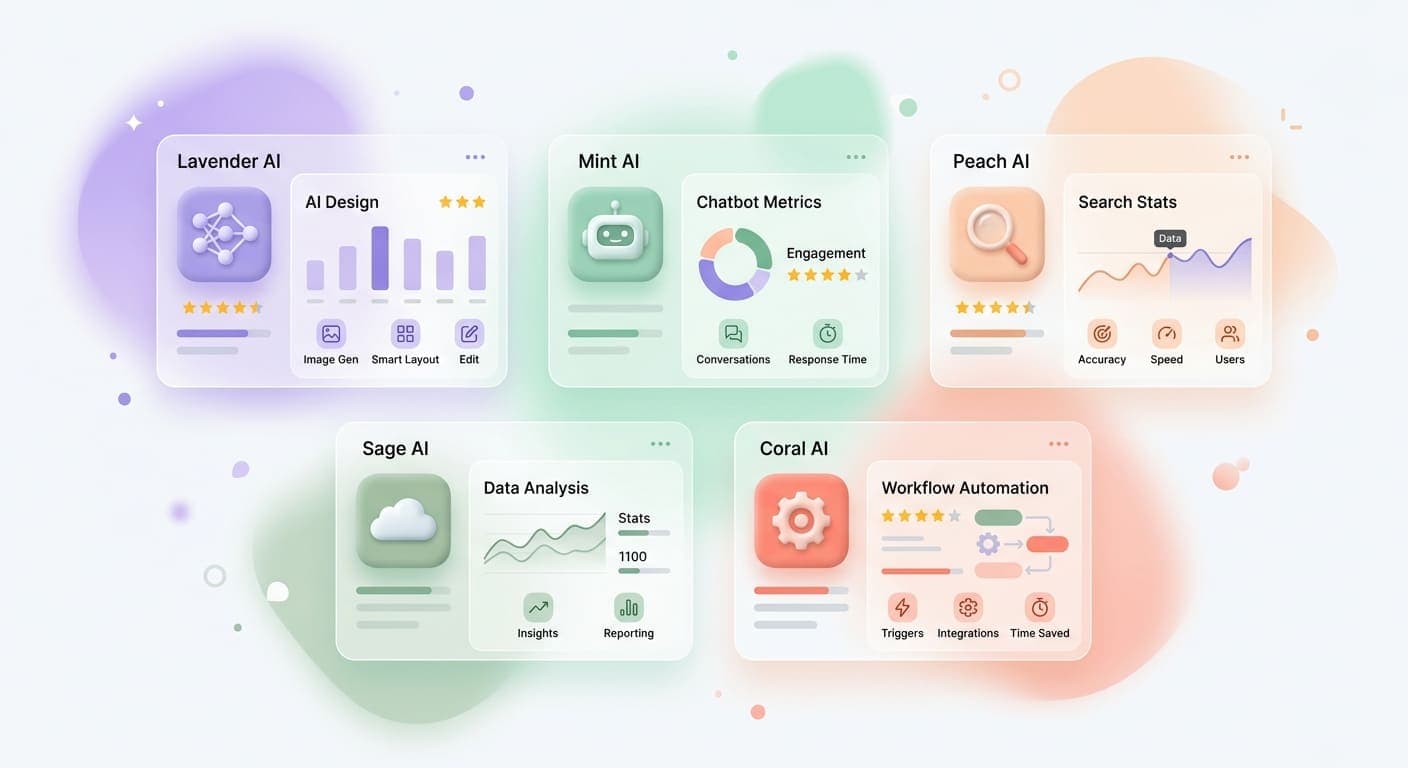
Free AI Tools for Business Automation in 2026
Free and cheap AI tools for writing, chatbots, CRM, automation, documents, and support, organized by business workflow.
Read the article: Free AI Tools for Business Automation in 2026
How to Make Your Southeast Service Business Sellable for Maximum Value
Most Southeast service business owners leave 30-50% of sale value on the table because the business cannot run without them. Here is the prep checklist that changes that.
Read the article: How to Make Your Southeast Service Business Sellable for Maximum Value
