The Louisville Dental Phone Problem
Louisville's dental market is competitive. With practices concentrated in the East End, St. Matthews, and along the Hurstbourne corridor, patients have options. That means your front desk is fighting for their attention, while simultaneously being buried in calls, appointment requests, insurance verification, and reminder callbacks.
The average dental practice spends 3–4 hours per day on the phone. Confirmations, reschedules, insurance questions, after-hours inquiries. That's a full staff member's worth of time on repetitive tasks that don't require clinical judgment.
AI automation handles those tasks. Your team stays focused on patients in the chair.
What Actually Gets Automated
Appointment Scheduling, 24/7
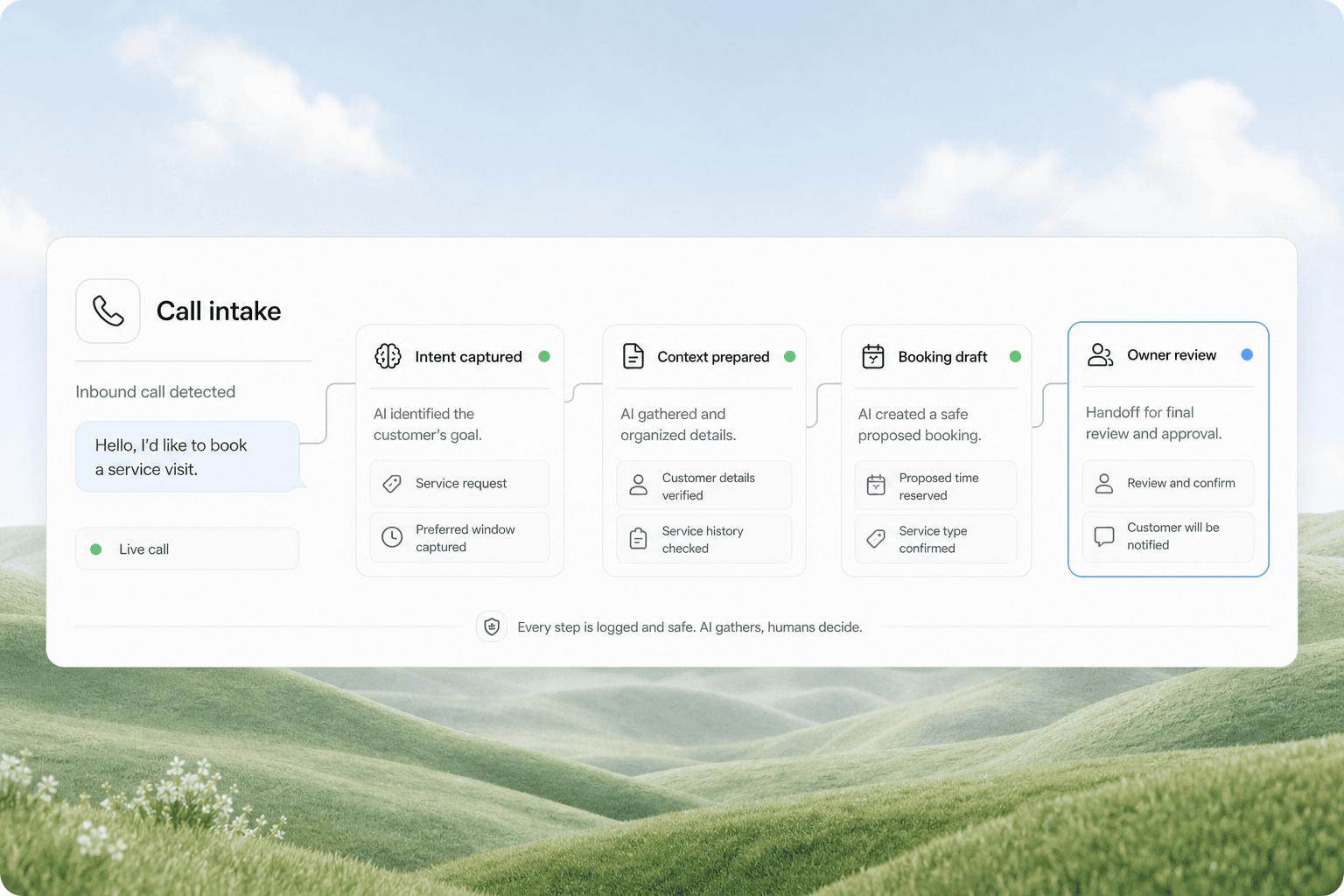
Patients don't only call during business hours. They search for a dentist on their lunch break, on evenings, on weekends. When they submit an appointment request at 9 PM, a chatbot can collect the information, check your availability, and propose a slot, all without your front desk lifting a finger.
The result: higher capture rates and fewer phone tag games. Patients who can self-schedule tend to book more often because there's no friction.
Insurance Verification Before the Visit
Insurance confusion is the top reason for billing delays and unexpected patient balances. A chatbot can walk new patients through coverage questions, collect insurance details, and flag potential issues before the appointment. Your front desk walks into a cleaner day.
Post-Visit Follow-Up and Recall
Patients who need a cleaning in six months often forget. A chatbot can trigger automated recall messages, share post-procedure care instructions, and remind patients when it's time to book their next appointment. This keeps your schedule full without your team making hundreds of manual calls.
Emergency After-Hours Triage
Dental emergencies happen at dinner time, on weekends, at 2 AM. A chatbot can assess symptoms, provide temporary guidance, and route urgent cases to an on-call line or after-hours answering service. Patients feel cared for; your team doesn't get blindsided by a 6 AM voicemail from a severe toothache that sat overnight.
Why Louisville Practices Are Especially Well-Positioned
Louisville's mix of suburban growth and established neighborhoods creates a patient base that's comfortable with digital tools but still expects personal service. Unlike large metro areas where patients are conditioned to self-serve, Louisville dental patients appreciate a conversational, warm approach, which AI can mirror when it's built correctly.
That means automation doesn't have to feel robotic. A well-configured chatbot for a Louisville dental practice uses local language, understands Kentucky insurance market norms, and routes patients to a human when the situation warrants it.
What It Doesn't Replace
AI chatbots handle the volume work. They don't replace your hygienists, your front desk judgment, or the relationship you build with patients over years. They remove the repetitive friction so your team can spend more time on the work that actually matters.
Key Takeaways
- Automate the phone tag game. Let patients book, confirm, and ask questions without waiting on hold.
- Verify insurance before appointments. Reduce billing surprises for patients and administrative headaches for your team.
- Recall patients automatically. Keep your schedule full without manual outreach.
- Serve patients outside business hours. Dental emergencies don't respect office hours. Neither should your response system.
- Keep it warm. Louisville patients expect personal service. Automation should amplify that, not replace it.
Ready to Automate Your Front Desk?
If your Louisville dental practice is spending too much time on repetitive calls and not enough time on patient care, let's talk through what automation could look like for your setup.
We build HIPAA-aware AI systems for dental and medical practices, integrated with your existing scheduling software and designed to reduce friction without losing the personal touch.
Contact us to start the conversation.