How to Audit a Workflow Before You Automate It
Before you automate anything, audit the workflow first. Here’s how to find bottlenecks, bad inputs, and ROI opportunities fast.

Introduction
A lot of businesses jump into automation too early. They pick a tool, connect a few apps, and expect the chaos to disappear. It usually does not. Bad workflows do not become good just because software touches them.
The better move is to audit the process before you automate it. That gives you a clear picture of what is slowing the team down, where mistakes happen, and which steps are actually worth automating. If you skip that part, you risk building faster ways to create the same problems.
Start With One High-Friction Process
Do not try to map your whole business in one sitting. Pick one workflow that creates the most drag.
Good candidates usually have a few obvious signs:
- The team repeats the same steps every day or every week
- Handoffs happen across email, spreadsheets, and chat
- Data gets entered more than once
- Delays hurt sales, service, or cash flow
- Nobody can explain the full process from start to finish
For most businesses, that means lead intake, proposal generation, customer onboarding, support routing, or follow-up after a form submission.
Map What Actually Happens, Not What Should Happen
This is where a lot of audits go sideways. Leaders describe the ideal process, but the real process lives in workarounds and side conversations.
Document the workflow as it actually runs today:
- What triggers the process?
- Who touches it?
- What tools are involved?
- What information is required at each step?
- Where do delays, errors, or rework happen?
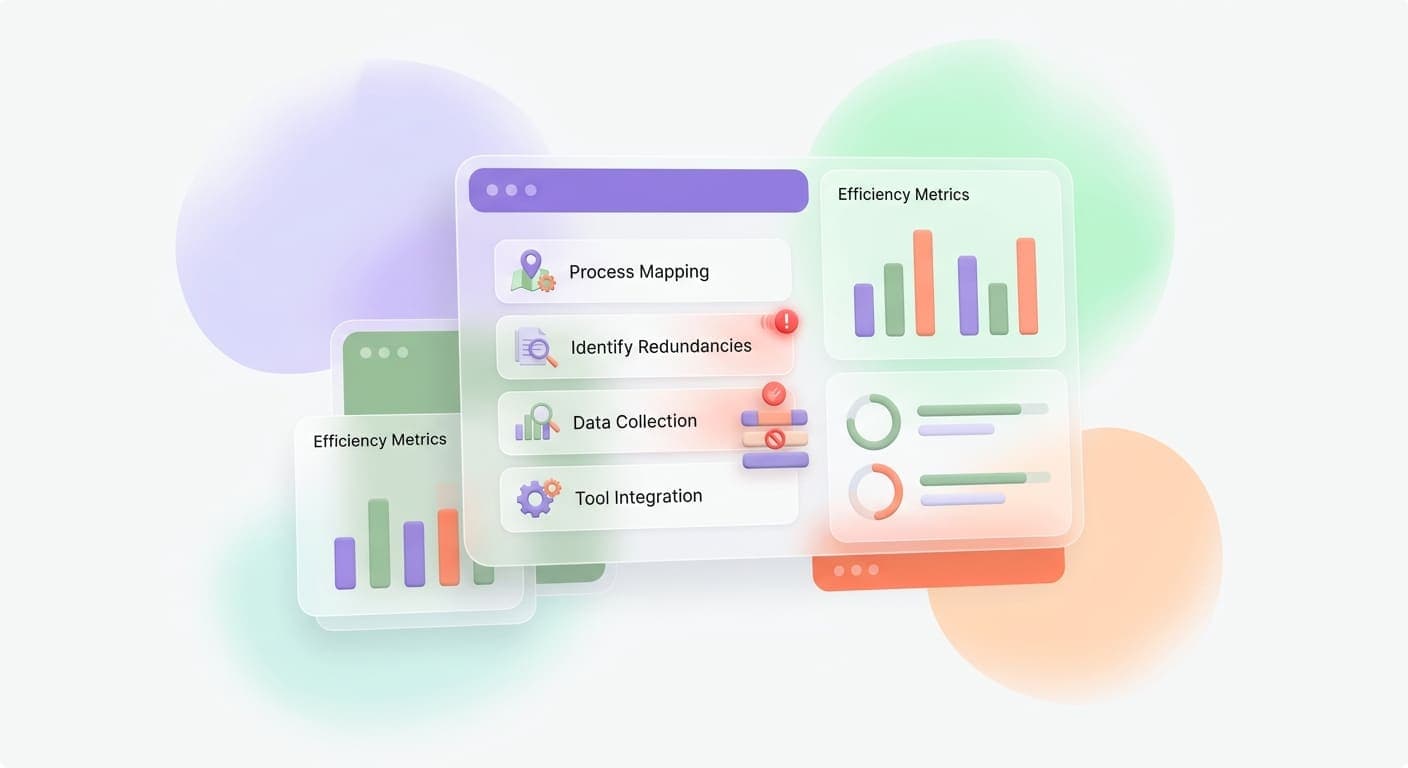
Keep it simple. A shared doc, whiteboard, or process diagram is enough. The goal is visibility, not perfection.
Once you lay it out, patterns usually show up fast. You will often find duplicate steps, missing ownership, vague approval rules, or broken data coming in at the start.
Check the Inputs Before You Automate the Outputs
Automation depends on clean inputs. If your form fields are inconsistent, your CRM is full of duplicates, or your staff uses different naming conventions, your automation will break or produce junk.
Before you automate, ask a few direct questions:
- Is the incoming data complete?
- Is it formatted consistently?
- Does every field have a clear purpose?
- Are there points where a human needs to review edge cases?
- Is the source of truth obvious?
This matters even more with AI workflows. AI can summarize, classify, route, and draft content, but it still needs reliable context. If the underlying data is messy, the output will be unreliable, and your team will lose trust in the system.
Separate Repetitive Work From Judgment Calls
Not every step should be automated. Some tasks are repetitive and rule-based. Others require experience, nuance, or exception handling.
A practical audit separates the two.
Good automation targets:
- Moving data between systems
- Sending reminders and follow-ups
- Routing tickets or leads
- Generating first drafts
- Triggering status updates
Steps that usually need human review:
- Final pricing decisions
- Complex customer escalations
- Sensitive approvals
- Anything with legal or compliance risk
The goal is not to remove humans from the process. It is to remove low-value manual work so humans can focus where judgment matters.
Score the Workflow for ROI
Once the process is mapped, estimate the payoff.
Use a simple scorecard:
- Frequency: how often the workflow runs
- Time cost: how many team hours it consumes
- Error rate: how often mistakes happen
- Revenue impact: whether delays affect leads, deals, or retention
- Implementation difficulty: how hard it is to automate well
The best early automation wins usually sit in the middle. They happen often, waste a lot of time, and are structured enough to improve quickly without a huge implementation burden.
That is how you avoid spending months automating a process that barely moves the business.
Build a Better Process Before You Build the Automation
An audit should lead to cleanup, not just software recommendations.
Before implementation, tighten the workflow:
- Remove unnecessary steps
- Standardize required fields
- Define ownership clearly
- Set clear handoff rules
- Decide where AI helps and where humans approve
Then automate the improved version.
That is the difference between a workflow that saves real time and one that becomes another fragile layer in your stack.
Key Takeaways
- Audit one high-friction workflow first instead of trying to automate everything at once.
- Map the real process, including delays, workarounds, and bad data.
- Clean up inputs and ownership before adding AI or automation tools.
- Prioritize workflows that are frequent, repetitive, and tied to revenue or service quality.
Conclusion
Automation works best when it is built on a clear process, clean data, and realistic expectations. If you want better results from AI, the first step is usually not buying another tool. It is understanding the workflow you already have.
If you want help auditing a process before you automate it, contact us or explore our AI Automation services.
Related articles

Wilmington Port Cyberattack 2026: Build Manual-Proof Workflows
Wilmington businesses tied to the port should use August's cyberattack disruption to tighten intake, routing, and backup workflows before the next slowdown.
Read the article: Wilmington Port Cyberattack 2026: Build Manual-Proof Workflows
Richmond Code Refresh 2026: Fix Government Workflows Before the Fall Vote
Richmond teams touched by Code Refresh should use the August draft launch to clean up intake, document routing, and public-facing workflows before fall review.
Read the article: Richmond Code Refresh 2026: Fix Government Workflows Before the Fall Vote
Savannah's New Port Connector: The Automation Playbook for Faster Freight Ops
Savannah operators should use July's Brampton Road Connector opening to tighten freight handoffs, yard workflows, and ERP reporting before port volume rises.
Read the article: Savannah's New Port Connector: The Automation Playbook for Faster Freight Ops
