Google Ads vs Facebook Ads: Which Platform Delivers Better ROI in 2026
Compare Google Ads and Facebook Ads for ROI in 2026. Learn which platform fits your business goals and how to allocate your ad budget effectively.

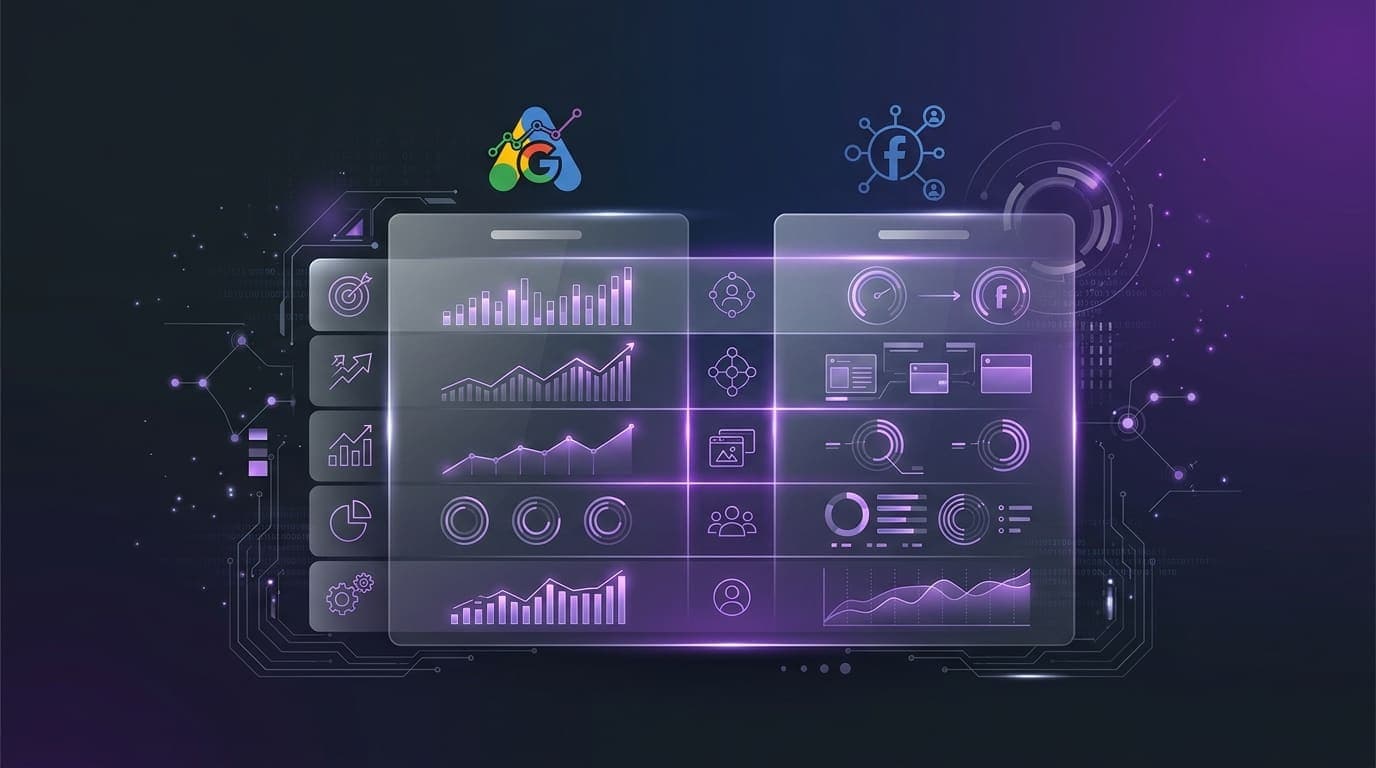
If you're running paid advertising, you've probably asked: "Should I put my money into Google Ads or Facebook Ads?"
The answer isn't either/or. It depends on what you're selling, who you're targeting, and where your customers are in their buying journey. Let's break down the real differences in 2026, costs, targeting capabilities, and when each platform delivers the best ROI.
The Core Difference: Intent vs Discovery
Google Ads captures intent. Someone searches "CRM software for small business" and sees your ad. They're actively looking for what you offer. Your job is to be the answer they find.
Facebook Ads create discovery. Users aren't searching for anything, they're scrolling. Your ad interrupts their feed. Your job is to make them want something they didn't know they needed.
This fundamental difference shapes everything else: cost per click, conversion rates, and which businesses succeed on each platform.
Google Ads: When Intent Wins
Google Ads works best when people search for exactly what you offer. If someone types "emergency plumber Atlanta" or "best accounting software for startups," they have a problem and want a solution now.
Where Google Ads Excel
- High-intent searches: "buy," "hire," "near me," "best [product]"
- Local services: Plumbers, lawyers, dentists, restaurants
- B2B products: Software, consulting, professional services
- E-commerce: Product-specific searches
2026 Cost Reality
Google's costs keep climbing. Average CPC across all industries is now $4-6, with competitive sectors like legal and finance hitting $10-20 per click. But those clicks convert at 3-5% when intent is high.
The math: If you're paying $8 per click and converting 4% of visitors, your cost per acquisition is $200. For businesses with high customer lifetime value, that works. For low-margin products, not so much.
Facebook Ads: When Discovery Wins
Facebook (and Instagram, part of the same ad platform) works best when you're building awareness or targeting people who don't know they need you yet.
Where Facebook Ads Excel
- Brand awareness campaigns: Getting your name in front of potential customers
- Visual products: Fashion, home goods, food, anything that looks good in a feed
- Interest-based targeting: Reaching people by hobbies, behaviors, demographics
- Retargeting: Showing ads to people who visited your site but didn't convert
2026 Cost Reality
Facebook's CPM (cost per thousand impressions) has increased significantly, averaging $12-15 in the US. But CPM isn't the full picture, you're paying for impressions, not clicks. Average CTR is around 0.9%, making effective CPC around $1.30-1.50.
The advantage: Lower CPC means you can reach more people for less money. But conversion rates typically lag Google's, 0.5-1.5% is common for e-commerce, lower for services.
Head-to-Head Comparison
| Factor | Google Ads | Facebook Ads |
|---|---|---|
| Average CPC | $4-6 | $1.30-1.50 |
| Conversion Rate | 3-5% (high intent) | 0.5-1.5% |
| Targeting | Keyword-based | Demographic/interest |
| User Mindset | Actively searching | Browsing/discovering |
| Best For | Services, B2B, local | E-commerce, brand building |
How to Choose: A Simple Framework
Choose Google Ads when:
- People actively search for your product/service
- Your offer solves an immediate problem
- You want qualified leads, not just traffic
- Your customer lifetime value justifies higher CPC
Choose Facebook Ads when:
- You need to create awareness for a new product
- Your product is visual and works well in feeds
- You want to retarget website visitors
- Your audience can be defined by interests or demographics
The smart money: Most businesses benefit from both. Use Google to capture high-intent searches and Facebook for retargeting and awareness. Allocate 60-70% of your budget to whichever platform performs best for your specific goals.
Key Takeaways
- Google captures intent, Facebook creates it, match platform to where customers are in their journey
- Google costs more per click but converts better, worth it for high-value customers
- Facebook reaches more people for less, better for awareness and visual products
- Most businesses need both platforms, the question is allocation, not either/or
- Track ROI obsessively, the platform that works for a competitor may not work for you
The Real Answer
Neither platform is universally better. The right choice depends on your product, your customers, and your goals. Test both with small budgets, track what actually converts, and scale what works.
Need help deciding where to put your ad budget? Contact us or learn more about our Digital Marketing services. We'll analyze your specific situation and recommend the approach that makes sense for your business.
Related articles
LinkedIn Automation Done Right: What Actually Works in 2026
Learn how LinkedIn automation can transform your business operations and bottom line.
Read the article: LinkedIn Automation Done Right: What Actually Works in 2026
Google Local Service Ads for Service Businesses: The Complete Setup and Management Guide
Google Local Service Ads put your business at the top of search with a Google Guarantee badge. Here is how to set them up, manage leads, and automate follow-up.
Read the article: Google Local Service Ads for Service Businesses: The Complete Setup and Management Guide
Call Tracking for Service Businesses: Know Which Ads and Keywords Drive Phone Leads
Service businesses spend thousands on ads but can't track which calls convert. Call tracking connects phone leads back to the source so you know what's working.
Read the article: Call Tracking for Service Businesses: Know Which Ads and Keywords Drive Phone Leads
