Website Design for Charleston Restaurants and Hotels
Charleston hospitality businesses compete on first impressions. Your website is the first one. Here's what makes a site actually book tables.

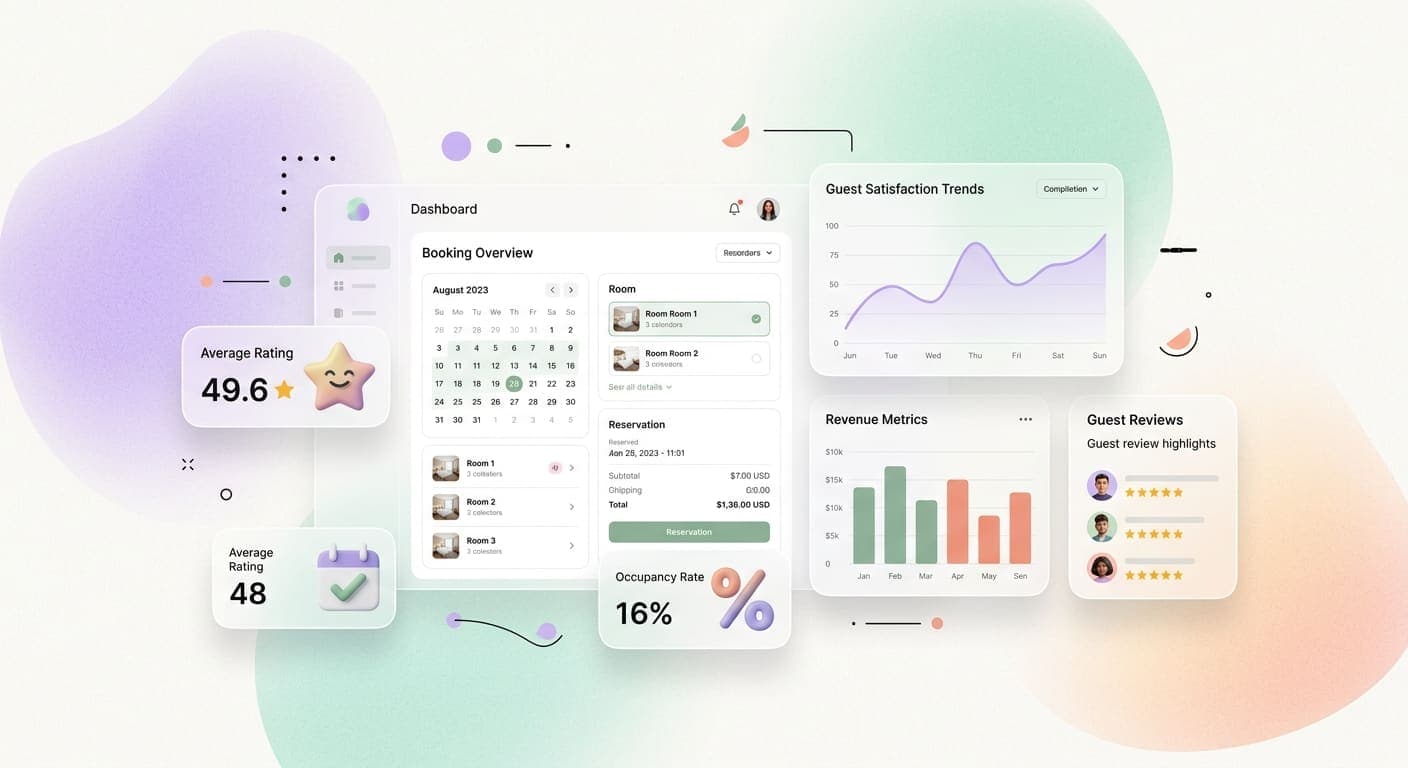
Charleston Runs on First Impressions
Charleston has ranked as the top US travel destination by Conde Nast Traveler readers for over a decade. The city draws millions of visitors each year for its food scene, historic architecture, and coastal charm. With multiple James Beard Award-winning restaurants and a hospitality economy that drives a significant share of the local workforce, competition for attention is relentless.
And that competition starts online. Before anyone walks through your door, they've already judged your business by what they found on their phone. A Google search for "best restaurants in Charleston" or "boutique hotels downtown Charleston" triggers a quick scroll through results, and whoever has the strongest digital presence wins the click, and the reservation.
The problem is that many Charleston hospitality businesses treat their website as an afterthought. A page thrown up years ago, rarely updated, slow to load on mobile. In a city where presentation matters as much as the food on the plate, your website can't be the weak link.
What a High-Performing Restaurant Website Actually Needs
Restaurant websites have one job: get people to make a reservation, place an order, or walk through the door. Everything else is secondary. Here's what separates the sites that fill tables from the ones that get skipped.
Mobile Reservations Without Friction
Over 70% of restaurant searches happen on phones. If your booking flow requires pinching, zooming, or navigating through three pages, people will tap the back button and book somewhere else. A reservation widget should be visible within seconds of landing on the site, ideally on the homepage above the fold.
The best restaurant sites integrate directly with reservation platforms so the booking happens without leaving your site. No redirects. No pop-ups that get blocked. One tap, pick a time, done.
Menu Design That's Readable, Not a PDF
Posting a PDF menu is one of the most common mistakes Charleston restaurants make. PDFs are hard to read on mobile, they're invisible to search engines, and they take forever to load on slower connections. Your menu should live as actual HTML text on your site, searchable, fast-loading, and easy to update when prices or dishes change.
Bonus: when your menu is real text instead of an image or PDF, Google can actually index the dish names. Someone searching "shrimp and grits downtown Charleston" might land directly on your page.
Speed That Respects People's Time
Google's own data shows that 53% of mobile users leave a page that takes longer than three seconds to load. For restaurants, that's a lost cover. Oversized images, bloated plugins, and cheap hosting are the usual culprits. Proper image compression, modern hosting, and clean code make the difference between a three-second load and a one-second load.
Photography That Makes People Hungry
Hospitality is visual. Stock photos of generic food won't move anyone. Invest in real photography of your actual space and dishes. The images on your website should make someone feel like they're already sitting at the table. This doesn't require a massive budget, even a well-executed phone shoot with good lighting outperforms stock imagery every time.
Hotel and B&B Websites That Drive Direct Bookings
If you run a hotel, inn, or B&B in Charleston, you already know how much OTAs like Expedia and Booking.com take from each reservation. Commissions typically range from 15% to 25% per booking. For a $300/night room, that's $45 to $75 going to someone else for each stay.
Your website is the path to direct bookings, and direct bookings are how you protect your margins.
A Booking Engine That Competes With OTAs
The booking experience on your own site needs to be as smooth as what people get on Expedia. That means real-time availability, clear pricing, room photos, and a checkout process that doesn't feel like filling out a tax form. Modern booking engines integrate directly into your site and handle all of this without requiring guests to leave your domain.
Rate Parity and Best-Rate Guarantees
When your site clearly states that booking direct gets the best rate, and backs it up, guests have a reason to skip the OTAs. Pair this with a small perk (free parking, late checkout, a welcome drink) and you shift the value equation in your favor.
Email Capture for Future Stays
Every visitor to your site who doesn't book today is still a potential guest. A simple email capture, "Get our seasonal rates and local event guides", builds a list you own. Unlike OTA customers, these contacts belong to you. Send them a targeted email before Spoleto Festival or peak season and you're filling rooms without paying a commission.
Local SEO for Charleston Hospitality
Having a beautiful website means nothing if nobody finds it. Local SEO is what puts your business in front of people actively searching for what you offer, right when they're ready to spend money.
Google Business Profile Optimization
Your Google Business Profile is often the first thing searchers see, before your actual website. Make sure it's complete: accurate hours, updated photos, correct menu links, and responses to reviews. Businesses with complete profiles get significantly more clicks and direction requests than incomplete ones.
"Near Me" Search Domination
Searches like "restaurants near me" and "hotels near King Street" have exploded over the past few years. Winning these searches requires consistent NAP data (name, address, phone number) across every directory, a mobile-fast website, and strong review signals.
Review Velocity Matters
It's not just about having good reviews, it's about getting them consistently. A restaurant with 200 reviews from three years ago looks stale compared to one with 150 reviews that include 20 from the last month. Automated review request sequences (sent after a visit or stay) keep the momentum going without requiring manual effort. This connects directly into your automation strategy if you're building systems across your business.
Real Estate and Property Management Sites
Charleston's real estate market is among the most competitive in the Southeast. Whether you're a realtor, property manager, or vacation rental operator, your website needs to work harder than a static listing page.
Listing automation pulls properties from your MLS or management platform and displays them on your site in real time, no manual updates when a property sells or a new one goes live. Lead capture forms tied to specific listings tell you exactly what a prospect is interested in before you ever pick up the phone.
For property managers handling vacation rentals, integration with platforms like Airbnb and VRBO while maintaining your own direct-booking channel is the same strategy hotels use to reduce OTA dependency. The playbook works at every scale.
Common Website Mistakes Charleston Businesses Make
After looking at hundreds of local business websites, the same issues keep showing up:
Slow load times. Heavy images, outdated WordPress themes, and cheap shared hosting make sites crawl. In hospitality, slow equals lost.
No mobile optimization. Tourists are on their phones. If your site isn't designed mobile-first, you're ignoring the majority of your traffic.
Missing calls to action. A site that says "Welcome to our restaurant" but doesn't have a visible reservation button on every page is leaving money on the table. Every page should make the next step obvious.
Buried menus and hours. People come to your site for two things: what you offer and when you're open. If either requires more than one click to find, the design has failed.
No analytics tracking. If you don't know how many people visit your site, where they come from, or where they drop off, you're guessing instead of deciding. Basic analytics setup takes an afternoon and pays for itself in insight.
If any of these sound familiar, our website conversion guide walks through the fixes in detail.
What a Modern Charleston Business Website Costs
Website pricing varies wildly, and most business owners have no frame of reference for what's reasonable. Here's a realistic breakdown for Charleston hospitality businesses:
Basic ($2,000 - $5,000): Template-based site with a few pages, mobile-responsive design, contact form, and basic SEO setup. Fine for a small cafe or single-location service business that needs a clean online presence.
Mid-range ($5,000 - $15,000): Custom design, integrated booking or reservation system, menu management, local SEO optimization, and analytics. This is where most restaurants, B&Bs, and boutique hotels land when they want a site that actually drives revenue.
Custom ($15,000+): Full custom build with booking engine integration, multi-location support, dynamic content, advanced SEO strategy, and ongoing optimization. Built for businesses that treat their website as a primary revenue channel.
The real cost isn't what you pay for the site, it's what you lose every month with a site that doesn't perform. If your current website converts at 1% and a better one converts at 3%, the revenue difference pays for the redesign within months.
Your Website Is Your Host
In Charleston, hospitality isn't just a business category, it's a standard. The way you welcome guests into your physical space should match what they experience online. A fast, clean, well-designed website that makes booking effortless is the digital equivalent of a warm greeting at the door.
If your current site isn't pulling its weight, it might be time to look at it with fresh eyes. Check out what we do for Charleston businesses or explore our web development services.
Want to know exactly where your site is falling short? Get a free website audit and we'll show you what's working, what's not, and what to fix first.
Related articles

Modern Web Development for Birmingham Manufacturing
Birmingham manufacturers still rely on outdated websites that don't capture B2B leads. Here's what a modern industrial site needs to actually work.
Read the article: Modern Web Development for Birmingham Manufacturing
Your Website Gets Traffic But No Leads, Here's What to Fix
Getting visitors isn't the problem. Converting them is. Seven specific changes that turn a passive website into a lead-generating machine.
Read the article: Your Website Gets Traffic But No Leads, Here's What to Fix
Website Speed for Service Businesses: Why Slow Sites Lose Customers and How to Fix It
A slow website costs service businesses real customers. Here is how to measure your speed, fix the biggest drags, and keep leads from bouncing.
Read the article: Website Speed for Service Businesses: Why Slow Sites Lose Customers and How to Fix It
