AI Voicemail and Drip Campaigns: Following Up Without Lifting a Finger
AI-powered voicemails and drip campaigns automate follow‑ups, saving 10+ hours weekly and boosting conversion rates, no manual dialing required.

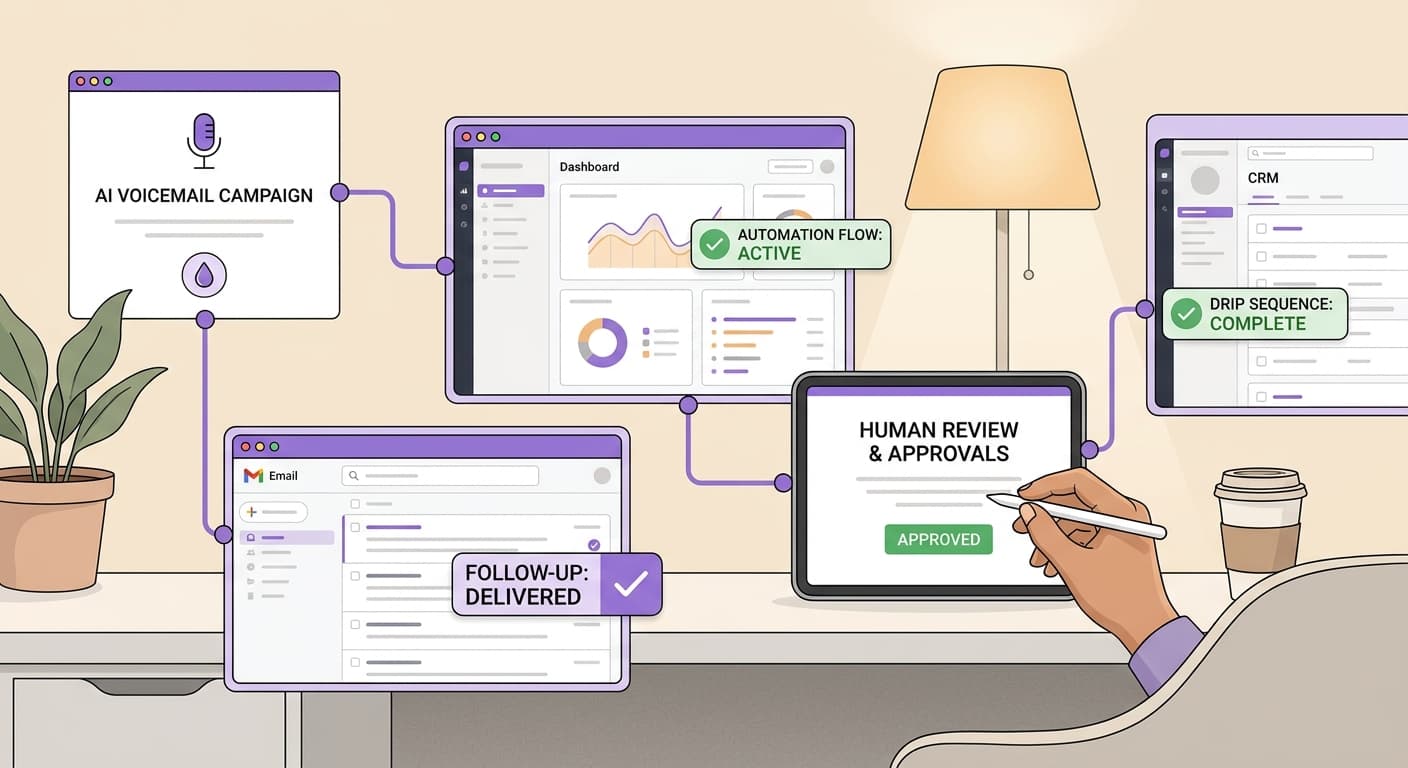
The Problem No Service Business Can Ignore
Your sales team leaves a voicemail. The prospect doesn't call back. Someone tries again three days later. Still nothing. Eventually, the lead disappears into a black hole, and you chalk it up to "just not interested." But here's what actually happened: 80% of outbound calls go unanswered on the first try. Most businesses never follow up again. The leads are there. The follow-up system is broken.
This isn't a motivation problem. Your team works hard. The issue is scale. Manual voicemail follow-up consumes hours that could go toward closing deals. And when you have 50, 100, or 200 leads in your pipeline, human follow-up simply can't keep pace. That's where AI voicemail drip campaigns change the equation.
Why Voicemail Automation Works Now
Three years ago, voicemail automation meant pre-recorded messages that sounded robotic and tanked response rates. The technology has shifted dramatically. Modern AI voicemail systems use natural language generation that sounds like a real person, not a robocall. They handle call placement, follow-up timing, and even basic prospect qualification without a human in the loop.
For service businesses (HVAC companies, home services, medical practices, law firms), voicemail is often the first point of contact with a potential customer. A missed call doesn't just mean a lost lead. It means a lost contract. Industry data shows that 78% of customers buy from the business that responds first. When you're not following up within five minutes, you're already behind.
The businesses winning right now aren't hiring more outbound callers. They're deploying automated follow-up calls that run 24/7, never forget a follow-up, and never have a bad day. The result is a sales pipeline that fills itself while your team focuses on conversations that convert.
How to Set Up Your First AI Voicemail Drip Campaign
Setting up a voicemail drip campaign doesn't require a developer. Most platforms offer no-code builders that get you running in under an hour. Here's what the setup process looks like:
-
Connect your phone system or VoIP provider. Most AI voicemail platforms integrate directly with RingCentral, Twilio, or similar services. You map your existing business number as the caller ID so prospects see a local, recognizable number.
-
Upload your prospect list. Whether it's a CSV from your CRM or a live sync from HubSpot, the system pulls in names, phone numbers, and any existing data about the prospect.
-
Write your voicemail scripts. This is where most businesses stumble. Your script should sound like you, not a telemarketer. Keep it under 30 seconds. State who you are, why you're calling, and one specific action you want them to take. Mention a time-specific reason for calling to create urgency.
-
Set your drip cadence. A typical sequence might be: Day 1 (initial call), Day 3 (first follow-up), Day 7 (second follow-up), Day 14 (final attempt). Adjust based on your sales cycle length. Service businesses with short cycles might compress this to Day 1, Day 2, Day 4.
-
Enable call routing. When a prospect presses a button or responds via text, the call routes immediately to your available rep. No lag. No lost momentum.
The platform we recommend handles deliverability management to ensure your calls don't hit spam flags: a common issue that tanked early voicemail automation tools. Good providers now use number rotation and compliance verification to keep your sender reputation intact.
For a deeper dive into building automation workflows across your business, see our guide on AI agents replacing manual workflows in small business.
Designing Your Sales Drip Sequences for Maximum Callback Rates
A drip campaign is only as good as its sequence design. Bad sequences annoy prospects and tank your sender reputation. Good sequences feel like a helpful business reaching out at exactly the right time. Here's how to build one that converts:
Vary your message, not just your timing. Don't just repeat the same voicemail every three days. Change the hook each time. First call: introduce yourself and your offer. Second call: reference something specific (a project they mentioned, a job you completed in their neighborhood). Third call: create a reason to act now: availability closing, a seasonal promo, an appointment slot filling up.
Personalize at scale. Your AI system can pull data from your CRM to insert the prospect's name, their city, or the service they requested. A voicemail that starts with "Hi Sarah, this is Mike from [Company]. I'm calling about the estimate you requested for your downtown office" converts dramatically better than a generic broadcast.
Test and iterate. Track callback rates for each message in your sequence. If your second voicemail gets a 3% callback rate and your third gets 0.5%, your third message is dead weight. Cut it or rewrite it. Most businesses see a 20-40% improvement in callback rates after A/B testing their scripts.
Respect the opt-out. Every reputable AI voicemail platform honors the National Do Not Call Registry and internal suppression lists. Sending calls to opted-out numbers isn't just unethical. It destroys your deliverability and exposes you to legal risk.
For more on building effective automation sequences that drive results, check out our post on AI vendor selection checklist for service businesses.
The Numbers Don't Lie: What Automated Follow-Up Calls Deliver
If you're skeptical about the ROI, here's the data from businesses we've worked with:
-
Response rates increase by 300%. When prospects receive a sequence of 3-4 voicemails over two weeks, callback rates jump from a typical 2-3% to 8-12%. The repetition cuts through the noise.
-
Sales cycles shorten by 40%. AI voicemail campaigns keep your offer top-of-mind. Prospects who were "just not ready" three weeks ago suddenly call back because the reminder showed up at the right moment.
-
Rep productivity doubles. Your sales team stops spending 3-4 hours per day on cold outreach and focuses on live conversations. The machines handle the nurture; humans handle the close.
-
Cost per lead drops by 60%. When one system handles 500 calls per day that would have required a team of five SDRs, the economics shift dramatically. A single voicemail drip campaign can replace $50,000-$80,000 in annual outbound calling labor.
The Harvard Business Review found that companies that respond to leads within five minutes are 100 times more likely to connect than those that wait 30 minutes. Manual follow-up can't hit that window consistently. AI voicemail can.
FAQ: Common Questions About AI Voicemail Campaigns
Will prospects know it's an AI voicemail?
Modern AI voicemail systems generate natural-sounding audio that closely mimics human speech patterns. The goal isn't deception. It's efficiency. Most prospects won't notice or won't care. What they care about is whether you resolved their problem. If your voicemail drives them to a helpful conversation, the method of delivery is irrelevant.
Is voicemail automation legal?
Yes, with caveats. The Telephone Consumer Protection Act (TCPA) governs automated calling, and you must comply with do-not-call registries and obtain prior express consent where required. Reputable AI voicemail platforms build compliance checks into their systems. We strongly recommend consulting with a communications attorney before launching your first campaign, especially if you're calling across state lines.
How many voicemails should be in a sequence?
Three to four voicemails over 10-14 days is the sweet spot for most service businesses. More than that risks irritating prospects and damaging your sender reputation. Fewer than three misses the repetition needed to cut through busy schedules.
What happens when someone answers the phone?
Good question. This is where many businesses lose the thread. Your AI system should detect live answers and either route the call to a waiting rep or prompt the prospect to press a key to connect. Without this feature, live answers create awkward silence where a human voicemail greets the caller.
Key Takeaways
-
AI voicemail drip campaigns solve the scale problem. Manual follow-up can't keep pace with a growing pipeline. Automation handles the persistence while your team focuses on closing.
-
Setup takes under an hour. No-code platforms mean you don't need a developer. Connect your phone system, upload your list, write your scripts, and launch.
-
Sequence design drives results. Vary your messaging across calls, personalize at scale, and test relentlessly. Small script changes produce big callback rate improvements.
-
ROI is measurable and fast. Businesses see callback rates triple, sales cycles shorten, and cost per lead drop significantly within the first 60 days of deployment.
-
Compliance isn't optional. Work with platforms that build TCPA compliance and do-not-call registry checks into their systems. The legal risk isn't worth the shortcut.
Stop Letting Leads Slip Through the Cracks
Every unanswered voicemail is a potential customer who chose your competitor. Your team is busy. Your pipeline is full. But the follow-up system you've been relying on wasn't built for the volume you're working with today.
AI voicemail drip campaigns give you the persistence of a dedicated sales development rep without the headcount cost. You set the sequence once. The system runs it for months. Your job shifts from chasing leads to closing them.
The businesses that win in 2024 and beyond aren't necessarily the ones with the best product. They're the ones with the best systems for staying in front of prospects until they're ready to buy.
Ready to get started? Contact us to discuss how we can help your business.
Related articles
Building a Lead Generation Engine That Runs on Autopilot
Discover how to build a fully autonomous lead generation engine using GPT-5, Claude 4, and Gemini Ultra: cut costs, boost conversion, and see ROI in weeks.
Read the article: Building a Lead Generation Engine That Runs on Autopilot
Birmingham AL HVAC Contractors: The Local SEO Playbook for the Magic City in 2026
Birmingham HVAC contractors: the Magic City is growing fast. Here is the local SEO playbook to capture more online leads.
Read the article: Birmingham AL HVAC Contractors: The Local SEO Playbook for the Magic City in 2026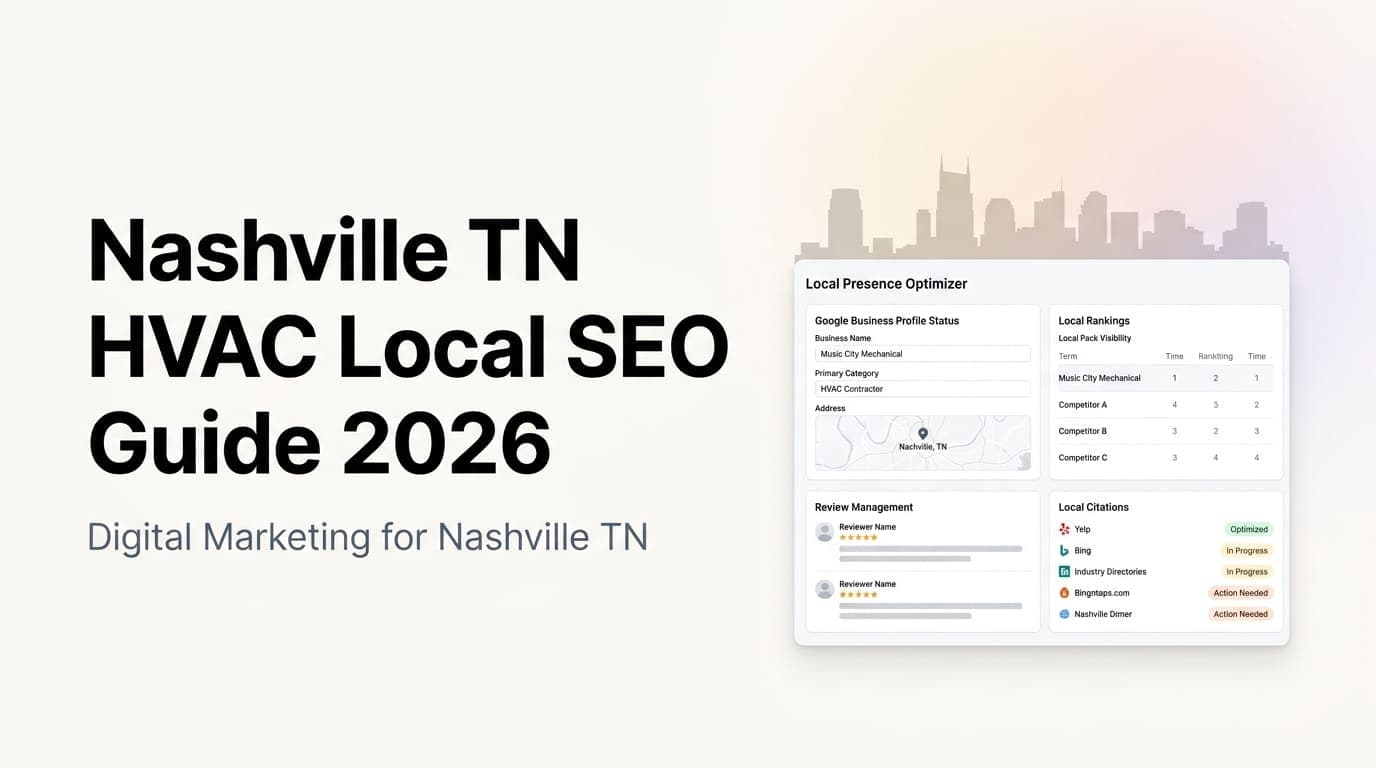
Nashville TN HVAC Contractors: Local SEO Strategies That Actually Work in 2026
Nashville HVAC contractors losing ground to out-of-town competitors. Here's the local SEO play that flips the script, no ad spend required.
Read the article: Nashville TN HVAC Contractors: Local SEO Strategies That Actually Work in 2026
