
Website redesigns that fix structure, speed, search, and conversion.
We rebuild the parts that affect results: offer clarity, page hierarchy, search coverage, speed, mobile experience, CTAs, forms, and follow-up.
Same business, new first impression.
A redesign keeps the facts and the rankings that work, and changes how fast a visitor understands them.
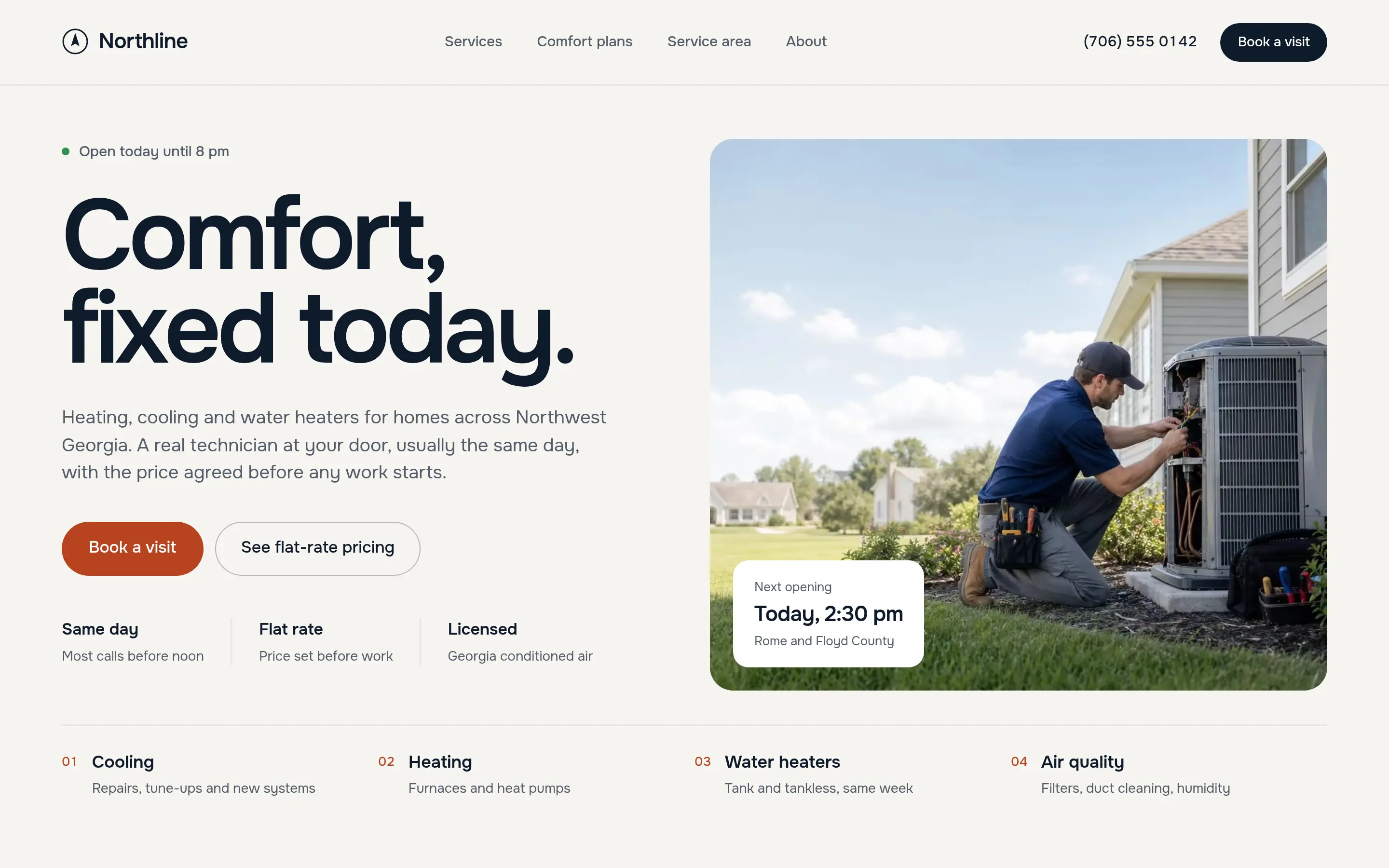
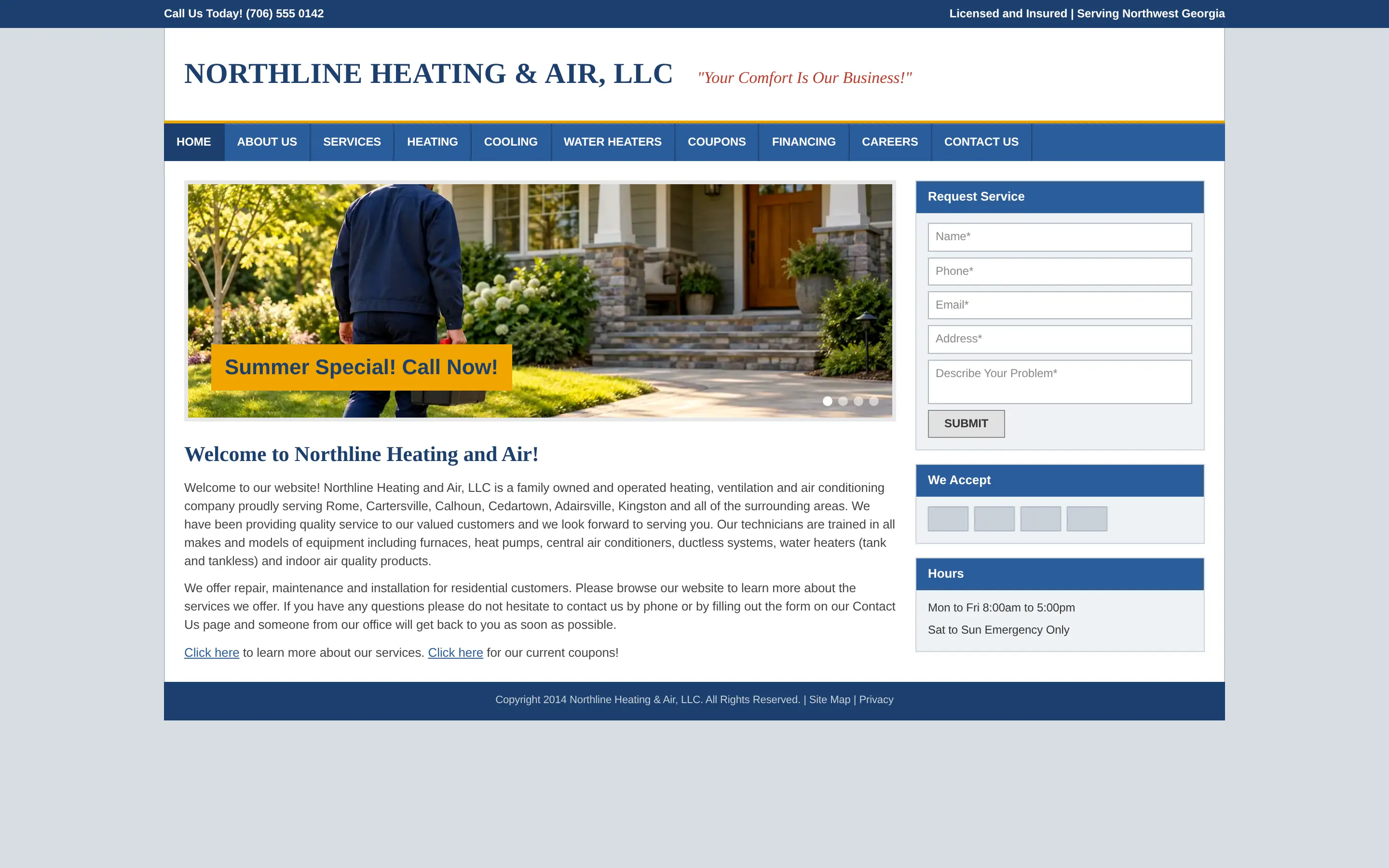
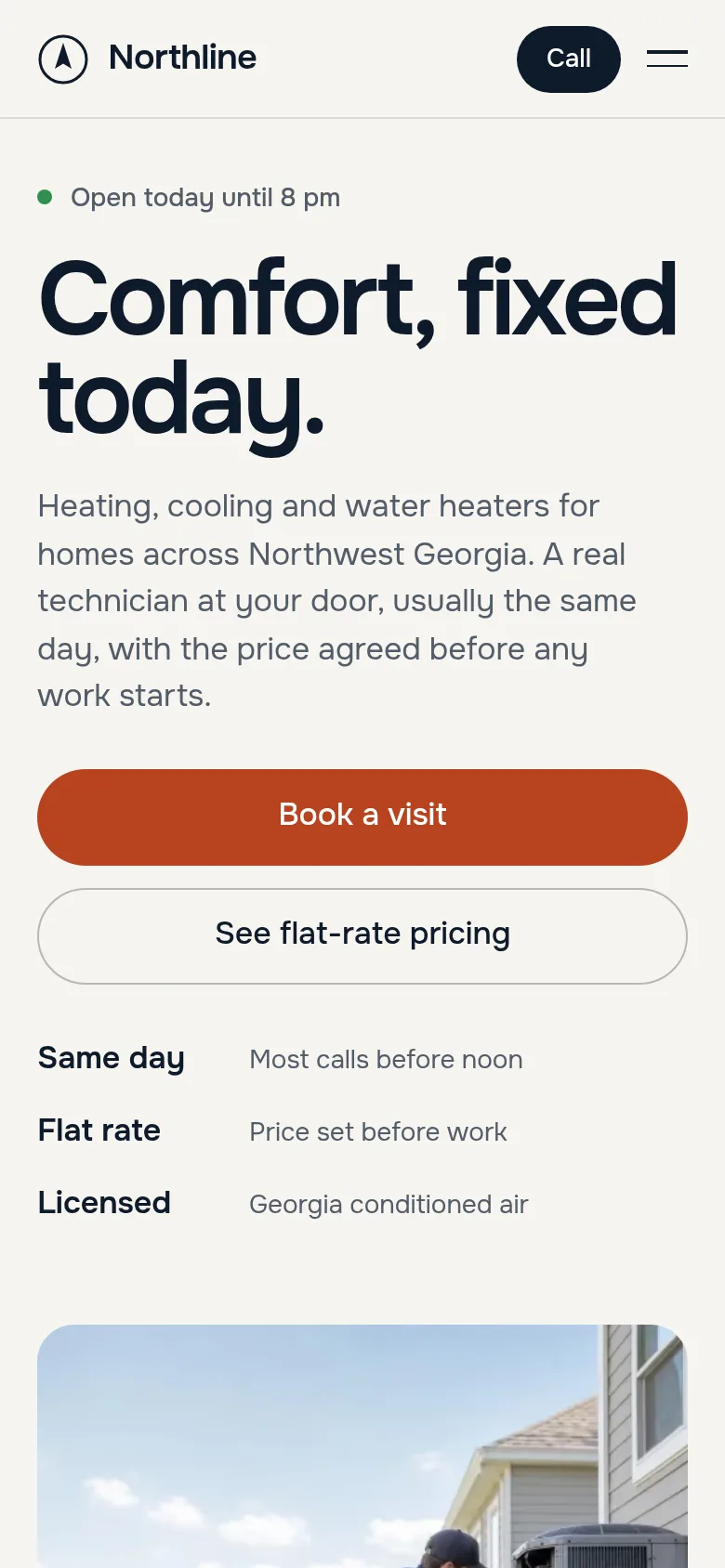
Find what the current site is costing you.
We look for the gaps that usually hide under a decent-looking design: unclear offers, thin pages, weak CTAs, slow assets, and broken intake.
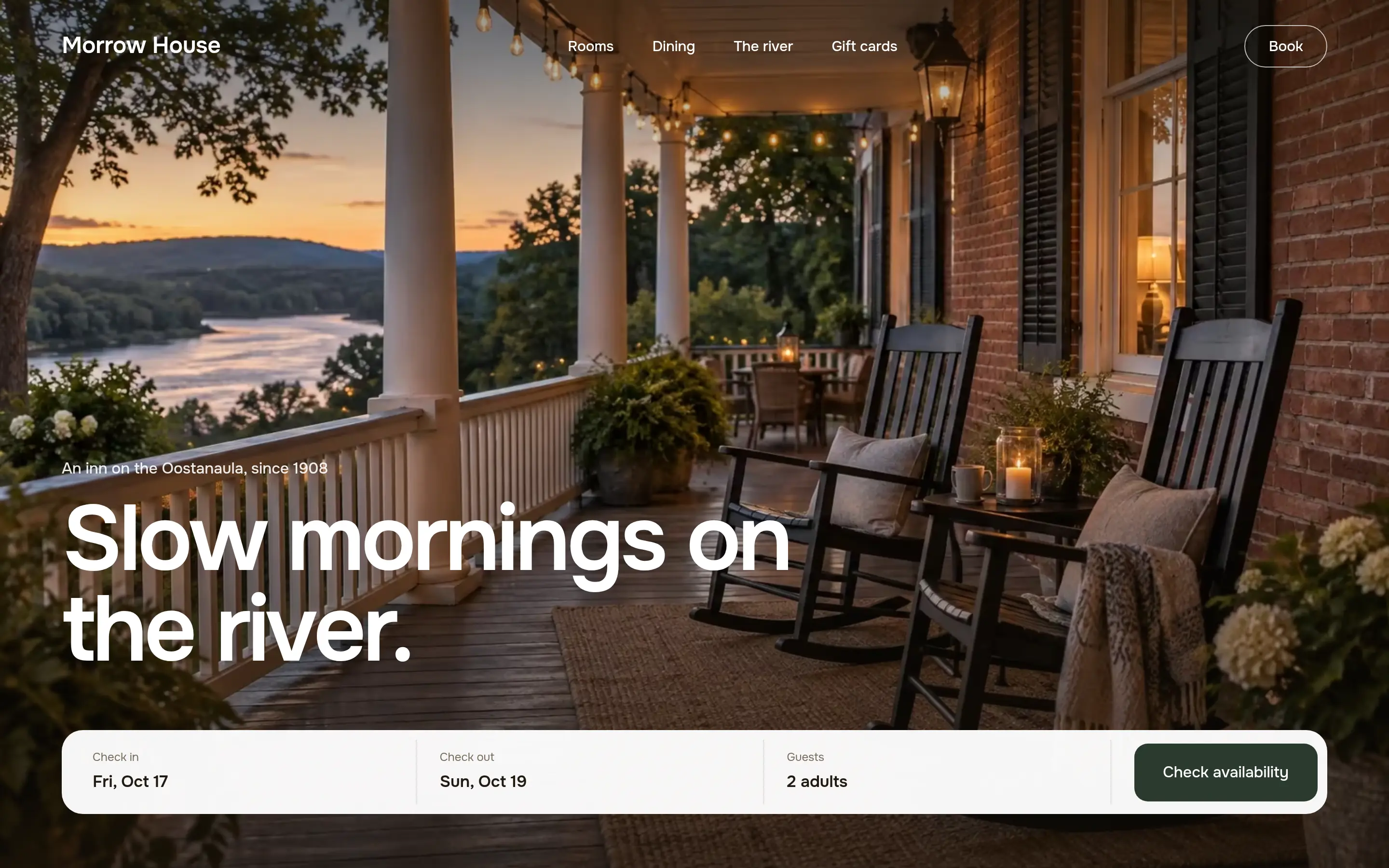
Change the structure, not just the visuals.
The redesign plan should reorganize pages, sections, internal links, proof, and calls to action around buyer intent.

Redesigns should not damage search visibility.
We preserve and improve SEO signals with redirects, canonicals, metadata, sitemap updates, and content planning.

- 1
Map the visitor question
We name what the buyer is trying to understand before the page is designed.
Clarity first
- 2
Design the trust path
Proof, process, objections, and CTAs are placed where hesitation usually appears.
Less guessing
- 3
Build for speed and search
The page ships with fast rendering, metadata, schema, internal links, and mobile checks.
Ready to index
- 4
Connect intake
Forms, tracking, notifications, and follow-up are planned as part of the page.
No dead-end leads
Do you build websites for businesses outside Rome, Georgia?
Yes. AnovaGrowth is based in Rome, Georgia and builds websites for companies across the United States. Local pages handle city-specific searches, while this website category is national.
Can you connect the website to our CRM or intake process?
Yes. We can connect forms, booking requests, lead notifications, follow-up sequences, and CRM fields so the website becomes part of the operating system, not just a public brochure.
Do you include SEO in website builds?
Yes. Page hierarchy, metadata, schema, internal links, speed, mobile UX, and conversion flow are planned during the build. SEO is not treated as a plugin added at the end.

A good website redesign fixes the reasons the old site underperformed. That usually means improving structure, messaging, SEO coverage, speed, mobile UX, proof, conversion paths, and lead routing.