How AI Chatbots Are Transforming Customer Service in 2026
Modern AI chatbots handle 85% of inquiries without human help. Learn how businesses deploy intelligent agents to cut costs and boost satisfaction.

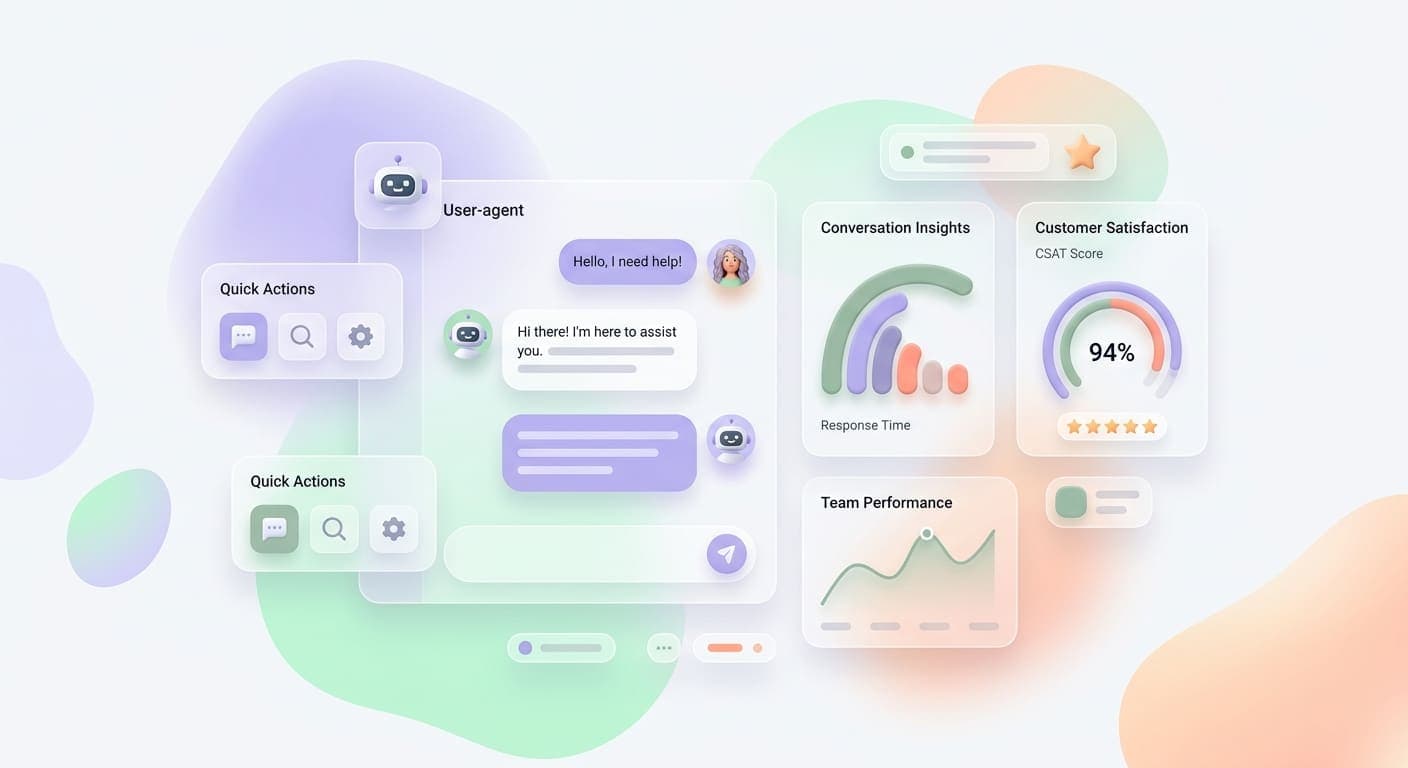
The Customer Service Challenge
Every business faces the same dilemma: customers expect instant responses around the clock, but hiring enough staff to provide 24/7 support isn't economically feasible for most companies.
The traditional chatbot solution often made things worse. Rule-based bots frustrated customers with their rigid scripts, inability to understand natural language, and constant "I don't understand" responses.
That's changed dramatically with modern AI.
What Makes AI Chatbots Different
Today's AI chatbots, powered by large language models (LLMs), represent a fundamental shift in what automated customer service can accomplish. They're the front-line capability of a broader AI automation strategy, and when paired with the right integrations, they get smarter as your business grows.
Natural Language Understanding
Unlike rule-based bots that match keywords to pre-programmed responses, AI chatbots understand intent, context, and nuance. A customer asking "What's the status of my order?" and "Where's my package?" both get accurate, personalized answers.
Contextual Awareness
Modern AI maintains conversation context across multiple exchanges. When a customer follows up with "What about the other item?", the bot understands they're referring to their earlier order discussion.
Learning and Improvement
AI chatbots learn from every interaction. When they encounter questions they can't answer well, those conversations inform updates that improve future responses.
Real Results from AI Deployment
Businesses implementing AI chatbots consistently report measurable improvements:
- 85% resolution rate, Most customer inquiries resolved without human involvement
- 60-second average response time, Compared to 4+ hours for human-only teams
- 40% cost reduction, In customer support operations
- 24/7 availability, No downtime, holidays, or staffing gaps
E-Commerce Case Study
An online retailer handling 500+ daily customer inquiries implemented an AI chatbot for order tracking, returns processing, and product questions.
Before: 8-hour response times, 3 full-time support staff, growing customer complaints.
After: 90-second average response, 78% of inquiries resolved by AI, one support specialist handling escalations only.
Implementation Best Practices
Successfully deploying an AI chatbot requires more than just turning on the technology.
Start with High-Volume, Low-Complexity Tasks
Begin with inquiries you receive most frequently that have straightforward answers:
- Order status and tracking
- Business hours and location
- Return policies and procedures
- Basic product information
Design Smart Escalation Paths
Your AI should recognize when to hand off to humans:
- Complex complaints or frustrated customers
- Requests requiring account changes
- Technical issues beyond its training
- Legal or compliance-sensitive matters
Integrate with Existing Systems
The AI needs access to your data to provide accurate answers:
- CRM for customer history
- Inventory systems for product availability
- Order management for shipping status
- Knowledge base for product information
Getting those connections right is where workflow automation comes in, making sure your chatbot reads from and writes to the systems your team actually uses.
Monitor and Improve Continuously
Track key metrics weekly:
- Resolution rate
- Escalation rate
- Customer satisfaction scores
- Common unanswered questions
Use this data to expand the AI's capabilities over time.
Common Concerns Addressed
"Will customers accept talking to a bot?"
Research shows 68% of consumers appreciate chatbots for quick answers to simple questions. The key is transparency, let customers know they're chatting with AI and make human support easily accessible.
"What about complex issues?"
AI handles the volume while humans handle complexity. Your support team focuses on cases that actually need human judgment instead of answering "Where's my order?" for the hundredth time.
"Is it secure?"
Enterprise AI solutions include data encryption, access controls, and compliance certifications. Customer data can be processed without being retained for model training.
Getting Started
Implementing AI customer service doesn't require a massive upfront investment. Most businesses start with:
- Pilot program, Deploy AI for one channel or inquiry type
- Integration work, Connect to essential systems (CRM, order management)
- Training phase, Fine-tune responses based on your specific products and policies
- Gradual expansion, Add channels and capabilities based on results
The typical timeline from kickoff to first deployment: 2-4 weeks for basic implementations, 6-8 weeks for more complex integrations. Want to understand what drives ROI before committing? The 5 signs your business is ready for AI automation is a useful gut-check before you scope a project.
Key Takeaways
- Modern AI chatbots understand natural language and context, they're not the frustrating rule-based bots of the past
- Expect 40%+ cost reduction and 85% resolution rates when implemented properly
- Start with high-volume, simple inquiries and expand based on performance data
- Always maintain clear escalation paths to human support
Ready to explore AI customer service for your business? Schedule a consultation to discuss your specific needs and see a demo.
Related articles

AI Automation for Real Estate Agents: How to Respond Faster, Nurture Leads, and Close More Deals Without Working Nights
Real estate agents lose internet leads to slow response and dead follow-up. AI automation captures, qualifies, and nurtures every lead without adding headcount.
Read the article: AI Automation for Real Estate Agents: How to Respond Faster, Nurture Leads, and Close More Deals Without Working Nights
AI Automation for Plumbing Businesses: Stop Missing Emergency Calls, Win More Recurring Contracts, and Cut Estimate Fallout
Plumbing shops lose 20-40% of emergency calls to missed after-hours responses and 30-50% of estimates to slow follow-up.
Read the article: AI Automation for Plumbing Businesses: Stop Missing Emergency Calls, Win More Recurring Contracts, and Cut Estimate Fallout
AI Lead Qualification and Follow-Up for Service Businesses: Stop Calling Everyone and Start Closing More
Most service businesses call every lead the same way. AI lead qualification scores your prospects so your team focuses time on the jobs that actually close.
Read the article: AI Lead Qualification and Follow-Up for Service Businesses: Stop Calling Everyone and Start Closing More
