
Small business websites that explain the offer, earn trust, and create follow-up.
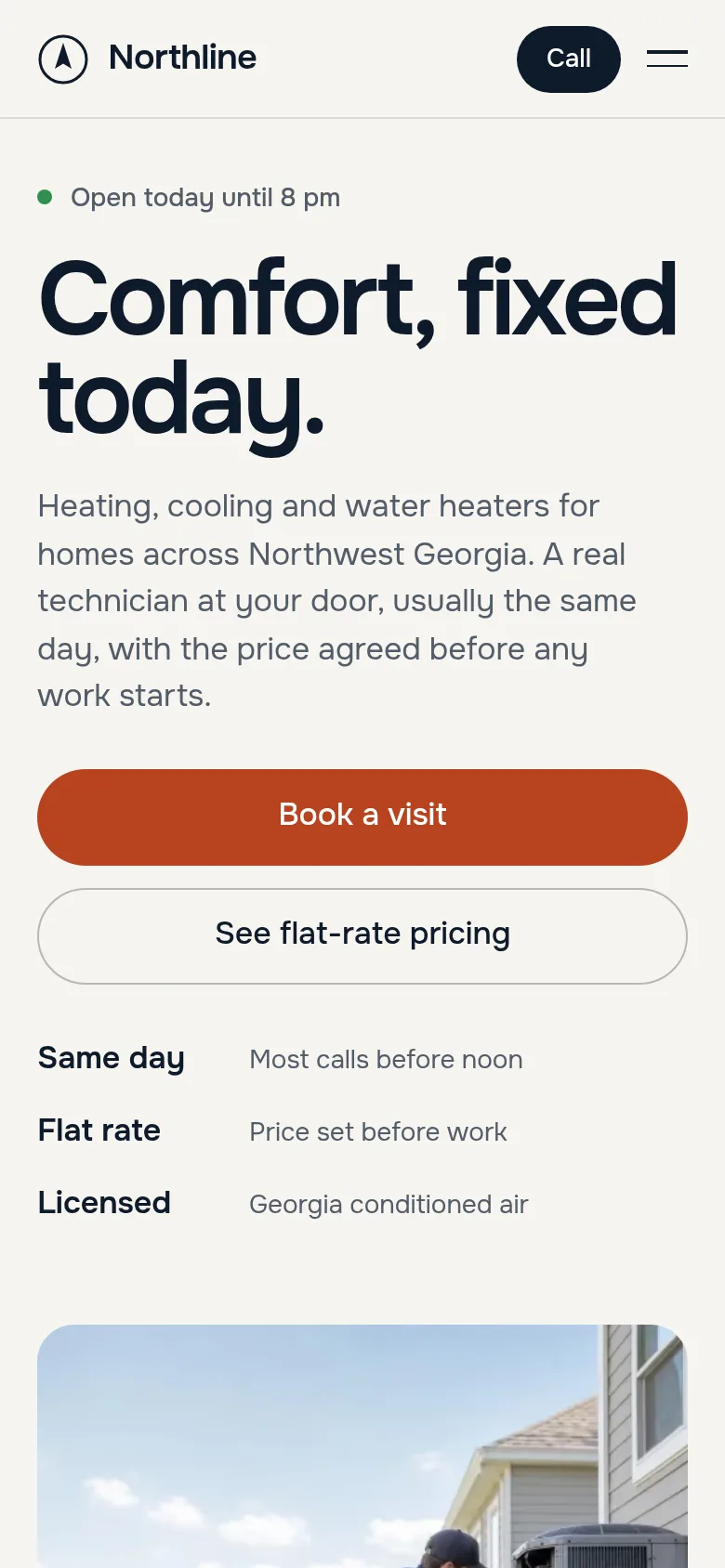
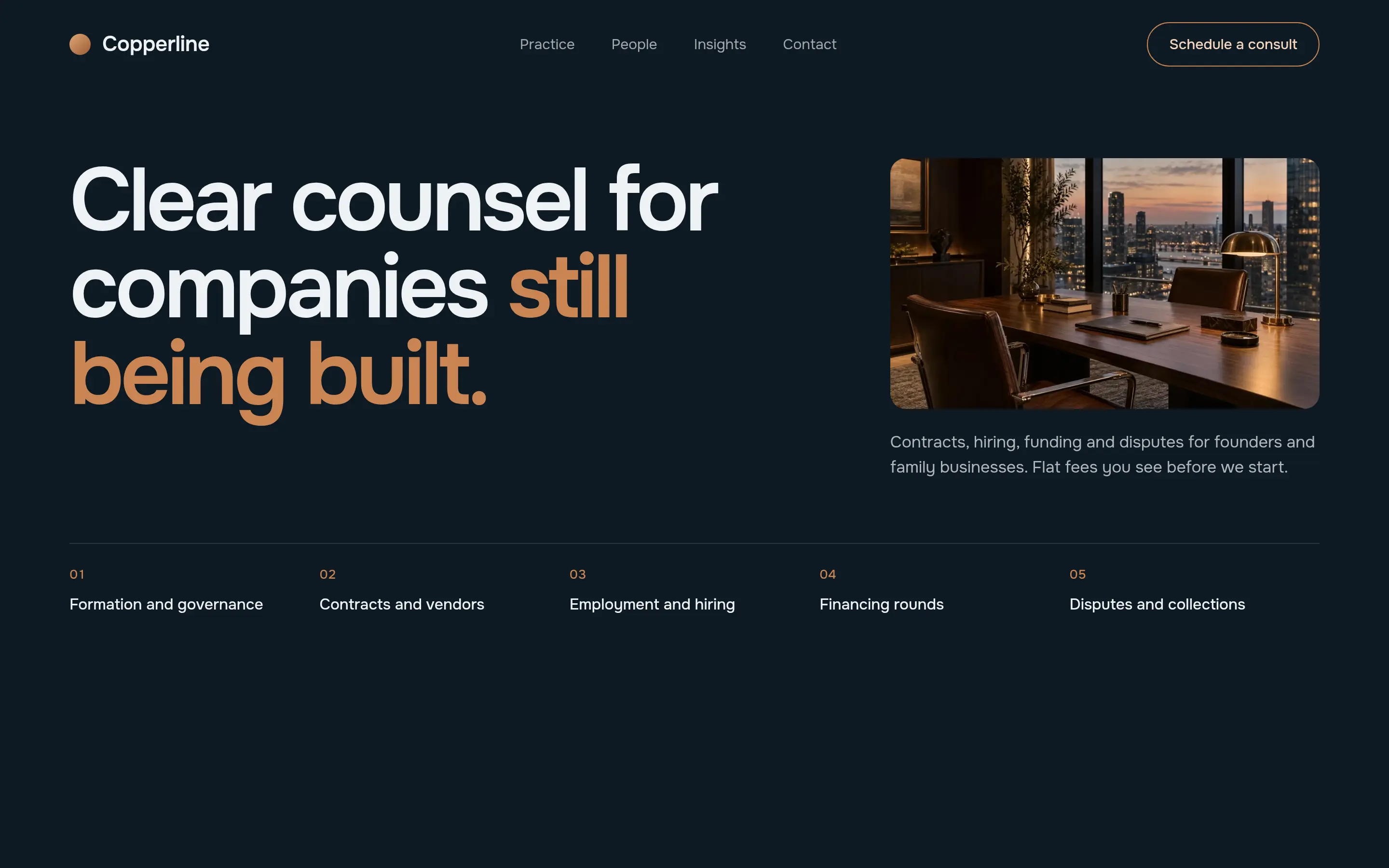
We build practical websites that support the actual work: explain services, show proof, help local search, capture leads, and make follow-up easier.
Four pages, done properly.
Most small businesses need a handful of clear pages before they need fifty. Each one has a single job.
- ServicesWhat you do, for whom, and what it costs to start.
- AboutThe people, the license, the years in town.
- WorkReal jobs and real photos, a few done well.
- ContactCall, book or ask, with hours and service area.
No unnecessary complexity.
We focus on the pages and workflows that actually help a small business get found, trusted, and contacted.

Built around how customers look for help.
Service pages, location signals, FAQs, and internal links help search engines understand what the business does.
The lead should not stop at the form.
We can connect the website to reminders, CRM fields, email replies, and AI-assisted follow-up as the business grows.

- 1
Map the visitor question
We name what the buyer is trying to understand before the page is designed.
Clarity first
- 2
Design the trust path
Proof, process, objections, and CTAs are placed where hesitation usually appears.
Less guessing
- 3
Build for speed and search
The page ships with fast rendering, metadata, schema, internal links, and mobile checks.
Ready to index
- 4
Connect intake
Forms, tracking, notifications, and follow-up are planned as part of the page.
No dead-end leads
Do you build websites for businesses outside Rome, Georgia?
Yes. AnovaGrowth is based in Rome, Georgia and builds websites for companies across the United States. Local pages handle city-specific searches, while this website category is national.
Can you connect the website to our CRM or intake process?
Yes. We can connect forms, booking requests, lead notifications, follow-up sequences, and CRM fields so the website becomes part of the operating system, not just a public brochure.
Do you include SEO in website builds?
Yes. Page hierarchy, metadata, schema, internal links, speed, mobile UX, and conversion flow are planned during the build. SEO is not treated as a plugin added at the end.

A small business website should clearly explain the offer, show local or industry trust, answer common buyer questions, and route every lead into a follow-up path. It should be simple for customers and useful for the owner.